


For years, the Sharp X68000 has often been described, with a fair amount of simplification, as “the Japanese Amiga”. It is an easy formula: two legendary computers, both based on the Motorola 68000 family, both surrounded by an almost mythical aura. But look a little closer and that definition only tells a small part of the story, and probably not even the most interesting one.
The Sharp X68000 was not Japan’s Amiga. It was a completely different way of imagining the dream computer: more expensive, more specialised, much closer to the arcade. The Amiga, especially in Europe, was a more accessible, more popular and more creative machine, able to generate a huge community made of games, demos, music, graphics, magazines, floppy disks and small teams born quite literally in bedrooms.
Two machines born with a futuristic vision
The Amiga arrived in 1985, in a personal computer market still dominated by machines that often felt rigid, monochrome or far removed from the idea of a modern audiovisual experience. With its custom chipset, multitasking, mouse, Workbench, sampled sound and graphics that seemed to belong to another generation, Commodore’s computer genuinely offered something new.
The Sharp X68000 arrived in Japan in 1987 and created a similar impression, but in a completely different context. Sharp presented it as a kind of personal workstation, with an iconic twin-tower design, 1 MB of RAM as standard, a Motorola 68000 CPU and impressive graphics and sound capabilities for a home computer of the period. The Computer Museum of the Information Processing Society of Japan describes the model as a machine announced in 1986 and released in March 1987, known for sophisticated graphics, powerful audiovisual features and its distinctive design.
This is already where the comparison begins to crack. The Amiga 500 was designed to bring that kind of power to a broader home market. The Sharp X68000 was much more expensive, deeply Japanese in conception and much closer to the idea of an elite computer, what today we might call an enthusiast-class machine. It was not something the average European teenager could realistically hope to own. For many of us, it would only become a myth many years later.
The Motorola 68000 connection is not enough
The first misunderstanding comes from the CPU. The Amiga and the X68000 share the same Motorola 68000 processor family, and that has helped feed the idea of a direct kinship. But a CPU alone does not define the identity of a computer.
The Amiga 500 used a Motorola 68000 running at around 7 MHz, supported by the OCS custom chipset, with Agnus, Denise and Paula handling memory, graphics, blitting, audio and input. The system started with 512 KB of Chip RAM, expandable, and was built around a very specific balance between the central processor and dedicated chips. The result was not just raw power for its time, but a particular way of programming, drawing, composing music and producing visual effects.
The X68000 started with a Motorola 68000 at 10 MHz, 1 MB of RAM and a graphics system much more oriented towards hardware sprites, graphic planes, higher resolutions and colour handling closer to the logic of Japanese arcade hardware. Its audio side, based on the Yamaha YM2151 and OKI MSM6258 sampling, also belonged to a different sound tradition from the Amiga’s Paula chip.
So these were two machines linked by the same processor family, but with deeply different technical identities. Saying that the X68000 was “the Japanese Amiga” is a bit like saying that two cars are similar because they have engines of the same size. The engine matters, of course, but chassis, gearbox, suspension, price, market and surrounding technology completely change the experience.
Where the X68000 really was superior
Let’s be clear: if the comparison is about closeness to the arcade experience, the Sharp X68000 was playing in a completely different league.
Sharp’s machine was designed to speak the same language as Japanese arcades. Hardware sprites, scrolling, high resolutions, rich palettes, FM audio, a faster CPU and an overall structure better suited to certain kinds of conversion made the X68000 deeply impressive. It was much more than a computer able to run good games. In some cases, it could bring home a surprisingly convincing version of the coin-op experience.
The myth of the X68000 was born there too. Conversions such as Daimakaimura, Final Fight, Strider, Gradius II, After Burner, Salamander, Akumajō Dracula, Street Fighter II and many others helped create the image of an almost impossible computer, close to what European players usually saw only in arcades or in magazine screenshots.
The Amiga, especially in the most common Amiga 500 configuration, could not compete on that ground. It had extraordinary games, of course, but arcade conversions were often a minefield. Some were reasonably successful, some were decent, others were painful. Less organised development teams, memory limits, architectural differences, the absence of hardware sprites in the same logic as Japanese arcade boards, compromises with scrolling, colours and audio all made many conversions difficult.
From this point of view, the X68000 was not “a Japanese Amiga”. It was something much closer to a home arcade machine, at least for the few who could afford it.
But the Amiga was not trying to be an arcade machine
This is exactly the point: judging the Amiga only by the accuracy of its arcade conversions means reducing it to something it was never meant to be.
The Amiga was not interesting because it could turn every coin-op into a perfect home conversion. It was interesting because it brought a creative environment into the home. Workbench, multitasking, a mouse, Deluxe Paint, trackers, samples, demos, bitmap graphics, animations, disk magazines, public domain software, utilities, European games: all of this was part of the experience.
With an Amiga, you did not only play. You drew, sampled sounds and composed modules. You copied a disk received from a friend. You watched cracktros that were sometimes more impressive than the games themselves. You opened Deluxe Paint to recreate a comic book character. You discovered ProTracker. You watched a demo and wondered how that machine could possibly be doing those things.
In our European perception, the X68000 often became a retrospective myth. We discovered it late, through emulators, videos, forums, technical comparisons and images of arcade conversions that seemed almost miraculous. The Amiga, instead, was there. In shops, in bedrooms, in magazines, in afternoons after school, in hand-labelled floppy disks, in groups of friends, at computer fairs, in demos passed from hand to hand.
The X68000 brought the arcade home. The Amiga brought home a miniature graphics, music and game development studio.
The price of the dream
Then there is a fundamental difference: price.
The Amiga 500 was not cheap in absolute terms. For many families it was still an important purchase. But it was an attainable dream, especially as the years passed, with bundles, offers, second-hand machines, gradual expansions and much wider distribution across Europe.
The X68000 belonged to another category. In Japan, it was an expensive computer, much closer to the idea of a premium machine than a popular home computer. That economic distance changed everything. It is one thing to compare two computers on a specification sheet. It is another to ask which one could actually enter the daily lives of thousands of people.
This is where the Amiga won: it was accessible, widespread and present in homes. And that presence, in the cultural history of a machine, matters as much as power. Sometimes more.
A community is not born only from the best hardware. It is born when enough people can buy it, use it, talk about it, swap disks, create tools, form small teams, write in magazines, organise meetings and build a shared memory.
Workbench versus Human68k: two ideas of a computer
The operating system also tells us a lot about the distance between the two machines.
The Amiga had Workbench and AmigaOS, a graphical, multitasking environment that felt surprisingly modern for the time. It was not perfect, and many games booted directly from floppy without really passing through the desktop. But the idea was powerful: the computer was not just able to launch programs, it was a complete environment.
The X68000 used Human68k, an operating system developed by Hudson Soft for Sharp, with an approach closer to the DOS-like world, although supported by graphical interfaces such as SX-Window. This comparison should not be oversimplified either. The X68000 was powerful, complete and also used for development and production. But in the European imagination, the Amiga had something more immediately recognisable: you turned it on, saw Workbench, moved the mouse, opened windows and felt an idea of the home computer’s future.
This is one of the reasons why the Amiga left such a strong mark. Its user experience, so modern and advanced for the period, contributed decisively to its success.


Games: Japanese arcade conversions versus European identity
When we look at games, the contrast becomes even clearer.
The X68000 shines above all when we talk about Japanese arcade conversions. Its charm is tied to the idea of having something very close to the arcade at home. It was a perfect machine for anyone who loved Capcom, Konami, Namco, Sega, Taito and that direct, technical, spectacular kind of experience.
The Amiga, meanwhile, built a huge part of its identity through original games, or at least through games deeply rooted in the European scene: Shadow of the Beast, Another World, Speedball 2, The Chaos Engine, Turrican II, Lemmings, Sensible Soccer, Cannon Fodder, Lotus, Pinball Dreams, Alien Breed, Gods, North & South, Project-X, Lionheart. They were not all perfect, and they have not all aged in the same way, but they tell the story of a living scene.
These were games born inside a different creative ecosystem: very young programmers, pixel artists, tracker musicians, software houses growing out of bedrooms, small offices and magazines. The Amiga was not trying to bring the coin-op home at all costs. It often tried to stand apart with games designed specifically to exploit the machine: tricks to multiply colours, larger software sprites, parallax, rich backgrounds, sampled music and a strong European identity in the way games were conceived.
This is a decisive point: the X68000 may have been the computer many arcade players dreamed of. The Amiga was the computer through which thousands of European teenagers learned how to create.
The demo scene: where the Amiga becomes culture
If there is one field where the Amiga has very few rivals, it is the demo scene.
Amiga demos were not simply programming exercises. They were aesthetic manifestos, technical challenges, music, graphics, group identity and underground culture. They were the place where a machine was pushed beyond what seemed reasonable, often by young people without large studios behind them, but with passion, talent and a fierce desire to show something.
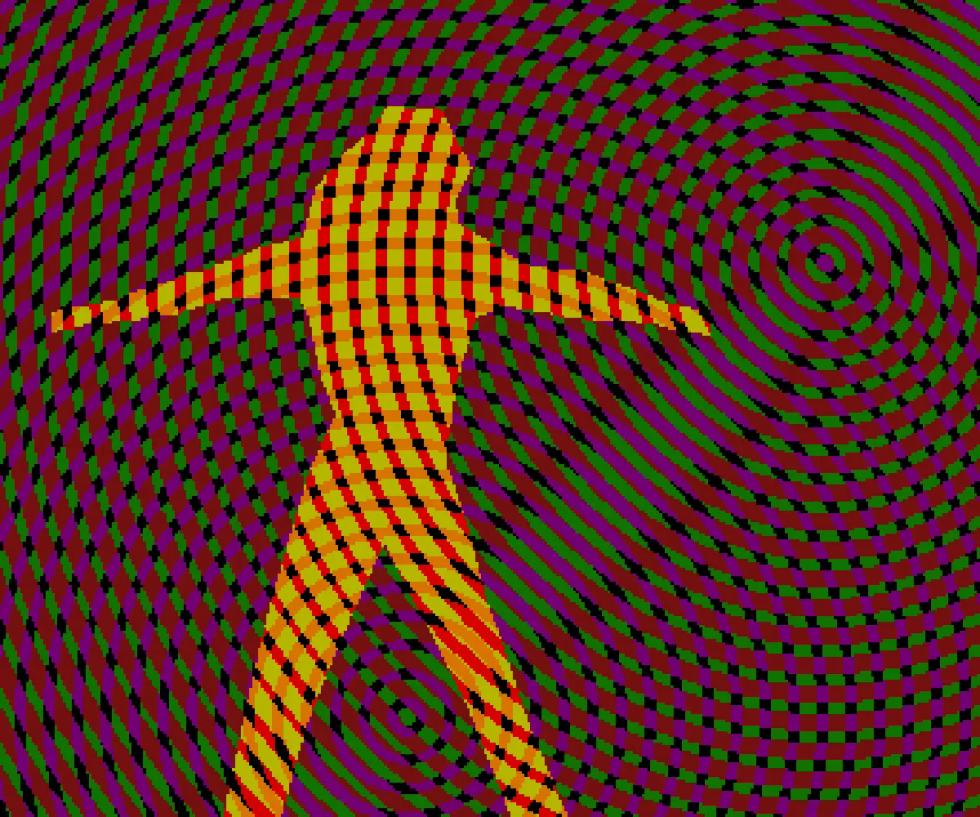
Copper, blitter, raster tricks, scrolling, modules, fonts, logos, plasma effects, bobs, improvised 3D effects: the Amiga became a creative gym. And that gym produced real skills, real careers and visual languages that would influence games, graphics, electronic music, intros and digital scenes.
The X68000 had its own scene, passionate users and remarkable productions. But in the European story of retrocomputing, the Amiga demo scene is something different: broader, more accessible, more rooted, more popular. The X68000 had impressive technical means, but the Amiga was in homes everywhere. And when a machine is everywhere, ideas circulate faster.
The myth discovered later
There is another decisive aspect: most of us did not really experience the Sharp X68000 at the time, except perhaps through the occasional magazine mention.
We truly discovered it much later. As adults, enthusiasts, retro gamers, curious players. We saw it in comparison videos, emulators, forums, articles and screenshots of stunning arcade conversions. That is why its myth feels legendary, almost perfect: we look at it without having lived through its daily limitations, its price, the availability of its games, the language barrier, the market and the geographical distance.
The Amiga, on the other hand, was something we experienced with all its flaws. Loading times, practical limits in colour and sprite handling compared with arcade hardware, Guru Meditations, damaged disks, disappointing conversions, memory that was never enough, the 512 KB expansion, the desire for a hard drive that cost too much, the frustration of watching the PC grow. The Amiga is not a perfect myth. It is a messy, concrete memory, full of love and disappointment.
And perhaps that is exactly why people still discuss it with so much passion.
So who really wins?
If the question is: which machine was closer to the Japanese arcade experience, there is only one winner: the Sharp X68000.
But if we ask different questions, the answers also change.
Which machine built its myth on a popular European culture?
Which one shaped a generation of young programmers, artists and musicians?
Which one turned the bedroom into a creative studio?
Which one left more shared memories in our part of the world?
That is where the Amiga comes powerfully back into the discussion. Its strength does not lie in absolute superiority, or in any supposed weakness of the X68000, but in the amount of life it generated around itself: prices, markets, magazines, friends, accessibility, software, tools, community and time spent in front of the screen.
Do not call it the Japanese Amiga
In the end, calling the Sharp X68000 “the Japanese Amiga” means simplifying two stories that deserve to remain distinct.
The X68000 was an arcade dream: powerful, fascinating, almost unreachable. A machine able to bring into the home something that, for many European players, still belonged to the arcade.
The Amiga was a computer that was lived with, discussed, expanded, pushed to its limits, loved, used for games but also for drawing, composing music, programming, creating demos and imagining something personal.
One was closer to the coin-op. The other was closer to the everyday life of a generation.
Would you have traded your Amiga for a Sharp X68000? Or would you have kept it for everything that surrounded it: Workbench, demos, trackers, floppy disks, magazines, friends, a living community and that European creativity so often born in a bedroom?
Reader memories
Comment on the article and join the discussion.
Comment rulesLog in or register to leave a comment.
Create your account
Loading comments...