


When the Amiga looked like the future
In 1989, Shadow of the Beast did not simply look like a good video game. It looked like a statement. It arrived with magnetic cover art, a premium feel and images that made the Amiga seem as if it belonged to a different future from most other home computers.
Developed by Reflections and published by Psygnosis, Shadow of the Beast quickly became one of the great symbols of the Amiga. Not because it was the most balanced or deepest game of its time, but because it showed something many players had never seen with that level of force on a home screen: layered backgrounds, multi-level parallax, rich colors, strange creatures, atmospheric music and a dark fantasy world that felt closer to progressive rock cover art than to a traditional platform game.
It was the kind of game you showed to friends to say: “Look what the Amiga can do.” In that sense, few titles were more effective.
Aarbron and the escape from the Beast
The protagonist is Aarbron, a man kidnapped as a child, transformed into a creature serving the Beast Lord and forced to live as an instrument of violence. When memories of his lost identity return, the beast rebels and begins a journey of revenge, liberation and self-recovery.
The story does not take up much space during play, but the premise is fascinating. Shadow of the Beast does not rely on long dialogue or extended narrative scenes. It works through images, atmosphere and suggestion. Aarbron crosses hostile lands, plains, forests, caverns, organic structures and alien environments, fighting creatures, avoiding traps and searching for the items needed to move forward.
The structure is that of an action platformer with exploration elements. Progress is not always linear or intuitive. You need to understand where to go, which objects to collect, which passages to unlock and in what order to face certain sections. This gives the game a more mysterious dimension, but also makes it much harsher.
Roger Dean, Psygnosis and visual identity
Before the game even begins, Shadow of the Beast makes an impact through its image. Roger Dean’s cover art was perfect for the Psygnosis identity: fantastic, alien, elegant and immediately recognizable. It was not just a beautiful cover. It was a promise. It told the player that this was not just another platformer, but something stranger, darker and more mysterious.
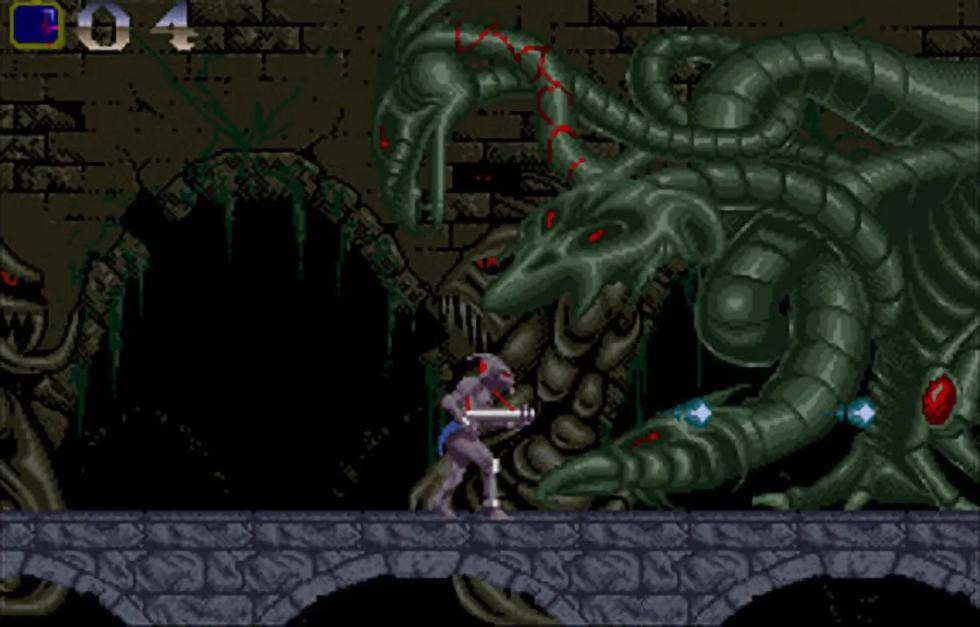
The game keeps that promise mostly through its world. The creatures often feel like they came from a biological nightmare, the settings sit somewhere between fantasy, science fiction and a disturbed dream, and the art direction avoids the colorful comfort of many contemporary platformers.
Shadow of the Beast did not want to be cute. It wanted to be hypnotic.
The triumph of parallax
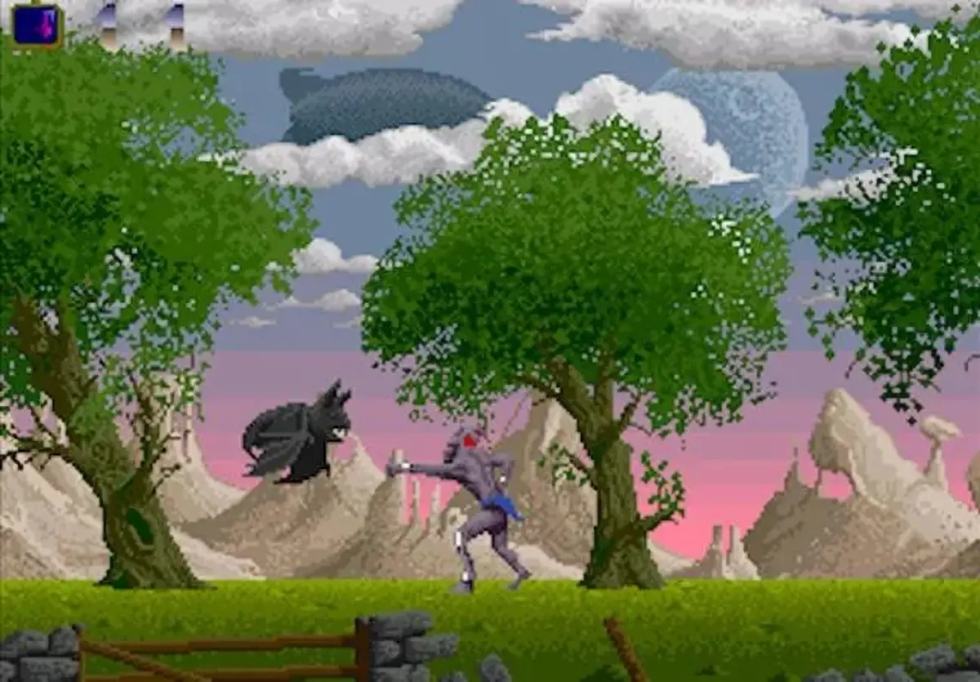
Technically, the game was a shock. Its multi-level parallax became legendary, with backgrounds scrolling at different speeds to create a sense of depth that was astonishing at the time. It was not just a decorative effect. It was the core of the game’s identity. Walking through the opening screens, with mountains, trees, ground layers and distant elements all moving independently, meant seeing the Amiga assert its audiovisual power.
Years later, the impact is not exactly the same as it was in 1989, but it remains strong. Of course, today it is easier to notice repetition, stiffness and structural limits that were once absorbed by the spectacle. Still, Shadow of the Beast keeps a rare screen presence. Its images are not only “good for the time”. They still have identity.
The secret is the combination of technique and style. Many later games had stronger effects, but few managed to turn a technical trick into an entire visual world. Shadow of the Beast did exactly that. The parallax was not only a trick. It was a signature.
David Whittaker and the sound of the alien
The audio is just as important. David Whittaker’s music does not simply accompany the action. It builds the tone of the game. It is atmospheric, unsettling and at times almost ritualistic. It does not chase an easy melody or a heroic theme. It works on the feeling of being in a hostile, unknown place, far from any sense of safety.
On Amiga, Shadow of the Beast’s audio was part of the spectacle. Samples, timbres and atmosphere made the game feel larger, darker and more mysterious. Even today, with all the technical limits of the period, that soundtrack remains one of the main reasons the game is remembered so strongly.
It is not just nostalgia. This music belongs deeply to the world it supports.
The problem: actually playing it
Then comes the moment when you have to play it. And that is where Shadow of the Beast becomes harder to judge.
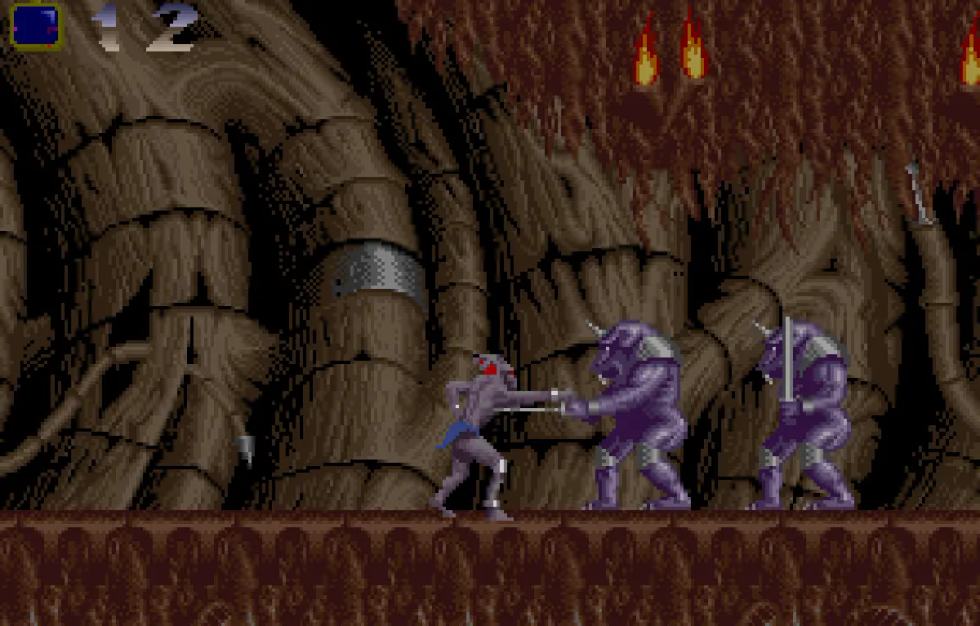
As an audiovisual experience, it is a masterpiece. As an action platformer, it is much harsher, less refined and often frustrating. Aarbron can punch, jump, duck and use some attacks or items, but the controls do not have the softness of the best console platformers or the precision of great arcade action games. Fights often require rigid timing, enemies arrive in patterns that must be memorized, and many situations feel designed more to punish than to guide.
The difficulty is brutal. Not only because death comes easily, but because it often arrives before the player fully understands why. Exploration requires order, memory and a willingness to restart. Shadow of the Beast is not generous. It does not hold your hand, explains almost nothing and forgives very little.
This does not mean it is unplayable. Once you accept its rules, it can become fascinating precisely because of its harshness. But it is a very different kind of fascination from Lionheart, for example. Lionheart uses spectacle to support a more fluid and controllable action game. Shadow of the Beast uses spectacle to create awe, then leaves you alone in a world that seems determined to reject you.
The sequels and the weight of the myth
Shadow of the Beast generated two Amiga sequels. Shadow of the Beast II pushed even further into dark atmosphere and Psygnosis identity, while keeping a very harsh difficulty and an often cryptic approach. Shadow of the Beast III tried to build a more thoughtful structure, with more attention to puzzles and a less brutal design.
The first game, however, remains the most iconic. Maybe not the most balanced, maybe not the most playable, but certainly the one that fixed the image in memory. It is the game of Roger Dean’s cover, impossible parallax, Whittaker’s music and that first walk through deep layered backgrounds.
It is a title that still lives inside the idea of the Amiga itself. Even those who criticize its gameplay can hardly deny its impact.
What is Shadow of the Beast worth today?
Today, Shadow of the Beast needs to be approached honestly. Judged only as an action platformer, its limits are obvious: stiff controls, harsh difficulty, often punishing design and progression that can be hard to read. It is not a comfortable game, and it never really was.
But when seen as an audiovisual work, as a Psygnosis manifesto, as a demonstration of the Amiga at a time when the Amiga still wanted to amaze the world, the conversation changes. Shadow of the Beast is not only a game to play. It is a cultural object from the European 16-bit era. An aesthetic statement, a technical showcase, a door into a darker and more mature imagination.
Its problem is also its greatness. It impressed so strongly that, for years, many players forgave everything else. Today, we do not have to. We can admit that the gameplay does not match the graphics and sound, while still recognizing it as fundamental.

Reader memories
Comments, memories and points of view stay here, beside the article.
Comment rulesLog in or register to leave a comment.
Leave a comment
Create your account
Loading comments...