


In 1993, the Amiga still had one more miracle left
By 1993, the Amiga was entering a difficult phase. The hardware that had seemed almost miraculous in the late 1980s was beginning to show its age, while consoles and PCs were moving faster and faster. For many developers, Commodore’s machine was no longer a place to attempt the impossible.
Thalion clearly had a different idea. With Lionheart, the German studio proved that the Amiga could still surprise people, not with a single clever effect, but with an entire production built around spectacle, craft and confidence. This was not just a game that looked good. It was a statement about what the machine could still do.
Released in 1993 as an Amiga exclusive, Lionheart quickly became one of those titles mentioned whenever people discuss the outer limits of Commodore’s 16-bit hardware. A fantasy action game, yes, but also one of the last great showcases of the OCS/ECS Amiga era.
The Lionheart
In Lionheart, you play as Valdyn, a feline humanoid warrior sent to recover an ancient relic known as the Lionheart. The artifact belongs to the Cat People and has been stolen by thieves working for the evil Norka. It is a simple fantasy setup: a hero, a stolen relic, a threatened kingdom and a journey through hostile lands.
Valdyn crosses the game armed with a sword, moving through stages filled with creatures, traps, platforms and end-of-area bosses. The structure is that of an action platformer with hack and slash elements, close in spirit to something like Rastan, but richer, smoother and far more spectacular.
Lionheart is not remembered because it invented a new language for the genre. It does not hide its foundations. You run, jump, slash, learn enemy patterns and try to survive until the end of each stage. Its greatness lies in how confidently all of this is executed.
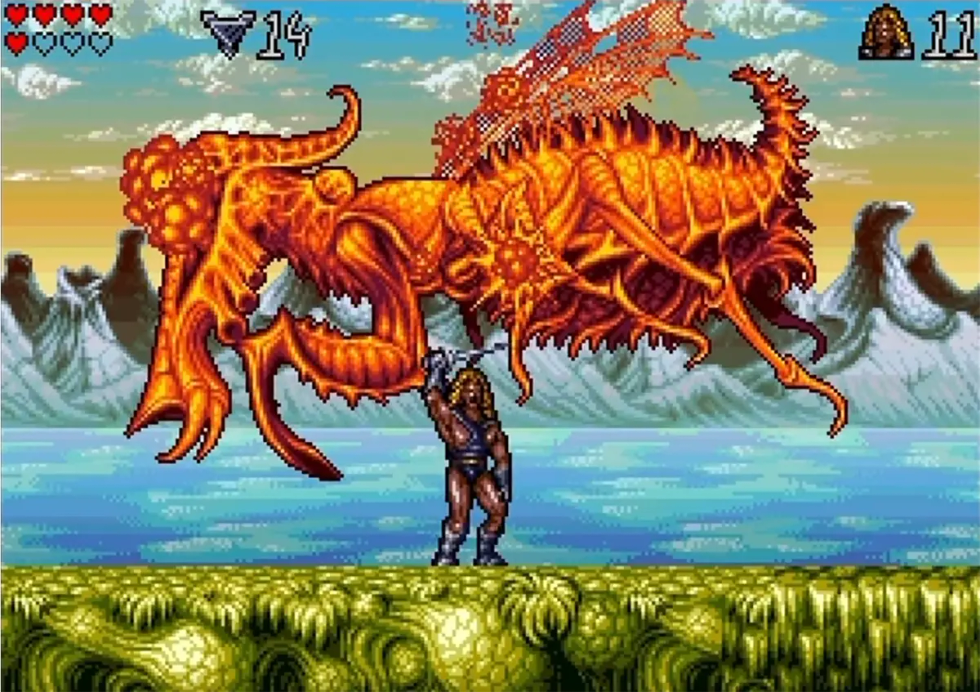
Are we sure this is running on an Amiga?
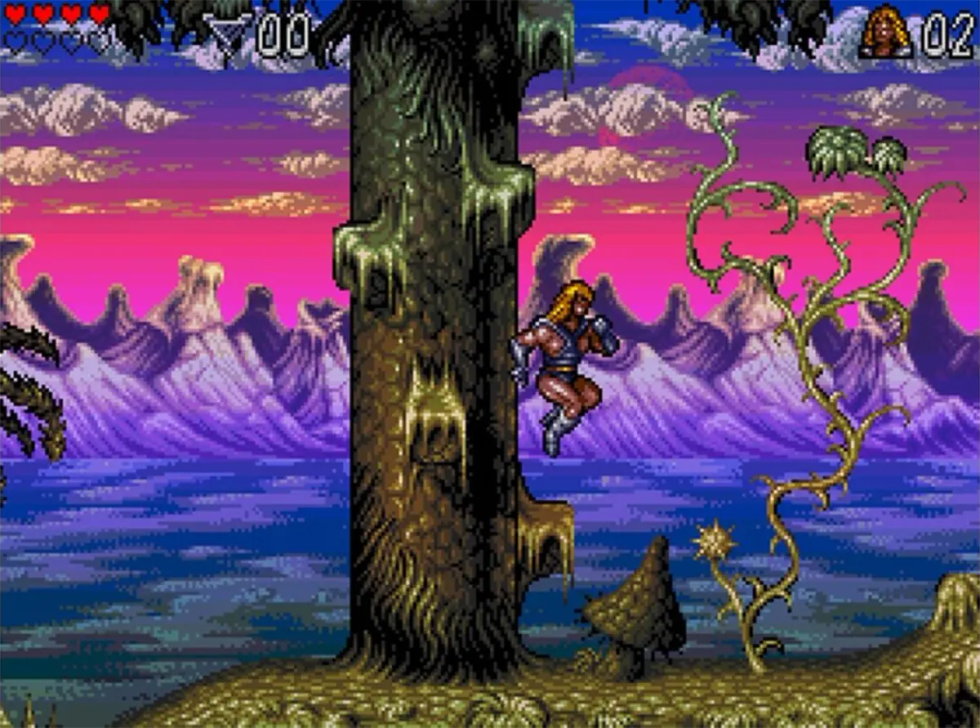
Technically, Lionheart is still astonishing. It remains one of the most impressive-looking games ever released for OCS/ECS Amiga machines, and even when compared with later AGA titles, very few games can match its overall visual impact.
The presentation already makes its ambition clear. The backgrounds are rich, Valdyn is animated with unusual care, the dragon appears with almost cinematic elegance, and even the short pseudo-3D sequence leading to the armor chest feels designed to make players wonder how much more the Amiga still had to give.
Once the game begins, the impact becomes even stronger. The opening stage shows incredible perspective parallax, with depth and movement that give the scenery an almost arcade-like presence. The colors feel richer than expected, the sprites are large and readable, and the animation of both Valdyn and the enemies gives the game a remarkable fluidity.
Comparisons with Shadow of the Beast and Jim Power come naturally, since both games built much of their identity around technical spectacle. But Lionheart feels more balanced. It is not only a showcase. Its graphics are not there just to impress, but to build a coherent, dense, readable fantasy world full of atmosphere.
Henk Nieborg’s pixel art is among the finest ever seen on Amiga. Forests, ruins, lava, huge creatures and layered backgrounds create a powerful fantasy identity that is still recognizable within seconds.
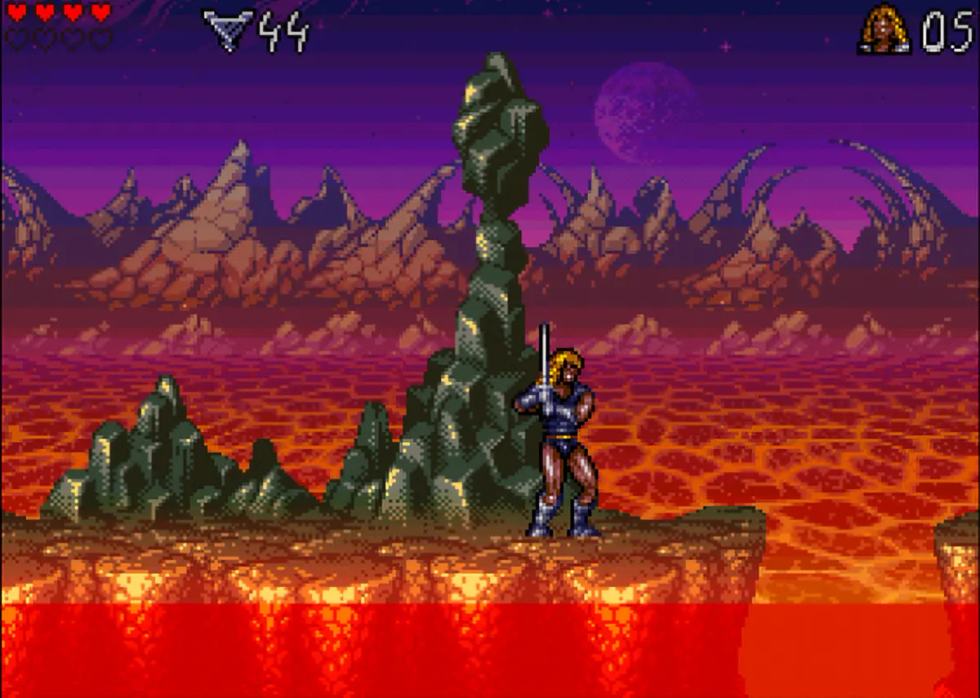
Epic, crystal-clear music
The audio side works at the same level. Matthias Steinwachs’ soundtrack has an epic, clean and crystalline tone that fits the adventure perfectly. It does not merely accompany the action. It gives Valdyn’s journey a sense of scale, making each area feel like part of a larger fantasy world.
The music is melodic without becoming intrusive, dramatic without feeling heavy. The Amiga had no shortage of memorable soundtracks, but Lionheart belongs to that special group of games where graphics and sound clearly push in the same direction. The result is a compact, powerful audiovisual identity.
The sound effects are less central than the music, but they support combat, jumps and impacts well. As a whole, the audio presentation remains one of the reasons Lionheart feels bigger than its genre.
Did Thalion forget the gameplay?
No, and this is where Lionheart separates itself from many technically impressive Amiga games that were weaker to actually play. Thalion did not only flex its technical muscles. It built an action platformer that still feels good in the hands.
Valdyn controls precisely, movement is fluid, and the sword combat has a simple but satisfying rhythm. The game demands attention, memory and timing, especially in later sections, but it rarely feels messy or unfair. It is tough, sometimes strict, but not built only around frustration.
The option to use a two-button controller is especially important, with one button for jumping and another for sword attacks. On Amiga, that was not a small detail. Here it makes a real difference, bringing the controls closer to the comfort of the best console action platformers of the time while keeping Lionheart’s European identity intact.
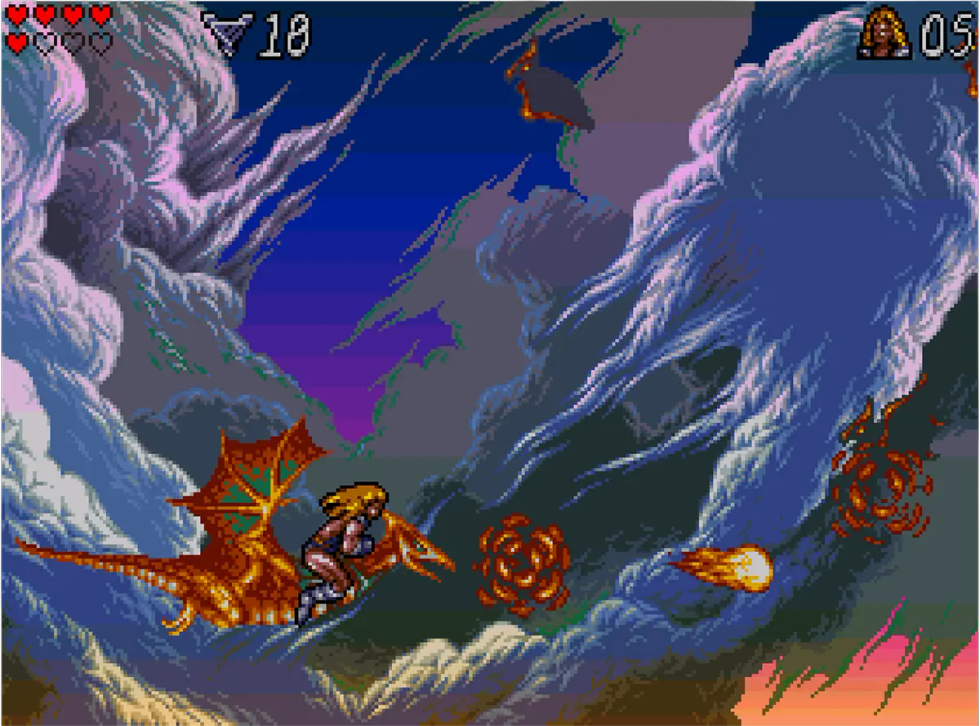
Variety also helps. Alongside platforming and combat, there are large boss encounters and a memorable shoot ’em up sequence where Valdyn rides his dragon. It remains one of the most spectacular moments in the game, a sudden shift in style that still feels perfectly aligned with the fantasy tone.
Lionheart does not truly reinvent the formula. If there is a limitation, it is this: beneath the exceptional presentation lies a fairly traditional action platformer. But the execution is so assured that this weakness never becomes a serious problem. It plays well, looks extraordinary and constantly makes you want to see what comes next.
Lionheart today
Playing Lionheart today means returning to a game that clearly belongs to its time, but does not live only through nostalgia. The difficulty is high, some sections require precision and memorization, and the design does not have the flexibility of later productions. Yet its appeal remains remarkably strong.
The reason is simple: Lionheart understood the Amiga deeply. It did not try to pretend the machine was a Japanese console, an arcade board or a more powerful PC. It took the limits of Commodore’s hardware and turned them into style. Color, parallax, animation, music and rhythm all worked together to create something unique.
It is easy to imagine Lionheart standing proudly beside many better-known 16-bit console productions of the period. In some moments, for sheer visual impact, it could even evoke the arcade imagination of the time. Not because it was technically the same as an arcade game, but because it had the ambition, screen presence and sense of spectacle.
Within Amiga history, Lionheart remains essential. Not just a technical demo, not just “the best graphics on Amiga”, but one of the rare cases where technique, art and playability truly meet.


Reader memories
Comment on the article and join the discussion.
Comment rulesLog in or register to leave a comment.
Create your account
Loading comments...