



Monkey Island 2: LeChuck’s Revenge
The sequel that raised the bar for LucasArts adventures: richer, sharper, more unpredictable and still one of the finest point-and-click games ever made.
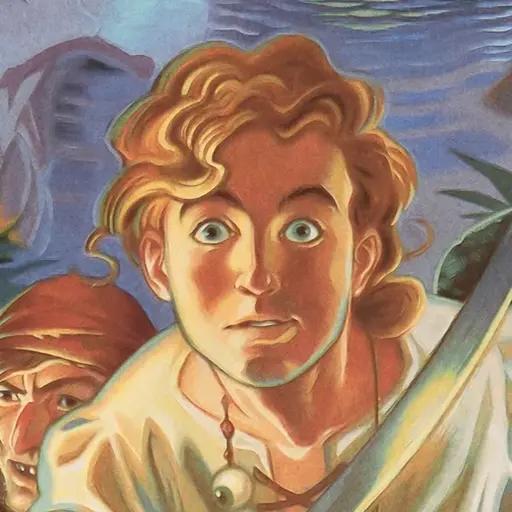
A huge pit, Guybrush Threepwood hanging from a rope, and Elaine Marley climbing down to rescue him. Before doing so, of course, she wants to know how he managed to get himself into trouble once again. That is how the sequel to the wonderful The Secret of Monkey Island begins. And as hard as it may be to believe, LucasArts somehow managed to improve on a game that was already close to perfect.
After the introduction, with two charming little monkeys dancing to the main Monkey Island theme, the adventure begins with Guybrush sitting around a campfire with two pirates, once again forcing them to listen to the story of how he defeated and killed the ghost pirate LeChuck.
Once the tale is over, Guybrush heads toward the heart of Scabb Island, where he meets Largo LaGrande for the first time. Largo is a bad-tempered pirate loyal to LeChuck, and he has placed the island under embargo. After a hilarious scene in which Guybrush is robbed of everything he owns, the adventure truly begins.
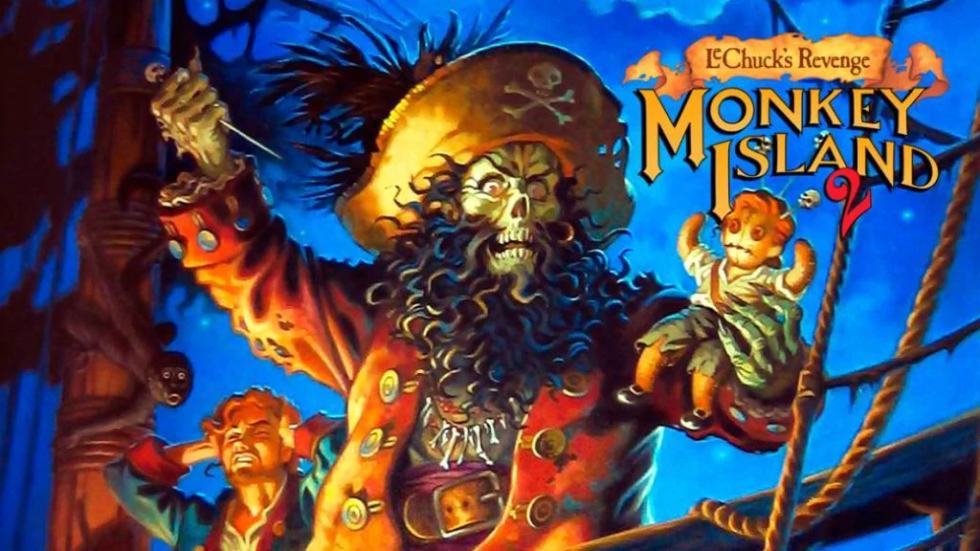
This time the goal is to find the legendary treasure of Big Whoop. Needless to say, it will be anything but simple. Thanks to his usual mixture of confidence and naïveté, Guybrush makes the serious mistake of showing Largo LeChuck’s living beard as proof of his victory. Largo takes it from him, uses it in a voodoo ritual, and the fearsome ghost pirate returns to life — or something very close to it — more eager than ever to take revenge on his sworn enemy.
All while Guybrush, blissfully unaware, continues to cause disasters wherever he goes.
Every location in Monkey Island 2 stays with you. Everything is wonderfully charming, and the pirate atmosphere can be felt in every corner of the game. Even decades later, sitting in front of a PC still feels like travelling back to 1991, the year Ron Gilbert’s final LucasArts adventure was released before he left the company.
Everything feels almost impossibly well judged. The characters are unforgettable, from returning faces such as the Voodoo Lady and the ever-absurd Stan, to new arrivals like the unfortunate Wally, the charismatic Captain Dread, the unbearable librarian of Phatt Island and many others best discovered directly in the game.
The location design is just as strong. The 256-colour VGA version is a joy to look at, but the Amiga version also delivers an impressive technical result. Despite its 32 colours on screen — purists may note that the effective number is slightly higher thanks to colours used for inventory objects — the difference is far less dramatic than one might expect.
Of course, some background animations and parallax effects were lost in the conversion, but expecting much more from Commodore’s 7 MHz Motorola-based machine would have been unfair. The Amiga was beginning to show its limits, especially in the way loading times and general slowness affected the rhythm of the adventure. It is still better than Indiana Jones and the Fate of Atlantis in this respect, but playing it on at least an Amiga 1200 makes the experience much smoother and faster.
The same kind of comparison applies to the audio. In terms of raw sound quality, the Amiga still has plenty of character, but on MS-DOS the famous iMUSE system does excellent work, assigning each location its own musical accompaniment and adding a series of sound effects not present on Commodore’s machine.
So, if you want the fullest experience, the choice is fairly clear. On Amiga, unless you have a hard disk, things can become frustrating quite quickly. But if you are truly nostalgic and changing two or three disks just to load an animation or a short musical cue does not scare you, then good luck.


Beyond whether you enjoyed the later entries in the series or not, Ron Gilbert’s departure represented a turning point for Monkey Island, and not a positive one. The following sequels marked a clear step back in both story and atmosphere, especially the weak fourth chapter, which effectively became the tombstone of the saga for many fans.
Telltale’s Tales of Monkey Island was more respectable, and you can feel the hand of Dave Grossman, one of the key figures behind the first two games. But most long-time fans continued to wait for the true third chapter from the one and only father of the series.
Monkey Island 2: LeChuck’s Revenge is, as said at the beginning, probably the best chapter in the series. Its jokes, strange characters, absurd situations and brilliant puzzles make it impossible not to love. For anyone who has never played it, the advice is simple: find a copy as soon as possible. You will be doing yourself a favour.
And if you have never approached the series at all — seriously, where have you been? — recover the wonderful first chapter as well. The others are far less essential.
Guybrush’s word.

Reader memories
Comments, memories and points of view stay here, beside the article.
Comment rulesLog in or register to leave a comment.
Leave a comment
Create your account
Loading comments...