


Metro City comes home
When it was released in 1989, Final Fight was the game that redefined the beat ’em up genre. Capcom took the side-scrolling formula made famous by Double Dragon, made it more physical, more readable and more spectacular, then built around Metro City an urban world of gangs, trash cans, knives, iron pipes, subway stations, dirty alleys and endless punches.
Three years later, in 1992, the Sharp X68000 conversion brought that world to one of Japan’s most fascinating and almost mythical computers. And it is on Sharp’s machine that Final Fight found one of its most convincing home versions.
The X68000 version does not need to reshape the game. It does something simpler and harder at the same time: it tries to bring all the appeal of the Final Fight arcade experience into Japanese homes. Same protagonists, same structure, same Capcom street-brawl tone, same desire to push you through the city while beating up everything that moves.
Cody, Guy and Haggar fight together
Jessica, daughter of mayor Mike Haggar and Cody’s girlfriend, is kidnapped by the Mad Gear gang. Haggar does not call the police. He takes off his jacket, rolls up his sleeves and goes down into the streets of Metro City together with Cody and Guy. It is a simple story, straight from an 80s action movie, but it fits the genre perfectly.
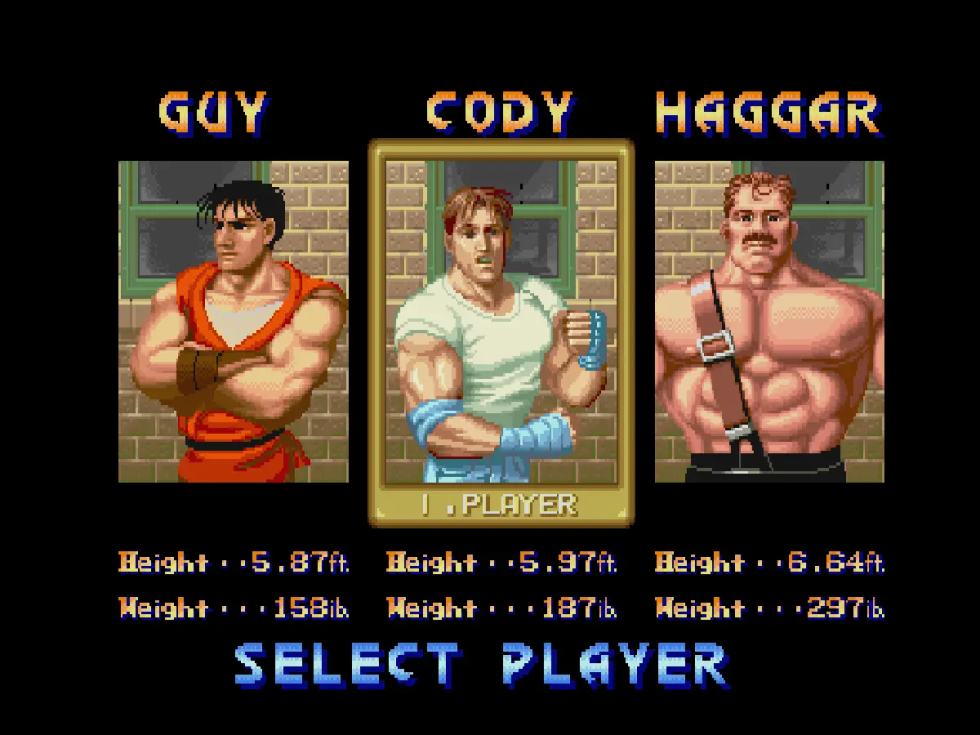
Cody is the most balanced character, fairly quick and powerful, and also my personal favorite. Guy is faster, more agile and more technical. Haggar, on the other hand, is slow and extremely heavy, but devastating when he manages to grab his enemies. Final Fight’s strength is also here: three characters who are immediately recognizable and easy to read without complex statistics. A few minutes are enough to understand who best fits your style.
The structure, as expected, is classic: you move from left to right, fight waves of enemies, pick up weapons and food to restore health, then face the usual end-of-stage boss. Final Fight works because every hit has weight. Punches feel solid, throws interrupt the rhythm, and weapons temporarily change the way you manage each fight. Every character has a special move, but using it costs energy. It is not as refined as the one-on-one fighting games Capcom would soon bring to global success. It is rougher, more direct, but it still has remarkable physicality today.
The Sharp X68000 magic
The Sharp X68000 was the right computer to reproduce the magic of the arcade. Sharp’s machine, built around the Motorola 68000 CPU, had a strong reputation for arcade conversions, especially Capcom productions. Final Fight is one of the clearest examples: it is not perfect, and it is not identical to the coin-op in every detail, but it is surprisingly close in overall impact.
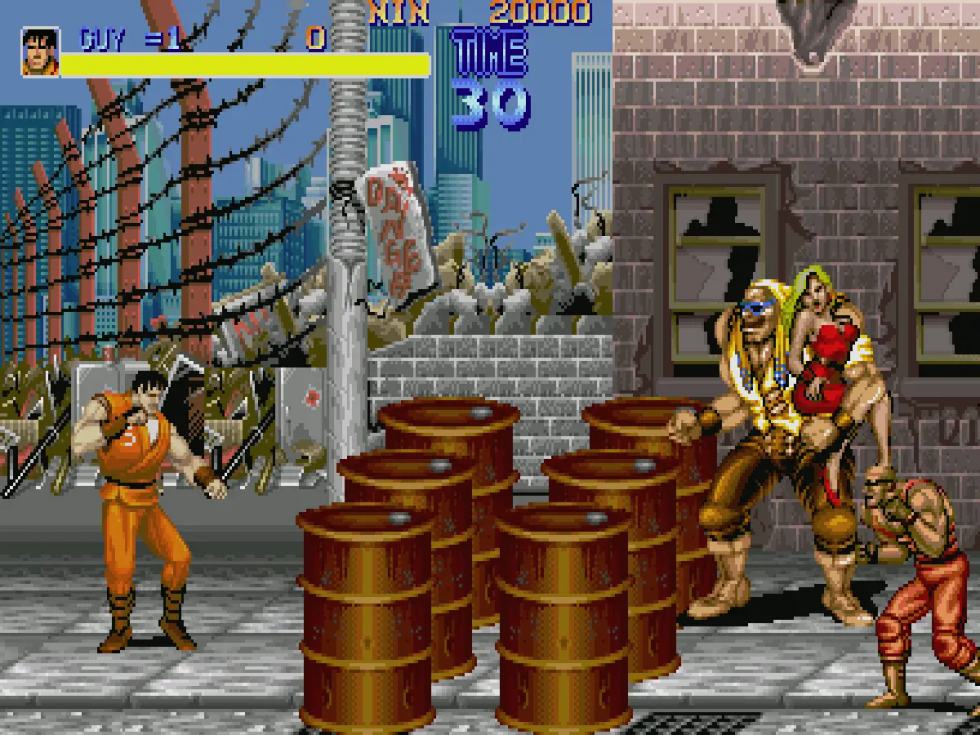
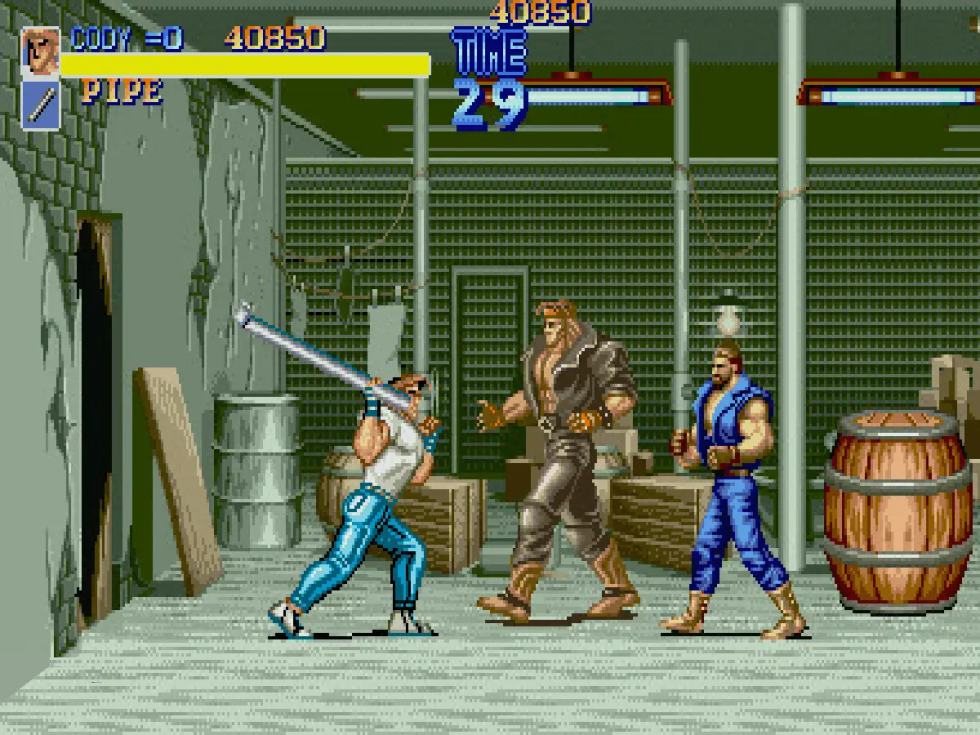
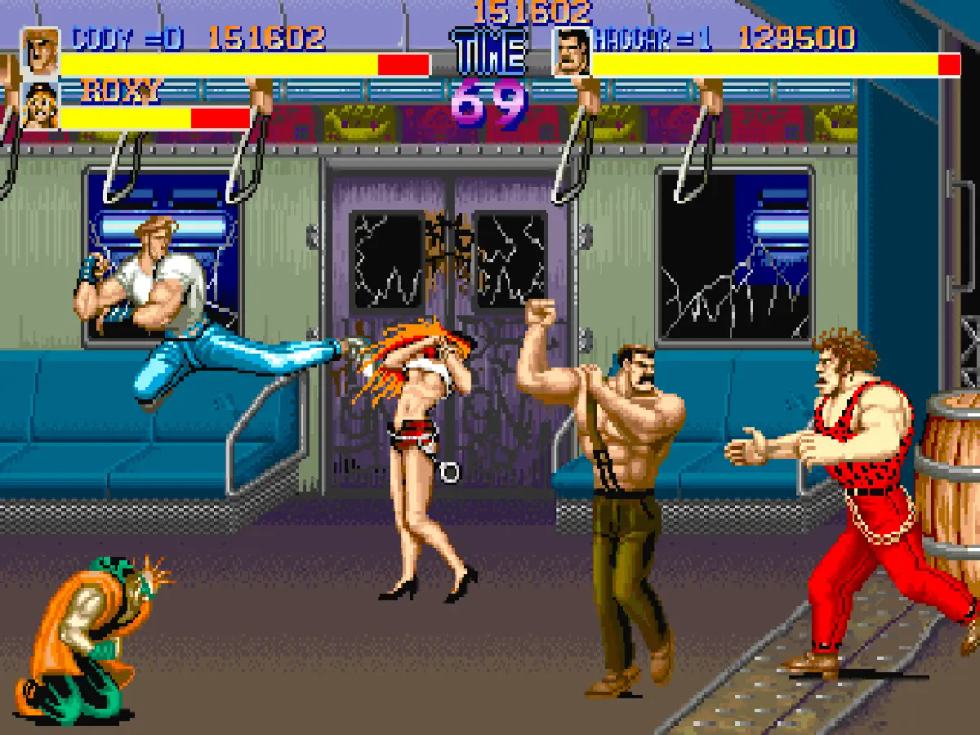
Graphically, the conversion preserves much of the arcade’s strength. The sprites are large, recognizable and well animated. The backgrounds keep the dirty urban flavor of Metro City, with a level of fidelity that was far from guaranteed on home machines of the time. The game also includes several video options, including different resolution modes, confirming the hardware-enthusiast care typical of many X68000 productions.
The most obvious difference from the arcade original is the number of enemies on screen. Compared with the coin-op, the X68000 has to reduce the simultaneous number of opponents quite noticeably, and in some moments the fight feels slightly less crowded. But the general feeling remains extremely strong. Colors, character size, hit impact and visual rhythm still communicate Final Fight in a fully convincing way.
The sound of the punches
Sound also contributes a lot to the success of this conversion. The X68000 version offers an effective soundtrack, with the possibility to choose between the machine’s internal sound and, where supported, MIDI solutions. Some editions were also accompanied by a CD soundtrack with remixed tracks, a detail that says a lot about the audience this release was aimed at: enthusiasts willing to treat a home conversion almost like a collector’s item.
Final Fight’s music is not just background noise. It gives rhythm to progression, marks the different parts of the city and keeps that constant street-fight tension alive. The sound effects are dry, direct and functional: punches, screams, impacts and objects destroyed by blows. There is no unnecessary polish, and none is needed. Metro City has to sound dirty, hard and immediate.
A conversion to play, not only to admire
The most important point is that Final Fight on X68000, three years after the arcade release, still works as a game. It is not just a technical demonstration made to say, “look how close this is to the coin-op.” The controls respond very well, the pace remains high, and two-player co-op is present, changing the experience completely, just like in the original.
The difficulty remains severe. Final Fight is an arcade beat ’em up, and it feels like one. Enemies surround you, hit you from behind, abuse their numerical advantage and force you to manage space, throws and special attacks carefully. It is not a game designed to flow easily. It is designed to consume credits, and it demands memory and attention.
That said, the formula works because it is simple, but effective. Every element is understandable, every character has a role, and every stage adds a change of setting and rhythm. The game can feel repetitive through modern eyes, but it remains one of the best examples of beat ’em up design from that era.
Final Fight X68000 today
Today, Final Fight on Sharp X68000 is interesting for two reasons. The first is obvious: it remains the best way to play one of the most important beat ’em ups ever made on period home hardware. The second is cultural: it perfectly explains what the X68000 represented in early 1990s Japan.
It was the dream computer for those who wanted the arcade at home. Expensive, niche, almost mythical outside Japan, but capable of hosting conversions that seemed to belong to another category compared with many other home machines of the time. Final Fight is one of the titles that best explains that reputation.
It is not identical to the coin-op in every single detail. There are compromises, especially in enemy density. But it is an excellent, respectful and powerful conversion, able to preserve almost all the urban physicality of Capcom’s classic. And today, for retro-gaming fans, it has a double charm: the charm of Final Fight and the charm of the Sharp X68000.
Reader memories
Comment on the article and join the discussion.
Comment rulesLog in or register to leave a comment.
Create your account
Loading comments...