


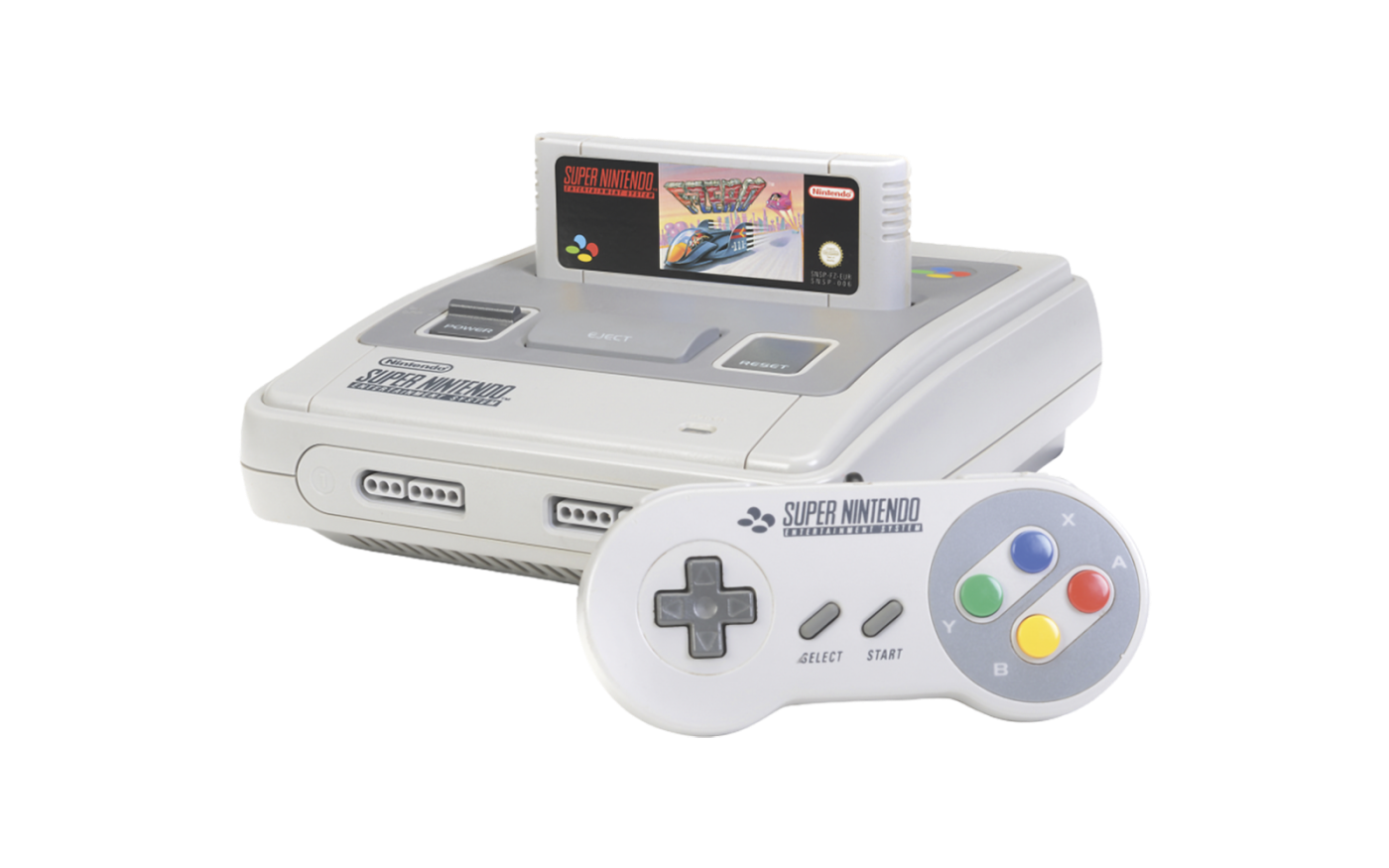


Super Nintendo
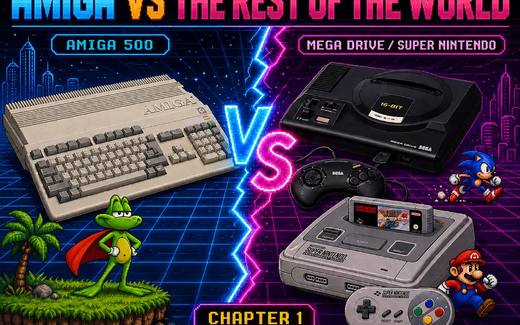
Launched by Nintendo in Japan in 1990 as the Super Famicom, the Super Nintendo arrived in North America in 1991 and in Europe in 1992. It was the successor to the NES and immediately found itself at the centre of the 16-bit battle with the Sega Mega Drive, which was already well established on the market. In Italy it spread during the early 1990s, supported by the strength of Nintendo’s brands and by a carefully curated catalogue, more focused on overall quality than on sheer quantity.
The console used a Ricoh 5A22 CPU, derived from the 65C816, with a 16-bit architecture and a variable clock speed of up to around 3.58 MHz. It featured 128 KB of main RAM and used cartridges, often enhanced with additional chips such as the Super FX. Graphically, it offered a 32,768-colour palette, up to 256 colours on screen in its main modes, a typical resolution of 256×224 pixels, and the famous Mode 7, used for rotation and scaling of a graphical plane. Audio was handled by the Sony SPC700 chip, providing eight sampled channels with a very distinctive tone.
Worldwide sales are generally reported at around 49 million units. The Super Nintendo remains one of the most balanced platforms of its era, capable of combining technology, art direction and game design. Its legacy lives through Super Mario World, The Legend of Zelda: A Link to the Past, Super Metroid, F-Zero, Donkey Kong Country, Street Fighter II, Final Fantasy VI and Chrono Trigger.