




New York, Christmas, mitochondria and nightmare
By the late 1990s, the PlayStation had become the ideal ground for more adult, cinematic and experimental games. The success of Resident Evil had proved that horror could work extremely well on console, while Final Fantasy VII had pushed the Japanese RPG toward a new narrative and spectacular dimension for the Western mainstream. Between these two forces, Squaresoft released Parasite Eve, a strange, elegant and hard-to-classify title.
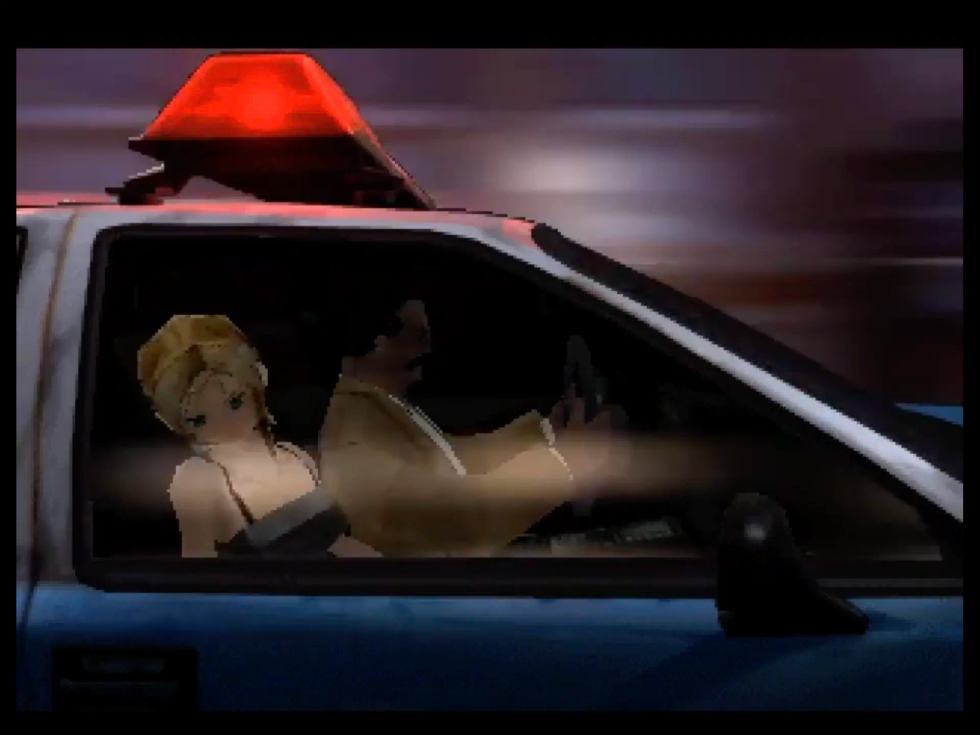
Released in 1998 for PlayStation, Parasite Eve is inspired by Hideaki Sena’s novel of the same name, but works as a sort of video game sequel to it. The setting is far removed from the fantasy worlds usually associated with Squaresoft: we are in New York, during the Christmas holidays, in an urban context that feels recognisable, cold, almost real. The protagonist is Aya Brea, a New York police officer caught in a terrifying event during an evening at the opera in Carnegie Hall.
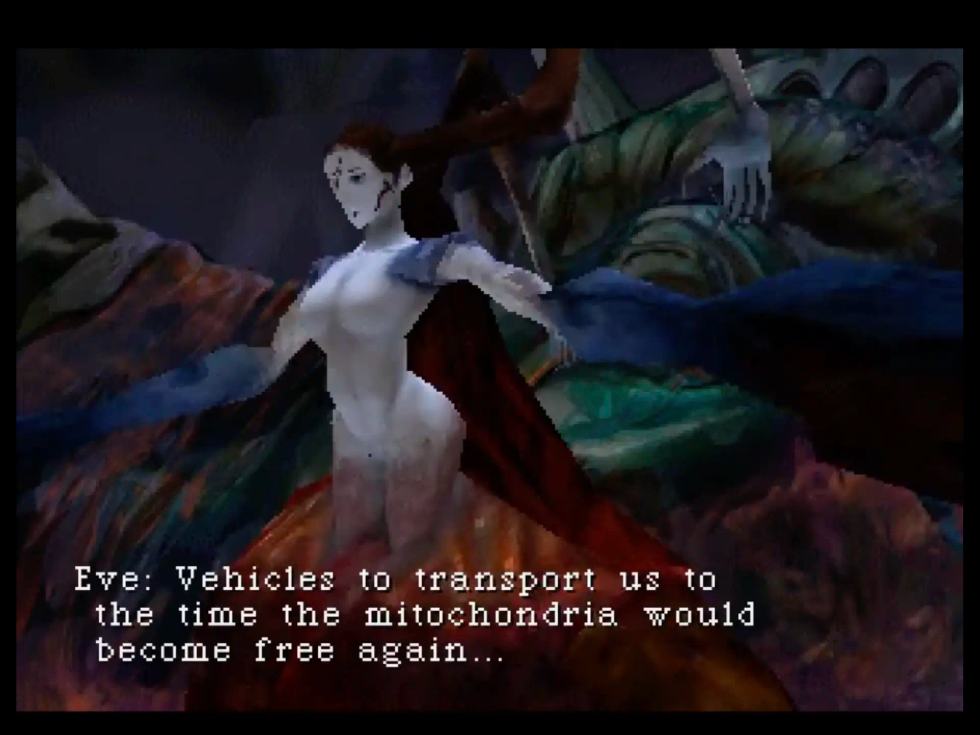
From there, the game falls into a biological nightmare of spontaneous combustion, mutations, experiments, sentient mitochondria and bodies transforming into monsters. Parasite Eve does not rely on gothic horror or the undead, but on something more clinical and disturbing: the fear that the human body may already contain its own enemy.
Squaresoft outside its comfort zone
The most interesting thing about Parasite Eve is that it feels like a Squaresoft game and, at the same time, not like one at all. There is an RPG structure, with statistics, levels, experience points, equipment, abilities and resource management. But there are no villages, no large party, no fantasy overworld and no long traditional dungeons. Everything is more focused, tense and cinematic.
The adventure is divided into days, almost like chapters of a thriller. Aya moves through iconic or recognisable New York locations: theatres, streets, parks, laboratories, museums and hospitals. Progression is fairly guided, but it works because the game has the rhythm of an investigation. You never feel as if you are inside an open world; instead, you are inside a story that slowly tightens around the protagonist and the mysterious Eve.
It is a structure that may feel limited today, but at the time it gave the game a very precise identity. Parasite Eve did not want to be Final Fantasy with biological monsters, nor Resident Evil with levels and experience points. It was something in between: an RPG thriller designed to take advantage of CD-ROM storage, pre-rendered sequences, detailed backgrounds and the cinematic taste of the first PlayStation.
Combat between action and tactics
The combat system is one of the game’s most original elements. Battles are not completely turn-based, but they are not pure action either. Aya can move freely within the combat area, avoid enemy attacks and wait for the ATB bar to fill before performing actions: shooting, using items, activating special powers or changing tactics.
This creates a distinctive rhythm. You have to position yourself, read enemy animations, understand weapon range and choose the right moment to attack. Pistols, rifles and other offensive tools have different reach, rate of fire and characteristics, while Aya’s mitochondrial powers allow her to heal, strengthen herself or inflict specific types of damage.
The RPG component emerges especially in equipment management. Weapons and armour can be modified, improved and customised by transferring bonuses from one item to another. It is less immediate than it first appears, but very interesting, because it allows you to gradually build your own version of Aya. It is not as deep as a major traditional JRPG, but it is enough to give weight to the player’s decisions.
The result is a combat system that still feels quite unique today. It is not always perfect and can sometimes feel a little stiff, but it clearly distinguishes Parasite Eve from both the survival horror games of the period and more traditional RPGs.


A different kind of protagonist
Aya Brea is one of the reasons why Parasite Eve remained in memory. She is not a fantasy warrior, not a chosen student, not a character built only around aesthetics. She is a young police officer, determined, vulnerable but not fragile, drawn into a story that concerns her in an increasingly personal way.
The game works a lot on her relationship with Eve and with the biological mystery at the heart of the plot. Aya is not simply the heroine who must stop the monster: she is part of the enigma. Her body, her past and her resistance to what is happening become central narrative elements. This makes the adventure more personal than many horror games of the same period.
Of course, the writing remains a product of its time. Some dialogue is sparse, certain narrative turns move quickly and the scientific language often slides into very free science fiction. But the atmosphere works. Parasite Eve makes you believe in its world even when it exaggerates, because it always maintains a serious, nocturnal and restless tone.


PlayStation aesthetics at their best
Visually, Parasite Eve is one of those games that represents the charm of the PlayStation very well. The pre-rendered backgrounds create a dark and stylised New York, suspended between urban realism and biological nightmare. The lights, interiors, snowy streets, theatres and public spaces have an almost cinematic framing, very different from the bright fantasy worlds Squaresoft had accustomed many players to.
The 3D models inevitably show their age today, but at the time they worked beautifully. Aya and the enemies move through detailed environments, with a strong contrast between relatively realistic settings and deformed, organic, disturbing creatures. The mutations are among the most memorable elements: animals, people and biological forms transform in grotesque ways, often accompanied by FMV sequences that make good use of the spectacular taste of the period.
The CG scenes are an essential part of the game’s identity. They are not just visual rewards, but moments of shock, atmosphere and storytelling. Parasite Eve uses the CD-ROM to build an experience that felt modern, adult and almost like an interactive film, without giving up its game structure.
Cold, elegant, restless music
Yoko Shimomura’s soundtrack is one of the game’s greatest strengths. It does not accompany the action with melodies that are always immediate or heroic, but builds a particular tension made of electronics, piano, suspended atmospheres and more dramatic moments. It is less “singable” than the great Square themes of the period, but perfectly aligned with the tone of the game.
The main theme has something both melancholic and clinical, while the battle tracks maintain a nervous, almost artificial drive. The audio does a lot to distinguish Parasite Eve from other survival horror games of the period: there is not only fear, but also elegance, coldness and scientific mystery.
The sound effects do their job, especially with the creatures and transformation scenes, even if they do not always have the physical impact of Capcom’s best horror productions. Overall, however, the sound department is extremely strong, coherent and still recognisable today.
A cult game rather than a universal classic
Parasite Eve is not a perfect game. Progression is linear, some sections are weaker than others, exploration does not have the density of the best survival horror titles and the combat system, while original, can feel slightly cumbersome for those expecting immediate action. Its length is also not huge by RPG standards, although the EX Game mode and additional content provide reasons to continue.
But these limits do not erase its strength. Parasite Eve is remembered because it had a rare personality. In a period full of experiments, it still managed to feel different: urban, adult, biological, suspended between police thriller, horror and role-playing game. It did not simply try to imitate the successes of the moment, but filtered them through Squaresoft’s own sensibility.
It is also one of those titles that perfectly captures the PlayStation as a cultural machine. Not just a console for platformers, racing games or fighting games, but a space for hybrid, strange, narrative experiences that would have been difficult to imagine in the same form on the previous generation.


A night twenty-five years long
Playing Parasite Eve today means returning to a very specific moment in Japanese video games: when Squaresoft could afford to take risks, when CD-ROM seemed to open infinite possibilities and when PlayStation was the meeting point between arcade, cinema, RPG and horror. Not everything has aged in the same way, but the atmosphere remains incredibly powerful.
Aya Brea, Eve, Christmas in New York, the mutations, the battles suspended between tactics and action: these are elements that still distinguish the game from almost everything else. It is not the most famous title in the PlayStation library, nor the best-selling, nor the most universally celebrated. But it is one of those games that, once encountered, stays with you.
Parasite Eve is a cult game in the fullest sense of the term: not perfect, not easy to replicate, but with a voice of its own. And it is precisely that voice, cold and neon-lit, biological and cinematic, that still makes it one of the most fascinating experiences of the first PlayStation.

Reader memories
Comments, memories and points of view stay here, beside the article.
Comment rulesLog in or register to leave a comment.
Leave a comment
Create your account
Loading comments...