



When the arcade truly entered the living room
In 1992, Street Fighter II was already much more than a video game. In bars, arcades and shopping centres, it had become a collective ritual: coins placed on the cabinet to reserve the next challenge, groups of players gathered around the screen, endless arguments about who was stronger between Ryu, Ken, Guile or Chun-Li.
Capcom had found the perfect formula for the modern fighting game, turning a still-young genre into a discipline made of technique, reflexes, reading the opponent and mastering space.
When the Super Nintendo conversion arrived in homes, the effect was enormous. Until then, the arcade was still perceived as something superior, distant, almost unreachable. With Street Fighter II, however, the living room came closer than ever to the arcade. It was not a perfect replica, and it could not be, but it was close enough to change the very perception of what a home console could offer.
A conversion that felt like a statement
The SNES version of Street Fighter II: The World Warrior arrived at a decisive moment in the console war. The Mega Drive had speed, aggressive marketing and a more “arcade” image on its side, while Nintendo had to prove that the Super Nintendo was not only colours, Mode 7 and mascots. Bringing Street Fighter II home meant striking at the heart of the video game imagination of the time.
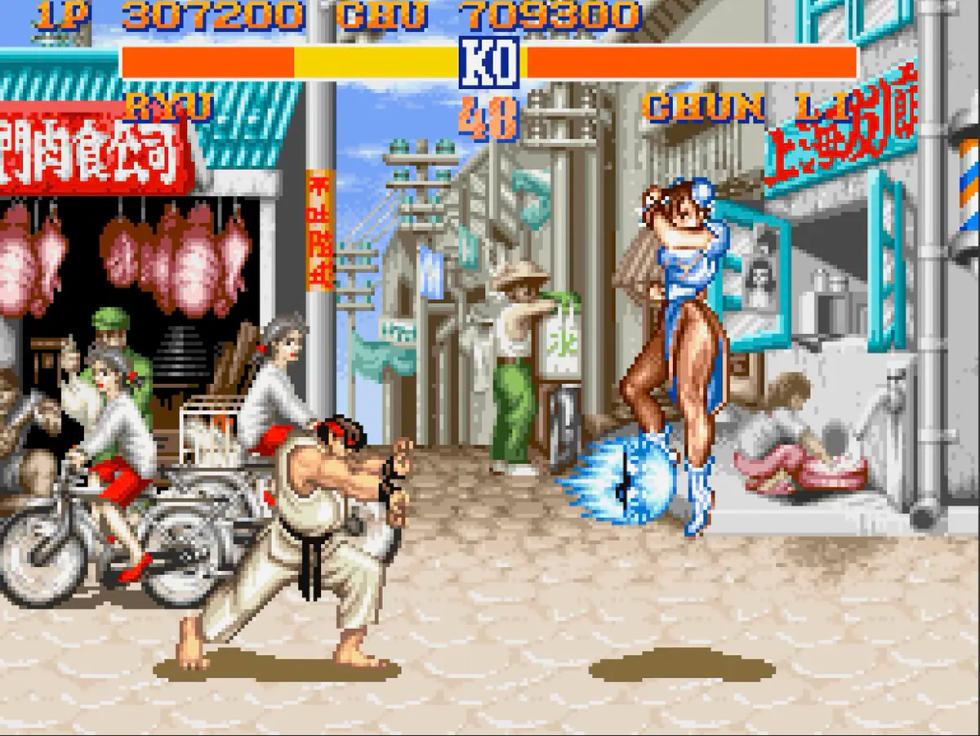
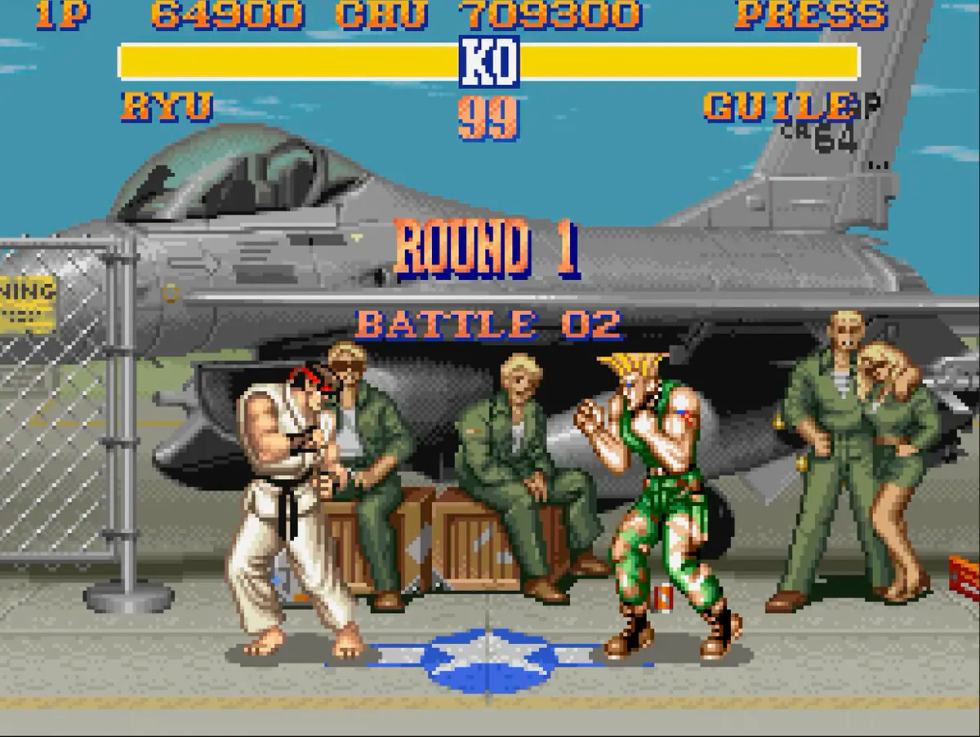
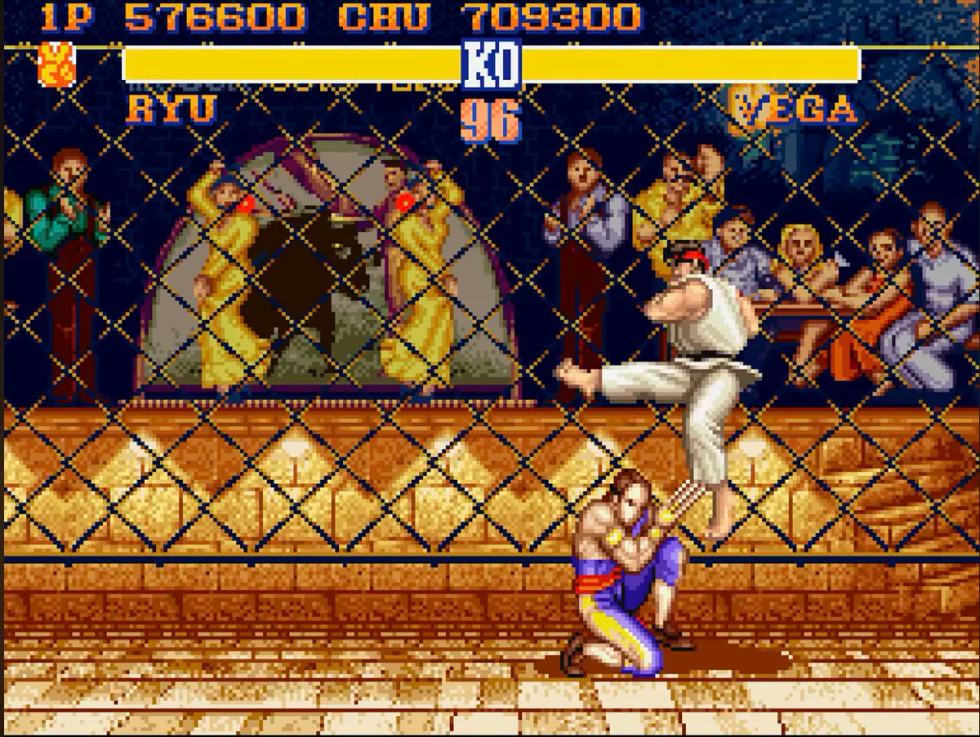
Capcom did an impressive job. The sprites are smaller than in the coin-op, some background details are simplified and the overall impact loses something in terms of screen presence, but the result remains remarkable for a home machine in 1992. The characters retain good definition, the main animations are smooth, the stages preserve their identity and atmosphere, and above all the game never feels like a pale imitation.
It is Street Fighter II, recognisable in its timing, moves, distances and the tension of its fights.
Eight warriors, a new language
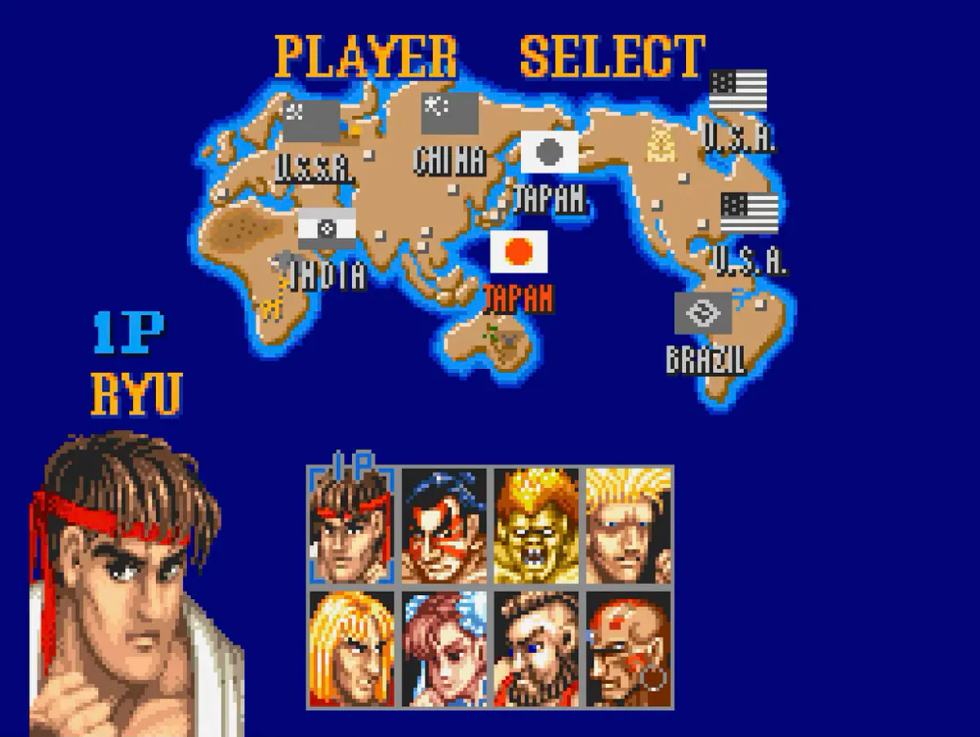
The strength of Street Fighter II was not only in its graphics or its faithfulness to the arcade. It was in its cast. Eight selectable characters, each with a completely different silhouette, rhythm and approach: Ryu and Ken as the technical foundation of the game, Chun-Li fast and unpredictable, Guile defensive and lethal, Blanka irregular, Dhalsim based on distance control, Zangief heavy and devastating in the right hands, E. Honda powerful and difficult to contain.
For the time, this was enormous variety. Each character forced you to learn the game again, not only in terms of special moves, but in terms of mentality. Street Fighter II taught players to observe, wait, provoke mistakes, punish the opponent and understand when to take risks. Behind the apparent immediacy of punches and kicks was a deep system, capable of growing together with the player.
This is where the SNES conversion hit the target: the feeling of combat was intact. The Super Nintendo controller, with its six available buttons across the face and shoulder inputs, was not an arcade stick, but it still adapted Capcom’s system in a credible way. After a few matches, Hadoken, Shoryuken and Sonic Boom became part of muscle memory.
Not perfect, but incredibly close
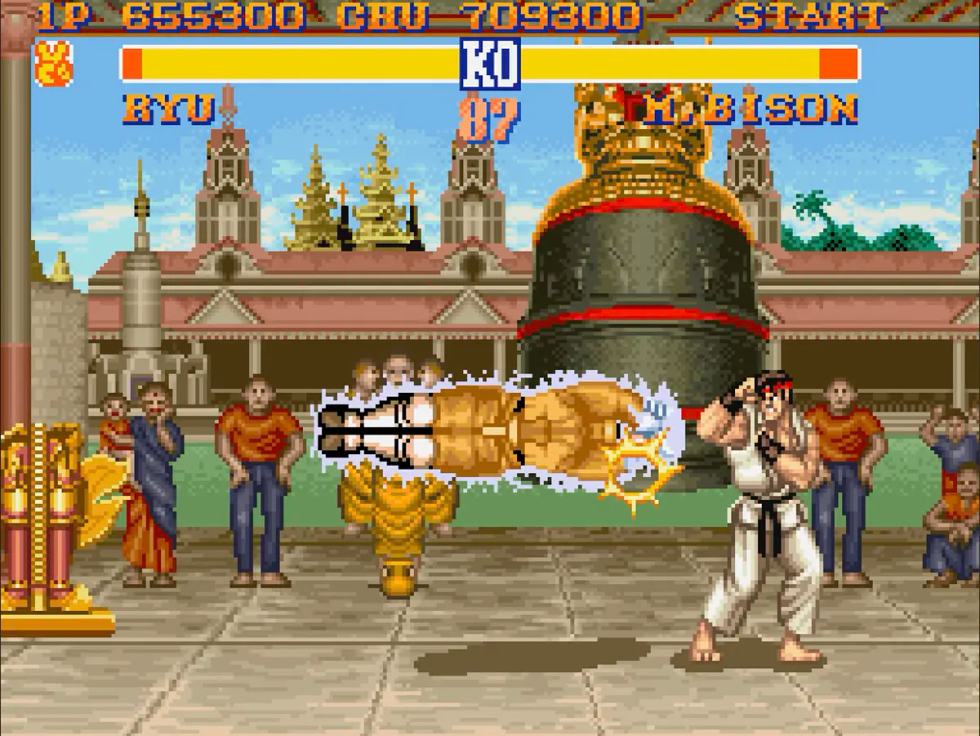
Played today, Street Fighter II on Super Nintendo inevitably shows its limits. The arcade version has more impact, larger sprites, more powerful audio and a different physical presence. Some voices are compressed, certain sound effects have less body and some backgrounds lose detail. This first version also does not yet allow players to use the four final bosses, a limitation that mattered at the time and would only be overcome by later editions.
And yet it would be unfair to judge it only by what is missing. The point is what it managed to bring home. The structure of the game, the overall balance, the rhythm of the matches and the tension of versus play are still there. Even without the technical perfection of the arcade cabinet, Street Fighter II for SNES delivers the most important part of the experience: the immediate desire to play “one more match”.
The sound follows the same logic. The music is reduced compared with the arcade version, but it remains instantly recognisable. The character themes keep their personality and accompany the fights well, even if the overall sound is less aggressive and less full than on Capcom’s original hardware. It is not the most powerful version to listen to, but in the domestic context of the time it worked beautifully.
The game that transformed home multiplayer
The two-player mode was the beating heart of the experience. Street Fighter II was not a game to “finish” and put away: it was a cartridge to leave inside the console for weeks, months, years. Two controllers and a friend were enough to turn the living room into a small arcade. Rivalries were born naturally: the player who always used Guile, the one who abused Blanka, the one trying to master Zangief, the one who spent hours learning the timing of the Shoryuken.
In this sense, longevity was enormous. It did not depend on levels, secrets or hidden content, but on the depth of the system. Every match could go differently. Every character had room for improvement. Every defeat seemed to teach something. That is one of the reasons why Street Fighter II had such a lasting impact: it was not only spectacular, it was naturally competitive.
A pillar of the 16-bit generation
Street Fighter II for Super Nintendo is one of those games that should not be remembered only as a successful conversion, but as an event. It was a cartridge capable of selling consoles, fuelling arguments, defining entire afternoons and changing the commercial weight of the fighting game genre. After its arrival, every console needed its own great fighting game. Every arcade conversion was measured against that threshold.
Every player knew what a quarter-circle, a hard kick or a well-timed throw meant.
Later versions would correct, expand and refine the formula: Street Fighter II Turbo would become faster and more complete, while Super Street Fighter II would expand the roster. But the first SNES conversion remains the one with the strongest historical impact. The one that took an arcade phenomenon and made it domestic without emptying it of its identity.
Today it is not the definitive version of Street Fighter II, but it is still one of the most important. And when telling the story of the Super Nintendo, few cartridges are more representative than this.
Reader memories
Comments, memories and points of view stay here, beside the article.
Comment rulesLog in or register to leave a comment.
Leave a comment
Create your account
Loading comments...