






Capcom
- Developer
- Publisher
- Manufacturer
Capcom is one of Japan’s most influential video game companies, central to arcade games, console action, fighting games and survival horror.
History
Capcom traces its roots back to 1979, when Kenzo Tsujimoto founded I.R.M. Corporation in Japan as a company involved in the manufacture and distribution of electronic game machines. Capcom Co., Ltd. was established in 1983, with a name derived from “Capsule Computers”, a term the company used to distinguish its arcade machines from the personal computers that were beginning to enter homes. In 1989, Capcom merged with Sanbi Co., Ltd., consolidating the corporate structure behind its international growth. Its historical base remained Osaka, an important city in Japan’s industrial and commercial culture.
The 1980s were the period in which Capcom built its identity. The company first made its name in arcades, where games such as Vulgus, 1942, Commando, Ghosts ’n Goblins, Gun.Smoke, Section Z, Bionic Commando and Black Tiger revealed a clear action philosophy: demanding games built around rhythm, strict collision, readable design and responsive controls. Figures such as Tokuro Fujiwara and Yoshiki Okamoto were central to defining Capcom’s character across arcade boards and home consoles. Famicom and NES development brought the brand into the home, while Mega Man, created in the late 1980s with the involvement of Akira Kitamura and Keiji Inafune, became one of the most recognizable icons of the 8-bit era.
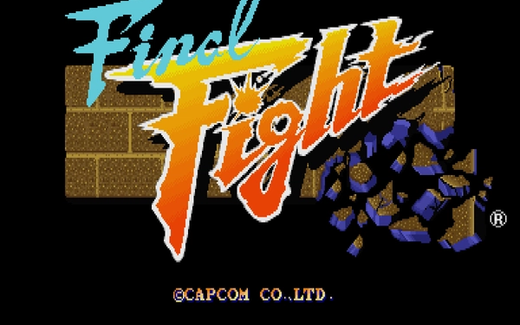
Capcom’s widest popular impact came between the late 1980s and early 1990s. Final Fight helped define the urban beat ’em up, while Street Fighter II, released in arcades in 1991, changed the history of competitive fighting games. With Ryu, Ken, Chun-Li, Guile and the rest of its cast, Capcom turned one-on-one combat into a technical, spectacular and social language, first in arcades and then at home through Super Nintendo, Mega Drive and later versions. At the same time, the CPS-1 and CPS-2 arcade boards supported a rich line of 2D action games: Captain Commando, Knights of the Round, The King of Dragons, Alien vs. Predator, Darkstalkers, X-Men: Children of the Atom, Marvel Super Heroes and the Versus series strengthened Capcom’s reputation as a master of arcade action.
During the 1990s the company proved it was not tied to one genre. Resident Evil, directed by Shinji Mikami and released for PlayStation in 1996, turned survival horror into a global phenomenon, combining genre cinema, resource management and a carefully staged haunted-house structure. Soon after came Dino Crisis, Breath of Fire, Rival Schools and, with the next generation, Devil May Cry, Onimusha, Viewtiful Joe, Phoenix Wright: Ace Attorney, Monster Hunter and Okami. Capcom’s history also includes major creators and producers such as Hideki Kamiya, Atsushi Inaba, Shu Takumi, Ryozo Tsujimoto and Jun Takeuchi, even if many of its best-known talents later left the company during the 2000s.
Capcom has gone through creative crises, overused sequels, revivals and major returns to form. Resident Evil 4 reshaped third-person action in 2005, Monster Hunter grew from a portable Japanese phenomenon into a global series, while Street Fighter, Resident Evil, Devil May Cry and Mega Man remain pillars of shared video game memory. Capcom’s legacy is that of a company able to move from the arcade to the living room, from 2D to 3D and from Japan to the world market, while keeping a clear idea of play at its center: precise control, strong characters, readable systems and spectacle that always remains tied to interaction.