



In 1994, SEGA put something on the market that still feels almost unreal more than thirty years later. Sega Channel for the Genesis was not just an accessory, and it was not a normal add-on service either. It was a digital game distribution system that could deliver data through television cable and load games directly into the console’s memory.
Every month, the catalog changed. Every time you turned it on, there could be something different waiting for you. Full games, demos, special content, modified versions and exclusive material arrived at home without a cartridge, without a box, without a manual, without any physical object to keep. For players raised on shelves full of cartridges, it must have felt almost like science fiction.
Technically, it was a remarkable experiment: compressed games, data delivered by cable, content rebuilt and loaded by hardware that had never been designed for that purpose. Historically, however, Sega Channel has become something even more interesting: a glimpse of a future that SEGA imagined before many others.
When the service shut down in 1998, much of that world seemed to disappear with it. Since there were no physical copies to preserve, many versions distributed through Sega Channel were left in a strange grey area: they had existed, some people had played them, but they did not survive in the same stable form as a retail cartridge. For years, a significant part of that material was believed to be lost.
Then came the work of the Video Game History Foundation.
Sega Channel: an idea born too early
Sega Channel anticipated concepts that are now completely familiar: digital distribution, rotating catalogs, subscription access, temporary content, exclusive versions. At a time when home internet was still far from becoming central to everyday life, SEGA tried to use an infrastructure that was already present in many homes: television cable.
The Genesis became a living, changing platform. It was no longer only a console fed by cartridges bought in shops, but a domestic terminal connected to a flow of content. In the mid-1990s, that was a powerful idea, perhaps even too advanced for the market that was supposed to receive it.
The most fascinating limit of Sega Channel was also its biggest problem: everything was designed to be temporary. A game arrived, loaded, was played and then disappeared. No physical support, no personal copy, no official public archive. When the service ended, what mostly remained was memory.
And the feeling that something important had passed by too quickly.
A trade show, a former SEGA executive and an unexpected discovery
The recovery story began in 2024, when the Video Game History Foundation came into contact with Michael Shorrock, former Vice President of Programming for Sega Channel, during an event dedicated to video game history.
That conversation revealed something crucial: Shorrock had preserved original material related to the service. Documents, correspondence, notes, presentations, media and data from the period when Sega Channel was still active. Not just memorabilia, but concrete traces of how a project that had long been known mostly through advertising, magazine articles and player memories actually worked.
At the same time, another key figure entered the story: Ray, known in the community as Sega Channel Guy. For years, he had been independently researching the service, contacting former people involved in the project and collecting surviving material. Among these materials were tape backups containing internal Sega Channel data.
The meeting between institutional preservation and community passion made it possible to rebuild an important part of that history. This was not only about “finding ROMs”. It was about understanding what Sega Channel really was, how it worked, how it was programmed, distributed and imagined by the people who built it.
144 ROMs brought back to light
The result of the project is remarkable: 144 ROMs connected to Sega Channel were recovered and preserved. These are not only full games, but also system ROMs, alternative versions, prototypes, internal builds, modified content and material that was never released on cartridge.
Among the most interesting recoveries are Garfield: Caught in the Act – The Lost Levels and The Flintstones, titles connected to the service that had remained for years in an almost ghost-like state. They existed in memories, lists and testimonies, but they were not easy to verify or play like normal commercial releases.


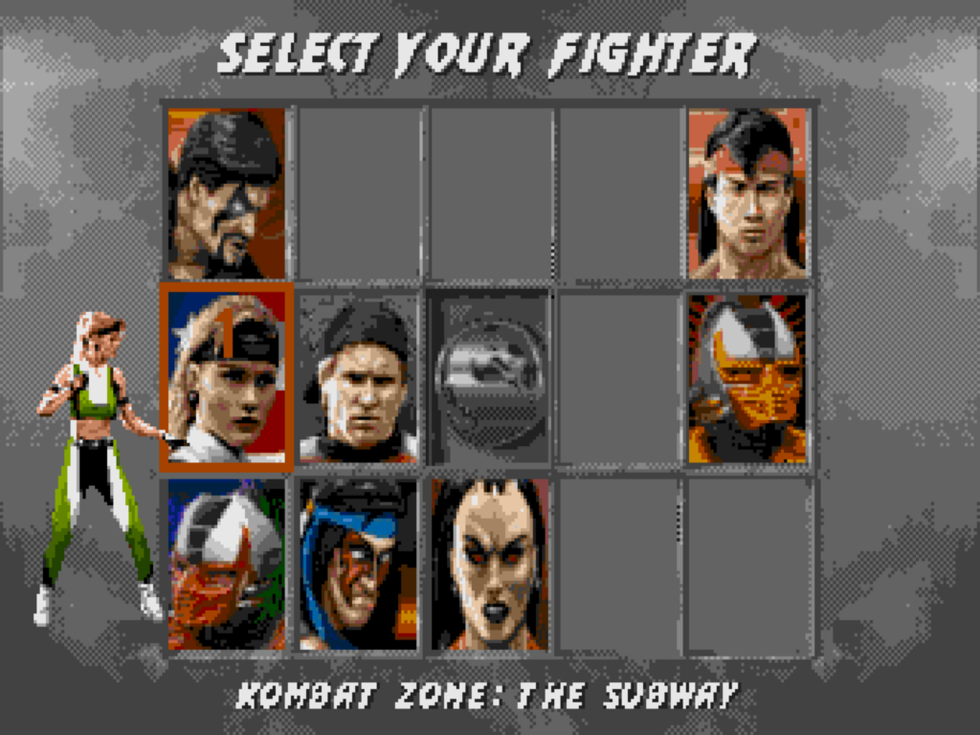
The recovery also shows something that is often forgotten: many Sega Channel games were not simply “the same games delivered by cable”. In several cases they were adapted, reduced or split in order to fit the technical limits of the service. Some content was cut, some versions were made lighter, and some games were organized differently from traditional cartridge releases.
This is where the discovery becomes especially valuable. It does not only recover software. It documents a series of technical and production compromises that show how people worked when digital distribution on consoles was still almost unexplored territory.
Web Blaster: a web browser for Genesis
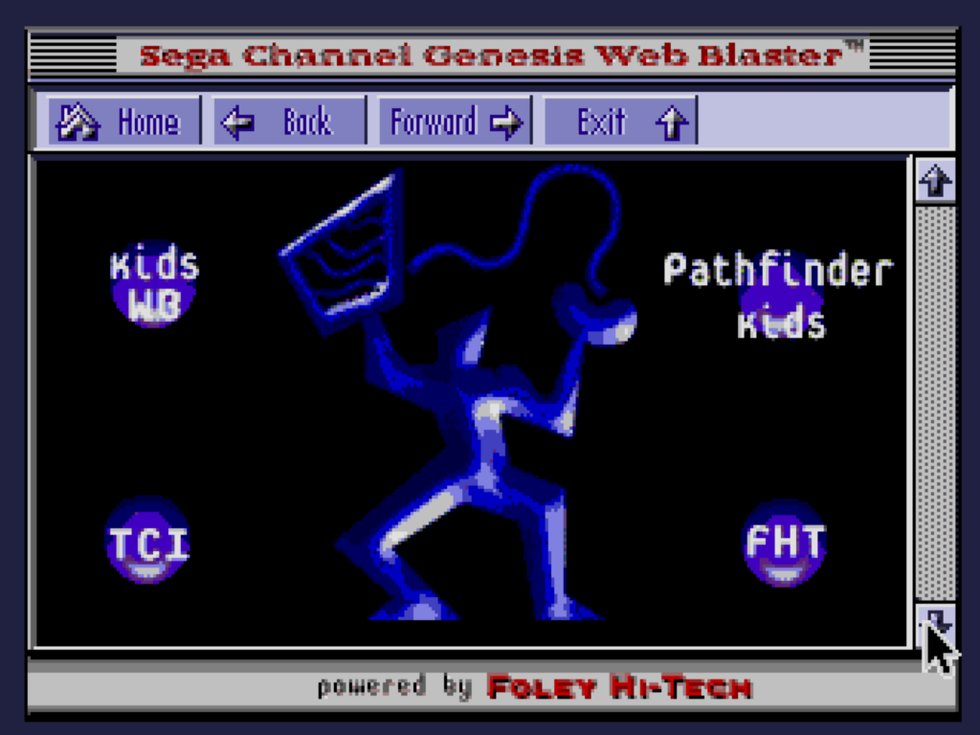
One of the most surprising elements to emerge from the recovery is Web Blaster, a prototype web browser for Genesis designed to load static pages through television cable.
It sounds almost like a joke today, but it fits perfectly with SEGA’s experimental mindset at the time. The Genesis, born as a cartridge-based console, was being imagined as a terminal capable of receiving content, services and perhaps even online information, or at least something very close to it.
Web Blaster is not important because it would necessarily have changed the fate of the Genesis. It is important because it shows how far SEGA was trying to stretch the very idea of a home console. Not only a machine for packaged games, but an access point for digital content.
Today, that sounds normal. In the 1990s, it did not.
Preserving what was designed to disappear
The most fascinating part of Sega Channel is also the most fragile: it was a service built around the temporary. It did not ask you to own a game, but to access a catalog. It did not leave you a cartridge, but a temporary experience. In that sense, it was extremely modern.
That is exactly why it became so difficult to preserve. Video game history has often been built around objects: cartridges, discs, manuals, boxes, magazines, posters, floppy disks. Sega Channel belonged to another category, one much closer to modern digital services: content that exists only as long as someone keeps it available.
When a service like that disappears, the risk is not only losing games. It is losing the context. The interfaces, the menus, the modified versions, the technical experiments, the distribution choices, the shape of the experience itself.
That is why the work of the Video Game History Foundation and Gaming Alexandria is so important. It is not only about recovering rare files. It is about preserving a piece of digital history that would otherwise have remained incomplete.
SEGA had seen something
Looking back at Sega Channel today, it is difficult not to think about modern services. Game Pass, PlayStation Plus, Nintendo Switch Online, rotating catalogs, digital content, games that appear and disappear from libraries. Of course, Sega Channel was something different, born in a different technical and commercial context. But the intuition was already there.
SEGA had seen that video games could move beyond the cartridge model. It understood that a console could become a gateway to a catalog. It imagined that value was not only in physical ownership, but also in access.
The problem, as often happened in SEGA’s history, was that the idea arrived before the right moment. Too early for the market, too early for domestic infrastructure, too early for an audience used to thinking of games as objects to buy and keep.
And yet that is exactly why Sega Channel still feels so fascinating today.
It was not just a curious service for Genesis. It was a rehearsal for the future.
Before the future was ready
The recovery of the lost Sega Channel ROMs does not simply add new files to Genesis history. It gives depth back to an experiment that risked being remembered only as a footnote.
Inside those ROMs there are games, prototypes, menus, technical limits, commercial ambitions and surprising ideas. There is an attempt to take console gaming beyond the cartridge before digital distribution became normal. There is a SEGA still willing to take risks, experiment and imagine scenarios that the market would only understand many years later.
Preserving Sega Channel means preserving a question: what happens when a video game is created to be temporary?
Today we know the answer very well, because we live in a world of digital stores, subscriptions and changing catalogs. But in the 1990s, that question had only just begun.
And for a moment, the Genesis tried to answer it.
Reader memories
Comment on the article and join the discussion.
Comment rulesLog in or register to leave a comment.
Create your account
Loading comments...