



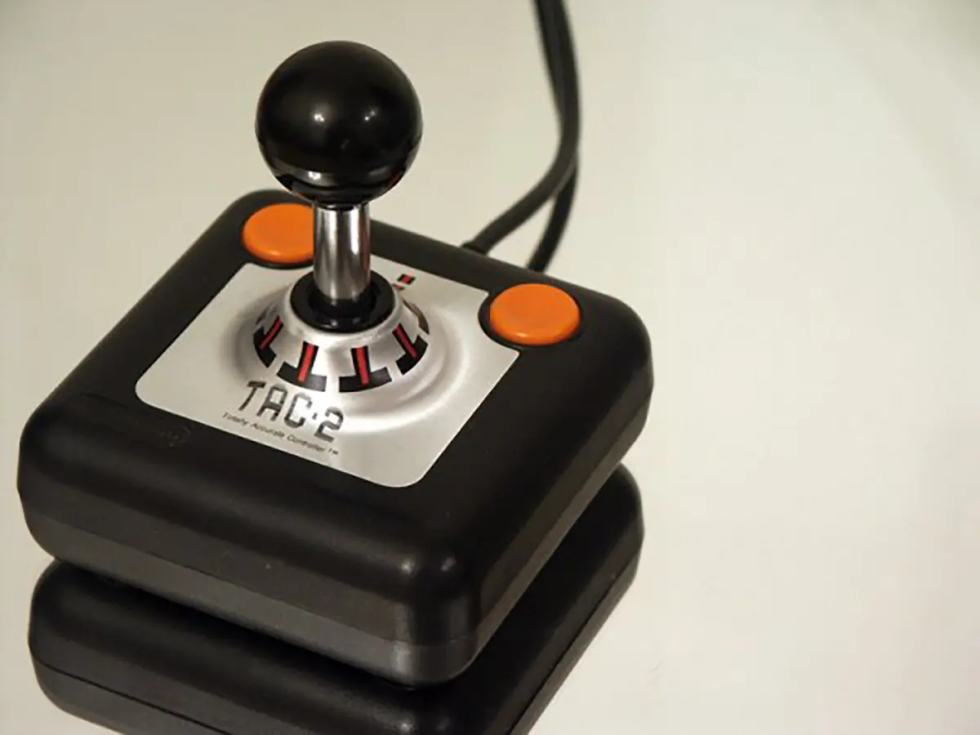
Some peripherals end up defining an era almost as much as the computers they were connected to. The TAC-2 is one of them. Square base, large ball top, metal shaft and two red fire buttons: for many players in the 1980s it became a familiar companion to the Commodore 64, Atari systems and, a few years later, the Amiga.
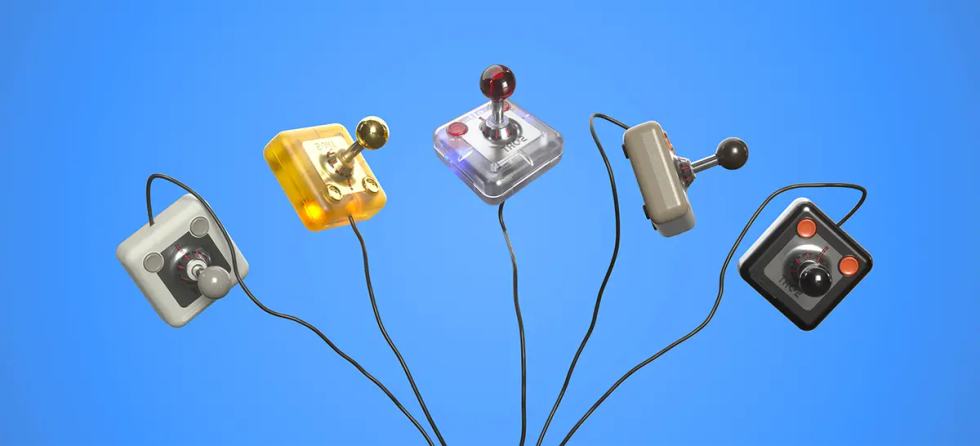
More than forty years after its debut, the TAC-2 is officially returning to production. Commodore has announced a new edition of the famous joystick in five variants, preserving not only its appearance but also much of the distinctive mechanical design that made the original so well known.
Before Commodore, there was Suncom
There is an important historical detail worth clarifying. The original TAC-2 was not a Commodore joystick.
It was introduced in 1983 by US company Suncom and was used with many machines compatible with the Atari 9-pin standard. The Smithsonian's National Museum of American History preserves an example in its collection and records its widespread use with the Commodore 64, Atari computers, Amiga and other systems of the period. The original models were mainly available in black and white.
The name TAC stood for Totally Accurate Controller, a statement of intent that Suncom backed up with a particularly distinctive construction. Instead of conventional microswitches, the joystick used direct metal contacts activated by the movement of the shaft. Its two fire buttons were another recognizable feature, although on the original they were wired to the same input rather than providing two independent actions.
Durability became a major part of the TAC-2's reputation. Commodore is now repeating an old promotional claim that the joystick was tested to three million movements without failure. It is a figure rooted in the product's historical marketing and should be read as such, but it says a great deal about the reputation the TAC-2 built among players at the time.
The new TAC-2 is deliberately old-fashioned
Perhaps the most interesting thing about the new version is what Commodore chose not to modernize.
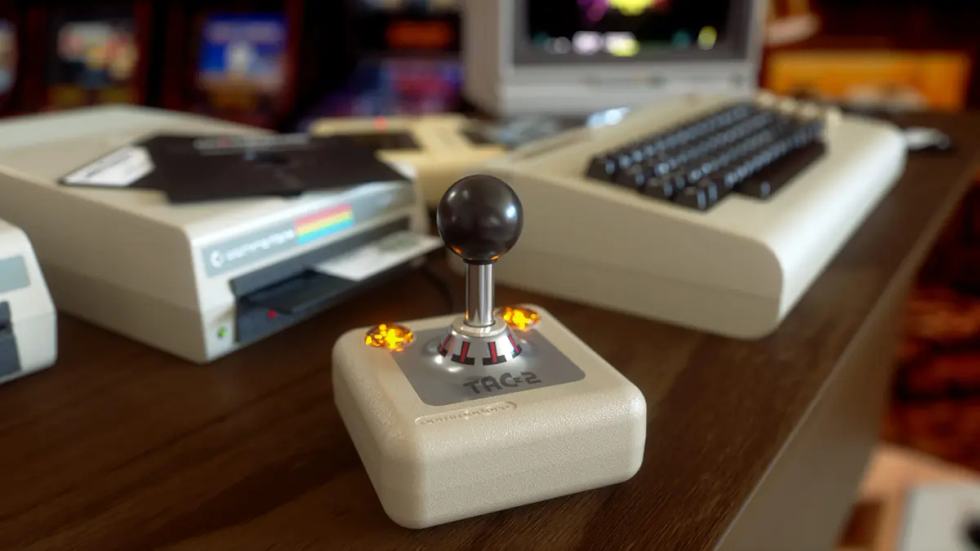
There is no built-in USB connection and no attempt to turn it into a contemporary controller dressed up as an 1980s peripheral. The new TAC-2 retains the Atari 9-pin connector and a direct metal-contact mechanism without microswitches, inspired by the original design. Using it with USB hardware therefore requires an external adapter.
That inevitably makes it less convenient for anyone who simply wants to plug it into a modern PC, but it makes much more sense from a preservation perspective. This TAC-2 is primarily intended for original hardware, compatible systems and new machines such as the Commodore 64 Ultimate, which retains traditional joystick ports.
According to Commodore, compatibility extends to systems using the classic 9-pin controller connection, including the C64, Amiga and Atari families, as well as other hardware based on the same standard.
Steel replaces Suncom's unusual original solution
One of the few substantial changes concerns the shaft.
The original TAC-2 had a construction detail that has become well known among enthusiasts: at the heart of the shaft assembly was a TR-418 automotive tire valve, a simple but remarkably durable solution. For the new production run, Commodore recreated its geometry and operation with a steel shaft instead, which the company says should provide even greater strength.
The new model measures 101 x 101 x 114 mm, weighs approximately 300 grams and uses a two-meter cable, 20 centimeters longer than the original. The 9-pin plug also features the classic Commodore symbol affectionately known to enthusiasts as the Chicken Lips logo.
Five TAC-2 models, from classic colors to the Founders Edition
The new range consists of five versions.
Knight Black and C= White are the closest to the spirit of the original and do without lighting. They are joined by BASIC Beige, designed to complement the C64 Ultimate, the transparent Starlight Edition, and the Founders Edition. These three versions add LED lighting to the fire buttons.
The Founders Edition also adds a gold PVD finish to the ball top and buttons.
The four standard versions of the new TAC-2 are listed on Commodore's official store at $49.99, while the Founders Edition costs $64. Prices are shown before tax, so the final amount will vary depending on the buyer's country, taxes and shipping costs. The joystick can be ordered directly from the official Commodore TAC-2 product page.
A retro logo alone is not enough
The retro-gaming market is now full of products that revive shapes, colors and brands from the past. What makes the return of the TAC-2 interesting will be discovering whether it can reproduce not only the appearance of a historic peripheral, but also the physical feel that made it so recognizable to the people who used one every day.
Photographs and technical specifications can only tell us so much. The real test will be holding one in our hands, perhaps during a game of Summer Games, International Karate+ or Sensible Soccer, and comparing it with our memories or, even better, with an original TAC-2.
There is already something interesting about the project itself. In recent years, the revival of historic hardware has expanded beyond complete computers and consoles. Keyboards, controllers, cases, accessories and peripherals that once formed part of the everyday experience of those machines are also returning.
The TAC-2 belongs precisely to that category. It was not simply something connected to a computer. For many players, it was the physical point of contact with the game.
More than forty years later, discovering whether that contact still feels the same may be the most interesting part of its return.
Reader memories
Comment on the article and join the discussion.
Comment rulesLog in or register to leave a comment.
Create your account
Loading comments...