


Mega Cat Studios has released a free demo of ZPF, a horizontal shoot ’em up developed for the Sega Mega Drive and Genesis. Published on itch.io on July 9, 2026, the 1.5 MB download contains the Genesis ROM and can be played through emulators, compatible flash cartridges or original hardware.
This is not an announcement for a game still far from completion. ZPF is already available as a physical Mega Drive and Genesis release, while the full game has also reached Steam, Nintendo Switch and Xbox. The new demo offers a simple way to experience it before choosing one of the commercial editions.
Three warriors against a chaotic universe
ZPF combines science fiction, fantasy and horror within a fast shooter firmly rooted in arcade tradition. It features three selectable characters, enormous mid-stage and final bosses, hidden secrets and a scoring system designed for players interested in learning every stage and improving their performance.
The project was created by a team of only three people. Gryzor handled the concept, graphics and overall design; Mikael Tillander, also known as Mix, worked on programming and hardware; Jamie Vance, or JGVex, composed the soundtrack. ZPF is created and owned by the three developers, while Mega Cat Studios acts as publisher.
In a 2024 interview with Sega-16, the team explained that development began in 2019, reusing sprite sheets created for an unfinished PC incarnation of ZPF. The Mega Drive project initially used SGDK before evolving towards custom C code and a collection of development tools created by Tillander. Gryzor produced the artwork using Cosmigo Pro Motion, while Jamie Vance composed the music with DefleMask.
The team cited games such as Thunder Force IV, Elemental Master, Lords of Thunder, Gate of Thunder, R-Type, The Legend of Valkyrie and Kingdom Grand Prix among its influences. ZPF does not simply imitate a single model, however, mixing spaceships, warriors, organic creatures, industrial environments and almost surreal landscapes.
A technically impressive showcase
We played the demo, and the initial impact is remarkable. ZPF moves enormous sprites, large groups of enemies and richly detailed backgrounds without feeling like a simple technical experiment. The pace is relentless, with every environment quickly introducing new creatures, hazards and attack patterns.
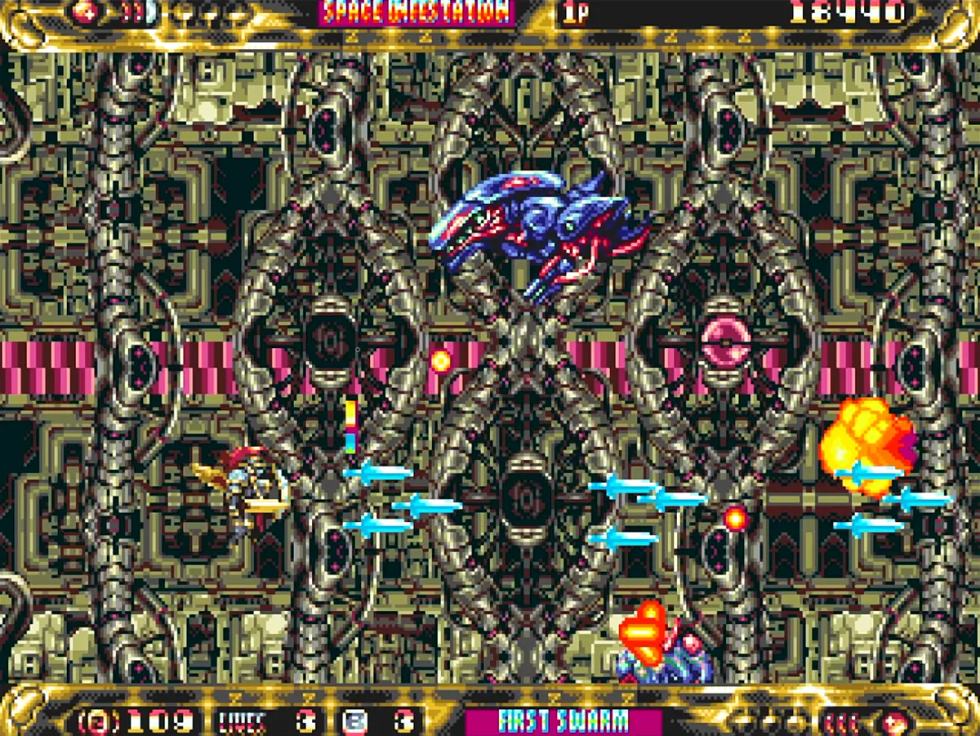
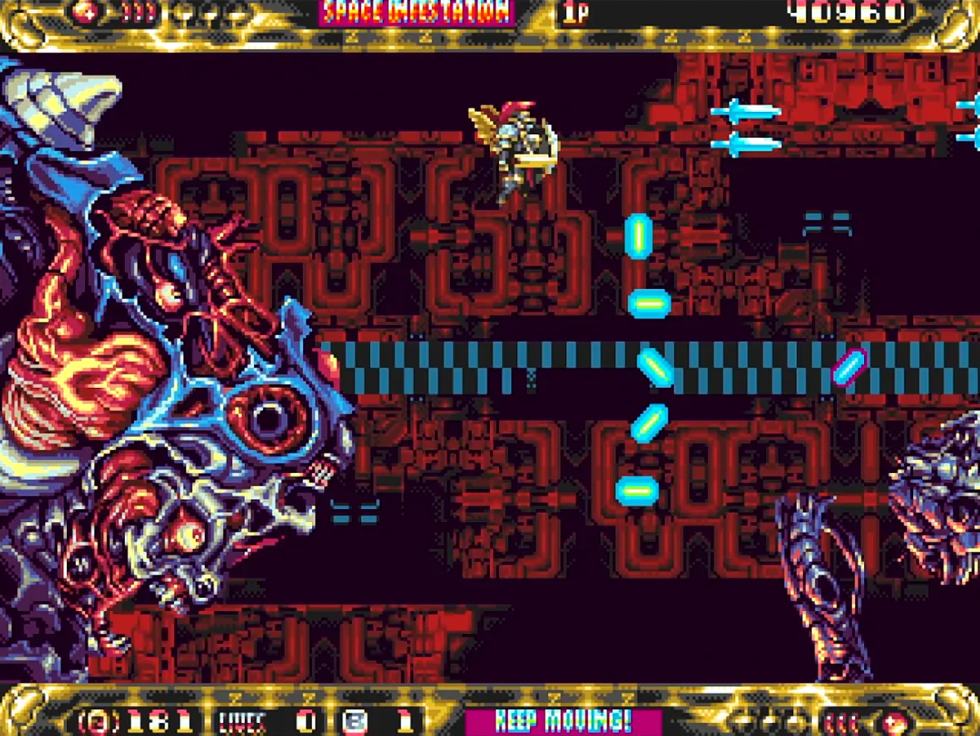
The amount of visual work is particularly evident during boss encounters. Some enemies occupy a considerable part of the screen and feature animation, detail and colour combinations rarely seen in the Mega Drive’s original commercial era. The environments are equally varied, moving from bright natural landscapes to industrial structures and biomechanical settings.
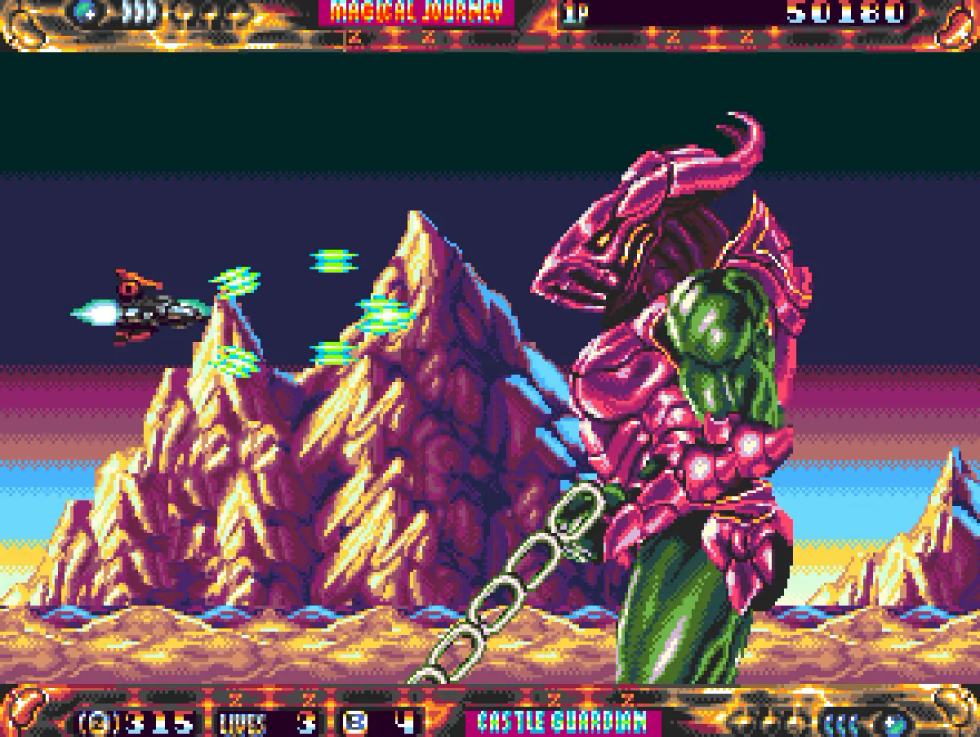
The result is an ambitious production that once again demonstrates how much unexplored potential remains within the Mega Drive hardware.
Colour as both a strength and a limitation
ZPF’s visual richness is also the source of its main weakness. Its palette relies on extremely bright colours, often placed alongside one another without a clear separation between scenery, characters, projectiles and decorative elements.
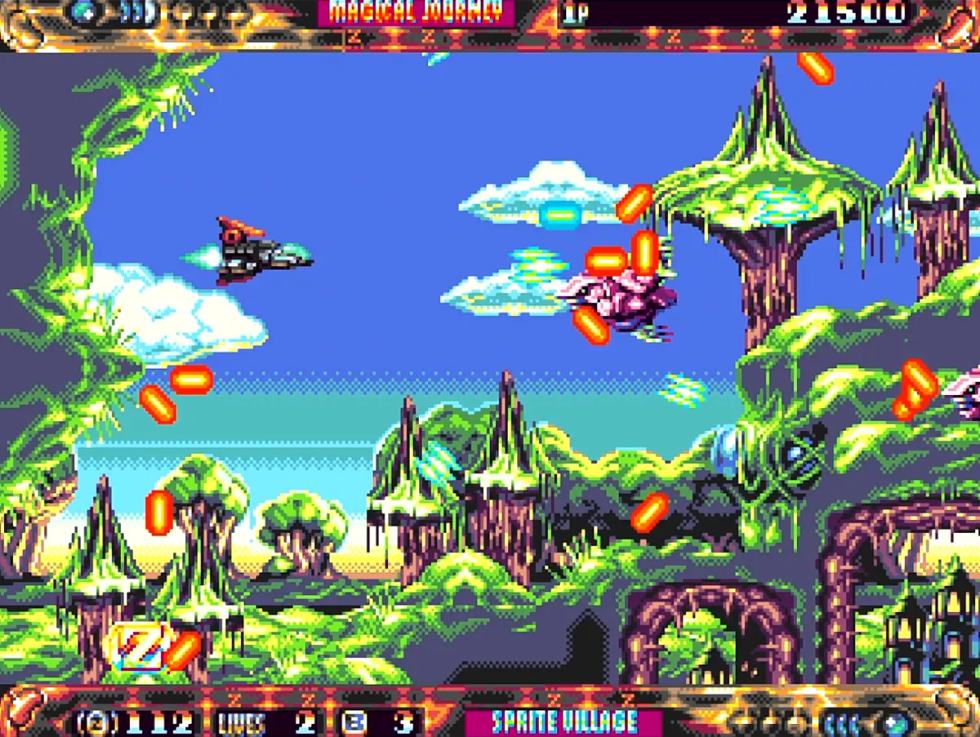
The style works well during quieter moments and gives the game an immediately recognisable identity. When the screen becomes crowded, however, readability can suffer. Some sprites blend into the scenery, while friendly and hostile projectiles occasionally compete with background details of similar brightness and saturation.
The graphics are not confusing because they are poor or badly constructed. Quite the opposite: ZPF wants to display a great deal and often attempts to show everything at once. During certain sequences, it can take an extra moment to distinguish environmental decoration from an actual threat.
Readability also changes considerably between stages. Darker industrial settings are generally clearer, while areas dominated by fluorescent greens, blues and yellows place more pressure on the player’s eyes.
A difficulty level that shows no mercy
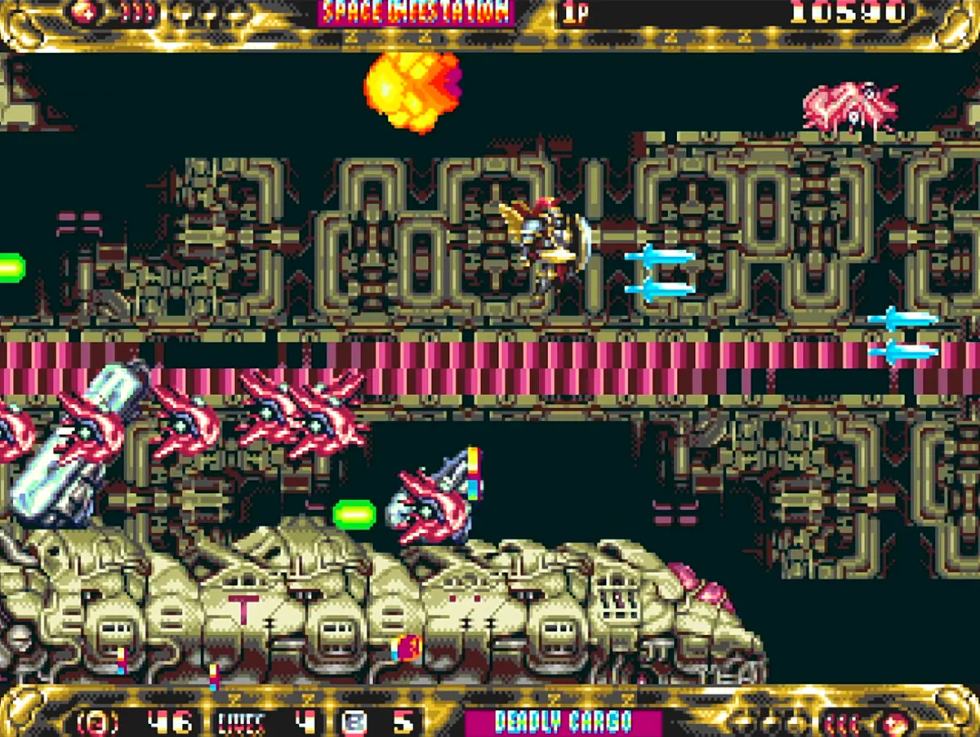
ZPF is also extremely difficult. The demo offers little time to become comfortable with the controls before filling the screen with enemies, projectiles and environmental obstacles. It is not a pure bullet hell shooter, but it still demands precise movement, memorisation and the ability to recognise attack patterns quickly.
Its difficulty comes from several combined factors. Enemies can absorb a significant amount of damage, attacks frequently arrive from different directions and the available space is gradually reduced. The visual density described above can also make certain deaths harder to understand immediately.
This is clearly a game aimed at experienced genre fans. ZPF has little interest in gently introducing players who are unfamiliar with arcade shoot ’em ups. The controls are responsive, however, and defeat usually encourages another attempt, armed with a better understanding of enemy placement.
Medals, shops and high scores
One of the game’s most distinctive systems revolves around medals. Collected medals can be spent on power boosts, extra lives and hints, or saved to be cashed in later at a higher scoring value. Completing the game while still holding them also counts as a cash-in.
This creates a continuous choice between safety and risk. Spending resources can make the current run more manageable; keeping them increases the potential score but also raises the consequences of failure.
ZPF also contains secret bosses that require pairs of hidden keys to reach. Choosing a character before each stage therefore has consequences beyond appearance or weapon preference.
A Kickstarter success story
ZPF’s Kickstarter campaign launched in 2024 with an initial goal of $15,000. It ultimately raised $204,670 from 2,108 backers, exceeding its original target by a considerable margin.
The result demonstrates the continuing interest in new games developed for historical consoles, particularly when those projects are genuinely designed around the original hardware rather than merely imitating a nostalgic visual style.
Mega Cat Studios publishes the physical edition in both Genesis and Mega Drive packaging, either as a cartridge or complete with box and manual. It is an independent production and is not licensed, sponsored or endorsed by Sega.
A free demo worth experiencing
The ZPF demo contains enough material to communicate the project’s personality. Its technical standard is high, the bosses are spectacular and the game appears to offer more depth than its overwhelming first impression might suggest.
Its demanding difficulty and inconsistent visual clarity could discourage players looking for a cleaner, more immediately readable shooter. For genre enthusiasts willing to study attack patterns, accept repeated defeats and adapt to the aggressive palette, ZPF has plenty to offer.
The download is free and contains the Mega Drive and Genesis ROM itself. Considering the small size of the archive, playing it remains the best way to decide whether its colourful chaos matches your tastes.
Reader memories
Comment on the article and join the discussion.
Comment rulesLog in or register to leave a comment.
Create your account
Loading comments...