





Reflections Interactive
- Developer
Reflections Interactive is a British studio from Newcastle, known for Shadow of the Beast, Destruction Derby and especially the Driver series.
History
Reflections was founded in 1984 in Newcastle upon Tyne, United Kingdom, by Martin Edmondson and Nicholas Chamberlain. Before becoming Reflections Interactive and later Ubisoft Reflections, the studio belonged fully to the British home computer scene: small teams, many different machines, direct technical development and a strong ability to adapt to available platforms. Its first released game was Ravenskull, published in 1986 for BBC Micro and Acorn Electron by Superior Software, followed by other titles for 8-bit and 16-bit systems. Major sources identify Newcastle as the studio’s historical base and 1984 as its founding year.
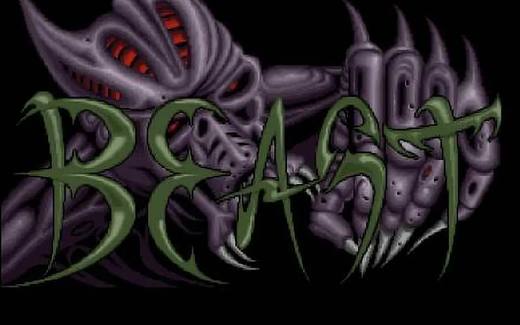
Reflections truly entered player memory with Shadow of the Beast, published by Psygnosis in 1989 for the Amiga. The game was not developed internally by Psygnosis, but by Reflections, with Martin Edmondson at the center of the project. Shadow of the Beast became one of the audiovisual statements of the Amiga: multi-layer parallax, strong colour, alien atmosphere, harsh difficulty and a soundtrack that helped define the idea of Commodore’s machine as visually and sonically ahead of many home rivals. It was not a perfect game in design terms, but as a technical demonstration and visual world it had enormous impact.
In the following years Reflections continued to work on Amiga, Atari ST and other platforms, often in partnership with Psygnosis. Shadow of the Beast II, Awesome, Ballistix and Brian the Lion describe a phase in which the studio was associated above all with graphics, movement and technical ambition. Reflections was not a broad catalogue publisher, but a team able to build games that put hardware under pressure and searched for immediate impact. This attention to the physical and dynamic side of play would become even clearer with the move to 3D.
The turning point came in 1995 with Destruction Derby, published by Psygnosis for PlayStation, PC and Saturn. At a time when 3D was still finding its language, Reflections focused on collisions, damaged bodywork, crashes and spectacular physics. Destruction Derby was not only a racing game. It was a game about destruction as a visible, readable and satisfying event. Its success consolidated a specialization that would remain central to the studio: cars, chases, control, impact and technology applied to movement.
In 1998 Reflections was acquired by GT Interactive and later became Reflections Interactive, then moved into the Atari orbit after later corporate changes. The decisive title was Driver, released in 1999. Inspired by 1970s cop films and television, from Bullitt to The Driver, the game turned urban car chases into a free, cinematic and strongly identifiable experience. Its opening garage test became almost as famous as its open cities and stunt-style missions. Driver anticipated some ideas that would later explode with early 2000s urban open worlds, while remaining focused on the car rather than complete player freedom.
The series continued with Driver 2, Driv3r, Driver: Parallel Lines and other entries, but its path became uneven. Driv3r, in particular, arrived with huge expectations and a troubled reception, showing how difficult it had become to compete in a landscape increasingly dominated by Grand Theft Auto. In 2006 Ubisoft acquired Reflections and the Driver franchise rights from Atari for around $24 million, integrating the studio into its own group. Driver: San Francisco, released in 2011, became the last great authorial moment tied to the brand: a clever game built around the “shift” mechanic between cars, turning a strange narrative idea into an original play system.
As Ubisoft Reflections, the studio later worked more often as a support team on major Ubisoft productions, including The Crew, Watch Dogs, The Division, Just Dance and other projects, while keeping a historical expertise in driving and movement. Its legacy remains clear: Reflections is one of the rare British studios able to cross BBC Micro, Amiga, PlayStation and modern open worlds without entirely losing its technical obsession. From Shadow of the Beast to Destruction Derby and Driver, its name tells a story of graphics, speed, impact and cars thrown through increasingly living cities.