





Master System
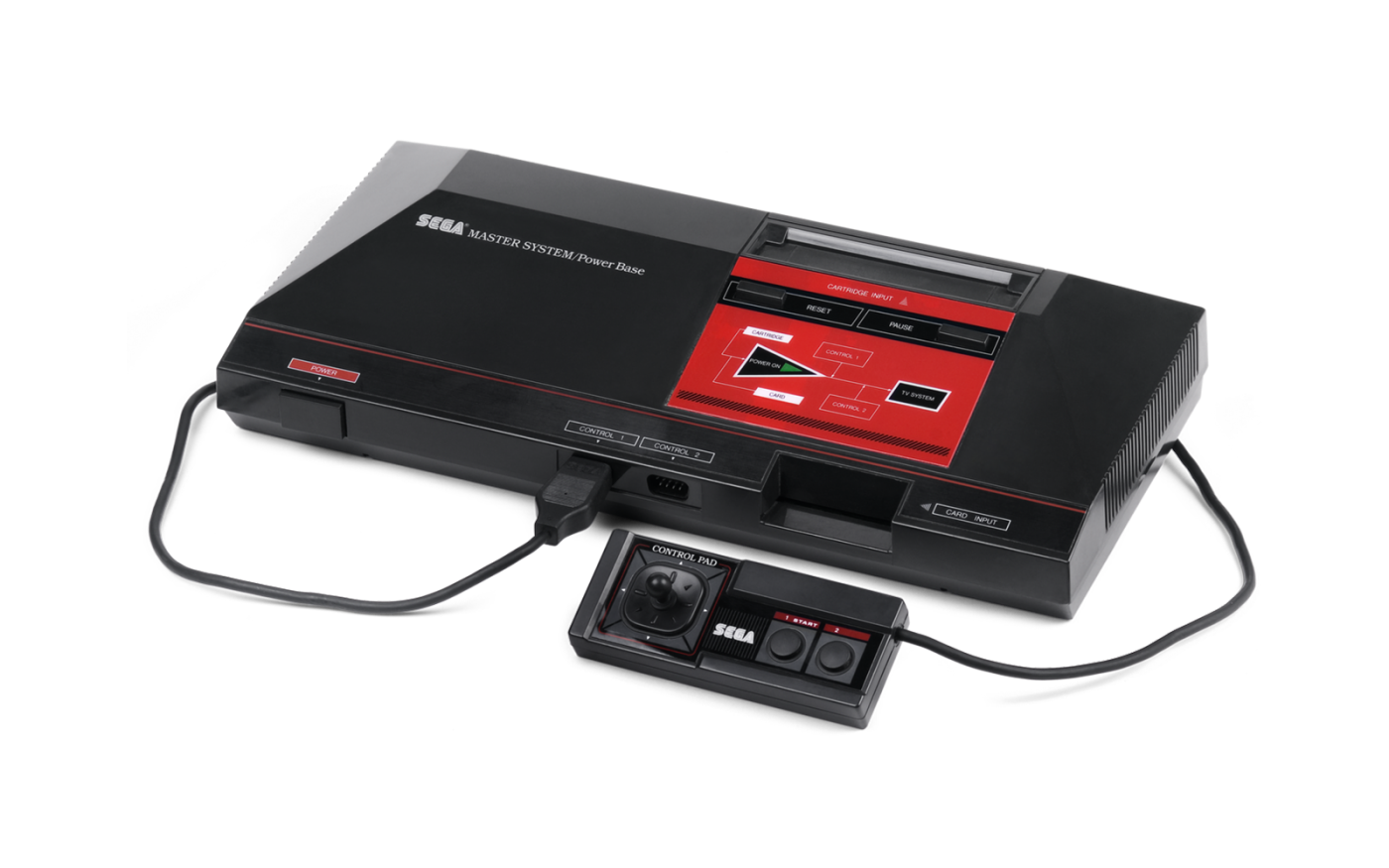
Launched by Sega in Japan in 1985 as an evolution of the Sega Mark III, the Master System arrived in North America in 1986 and in Europe from 1987. Created to challenge the dominance of the Famicom/NES, it achieved very different results depending on the market: it remained in the background in Japan and the United States, but gained a strong presence in Europe, including Italy, and enjoyed extraordinary longevity in Brazil thanks to Tec Toy.
The console used a Zilog Z80 CPU running at around 3.58 MHz, with 8 KB of main RAM and 16 KB of video RAM. Its main medium was the cartridge, joined in some markets by Sega Cards. Graphically, it offered a typical resolution of 256×192 pixels, a 64-colour palette and up to 32 colours on screen, often producing a cleaner and more colourful image than many 8-bit rivals. Audio was handled by a three-channel PSG plus noise, while in Japan an optional FM sound module was also available.
Worldwide sales are generally estimated at around 10-13 million units. Although it never overtook Nintendo, the Master System built an important foundation for Sega’s home-console identity, with games such as Alex Kidd in Miracle World, Wonder Boy III: The Dragon’s Trap, Phantasy Star, Fantasy Zone, Shinobi, Sonic the Hedgehog, Castle of Illusion and R-Type.

