




The past cannot be changed. It has already happened. Battles had their victors, empires rose and fell, and millions of people made choices they could never take back. Videogames, however, open up possibilities. They allow the player to act, change direction, fail, start again and, very often, win.
When the past enters the screen, it necessarily changes its nature. A civilisation that lasted for centuries has to be compressed into a handful of turns. A war inevitably becomes a succession of missions. A journey across a continent turns into supplies to manage, sudden illnesses and decisions to make. Castles, gods and mythological creatures become territories to conquer, powers to use or enemies to defeat.
This is why it is not enough to ask whether a building has been accurately reconstructed or whether a suit of armour really belongs to that period. The relationship between history and videogames is primarily about the way the past is selected, simplified and reinterpreted.
Governing Thousands of Years
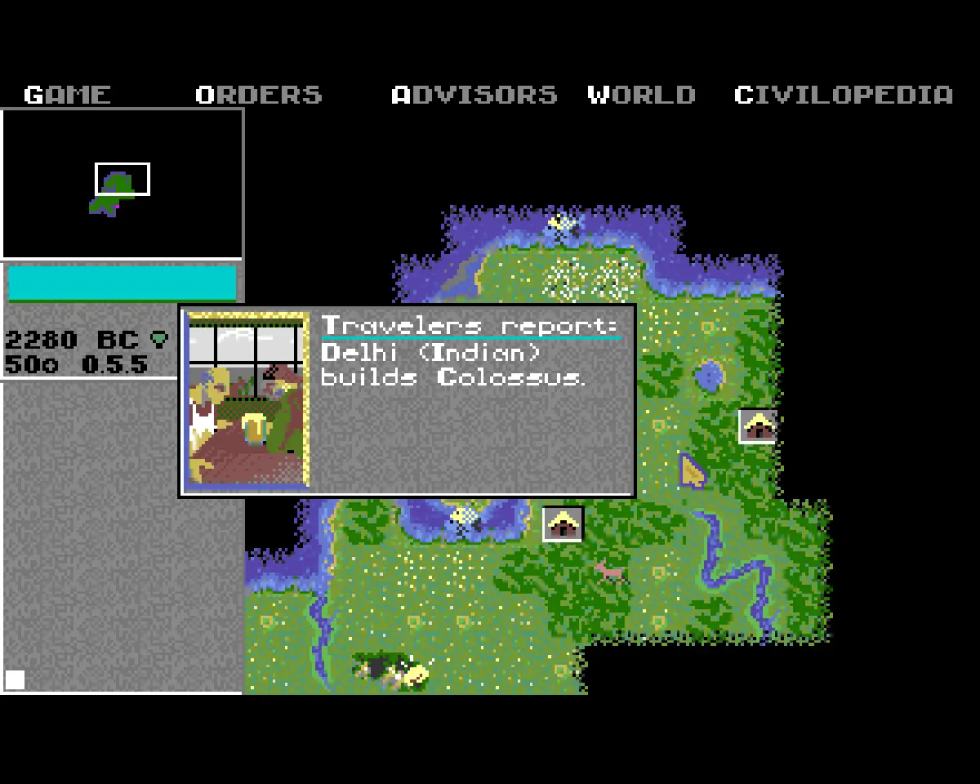
In 1991, Sid Meier’s Civilization gave the player an enormous task: guiding an entire civilisation through thousands of years of history. Designed by Sid Meier and Bruce Shelley, the first game began in ancient times and allowed players to influence the development of cities, scientific research, exploration, diplomacy and warfare.
Its strength did not lie in recreating one specific period. Civilization took human history as a whole and turned it into a manageable system. Discovering a technology opened new possibilities, founding cities extended control over territory, while building wonders generated prestige and advantages. Peoples who had existed centuries apart could meet, form alliances or fight one another on maps that had never existed.
Rome could survive into the space age. Civilisations that had disappeared from history could dominate the modern world. Inventions created in particular places and circumstances became stages along a single universal path.
It was inevitably a simplification of thousands of years of history, but also an extraordinarily powerful form of storytelling. The fate of a people depended on the balance between knowledge, territory, production and military strength. The player no longer watched civilisations rise and fall. They became their architect.
The Total War series would approach history from another perspective, separating political and diplomatic management from battles fought directly on the field. Rome: Total War transformed Roman expansion into campaigns, alliances, revolts and clashes between armies, while Medieval: Total War and Medieval II applied a similar structure to kingdoms, dynasties and medieval conflicts.
The past was broken down into territories, economies, armies and relationships of power, giving players the illusion that they could control processes which, in reality, depended on thousands of people and often unpredictable circumstances.


Looking Down on Humanity
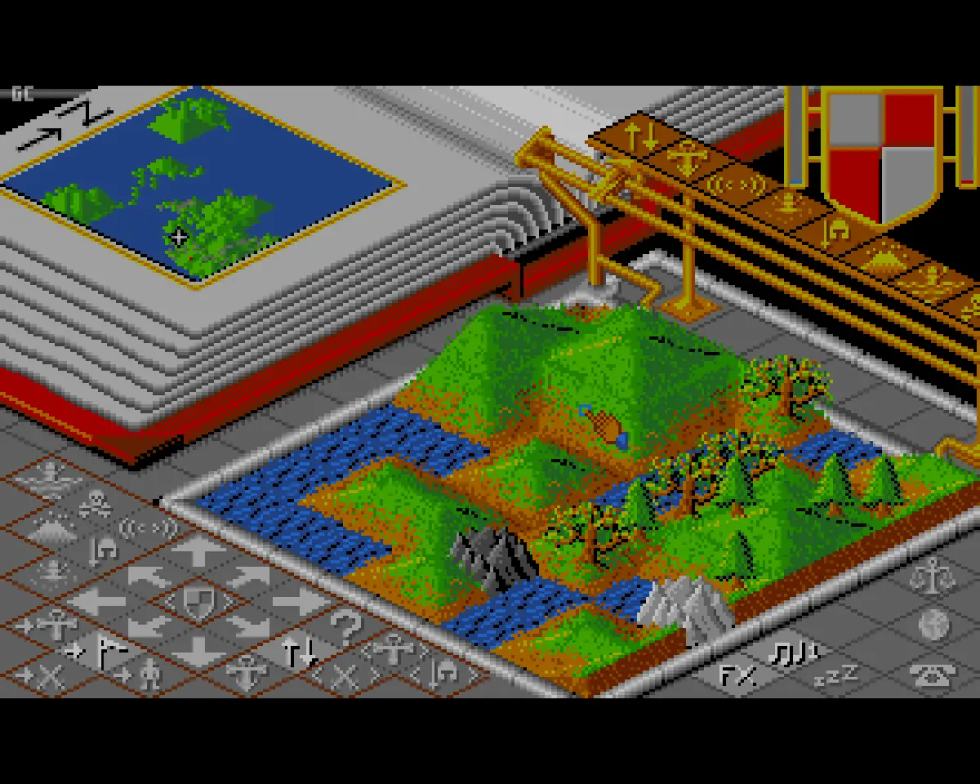
Populous, developed by Bullfrog and published by Electronic Arts in 1989, pushed this perspective even further. The player was not a ruler, a general or the leader of a civilisation. The player was a god.
They could reshape the land, encourage the expansion of their followers and unleash supernatural powers against the opposing population. Its success helped establish what became known as the “god game”, a genre in which humanity is observed and influenced from an almost absolute position.
In Civilization, the player accompanies a people through history. In Populous, they can even reshape the world upon which that people must live.
There are no real nations, characters or historical chronologies, only communities occupying territory, building settlements and fighting in the name of their god. Yet this abstraction evokes some of the oldest elements of human history: the birth of communities, our relationship with the land, religion, conflict and the need to attribute to the gods what human beings could not control.
Experiencing the Past from Below
Not every historical videogame places the fate of an empire in the player’s hands. Some do the opposite, narrowing the field of view and showing how vulnerable individuals can be when confronted with history.
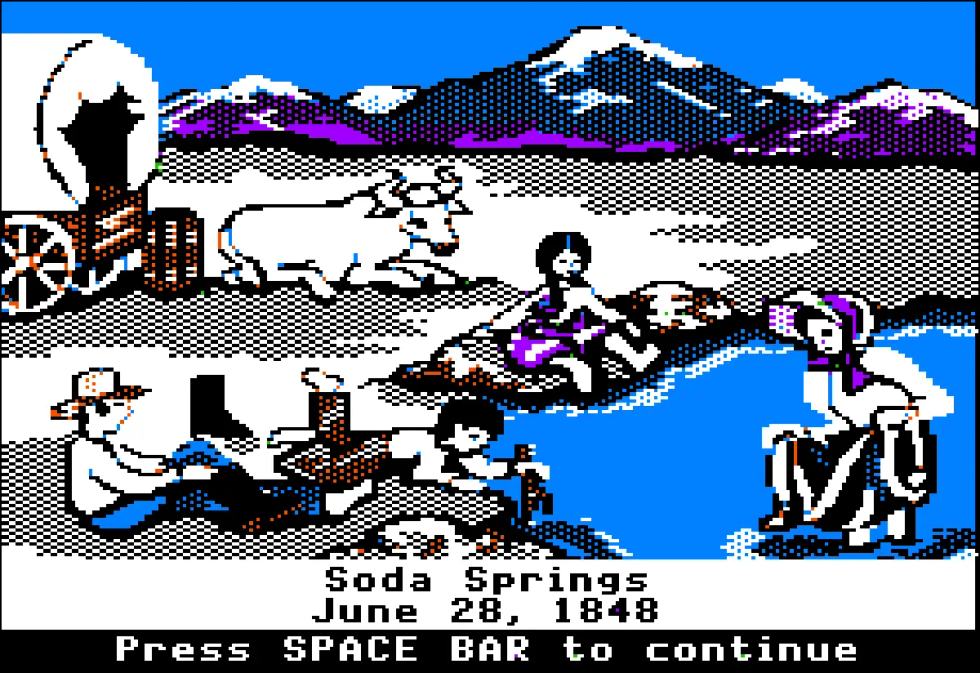
The Oregon Trail began in 1971 as an educational project by Don Rawitsch, Bill Heinemann and Paul Dillenberger. When Rawitsch joined the Minnesota Educational Computing Consortium, the game was reworked and distributed in schools, eventually becoming one of the best-known educational computer games in the United States.
The player had to lead a small group of settlers towards Oregon, buy supplies, manage the journey and deal with accidents, hunger and disease. The West was not presented simply as heroic conquest, but as a sequence of practical decisions whose consequences could often be irreversible.
The game also carried the perspective of the period and culture that produced it. The settlers’ journey occupied centre stage, while the consequences of westward expansion for Native peoples remained largely at the margins. Every historical videogame chooses who we control, which problems matter and whose lives remain outside the screen.
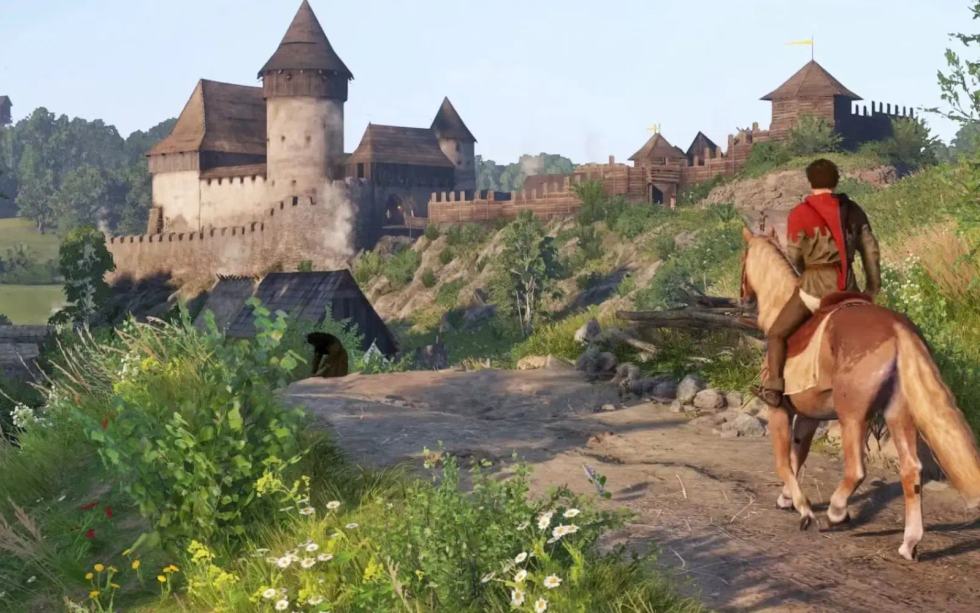
Decades later, Kingdom Come: Deliverance attempted to make the Middle Ages tangible through an ordinary man. Henry is not a king, a legendary knight or a hero with extraordinary powers. He is a blacksmith’s son in Bohemia in 1403, swept into political and military events far greater than himself.
The game reconstructs clothing, settlements, social hierarchies, trades and material conditions with considerably more historical research than most games set in the Middle Ages. Its creators themselves have spoken in terms of historical credibility rather than absolute accuracy, acknowledging that some elements had to be adapted to the needs of a videogame.
Eating, sleeping, learning, finding equipment and earning other people’s trust all become part of the experience. The past is no longer viewed from a strategic map or reduced to a sequence of famous battles. It has to be lived.
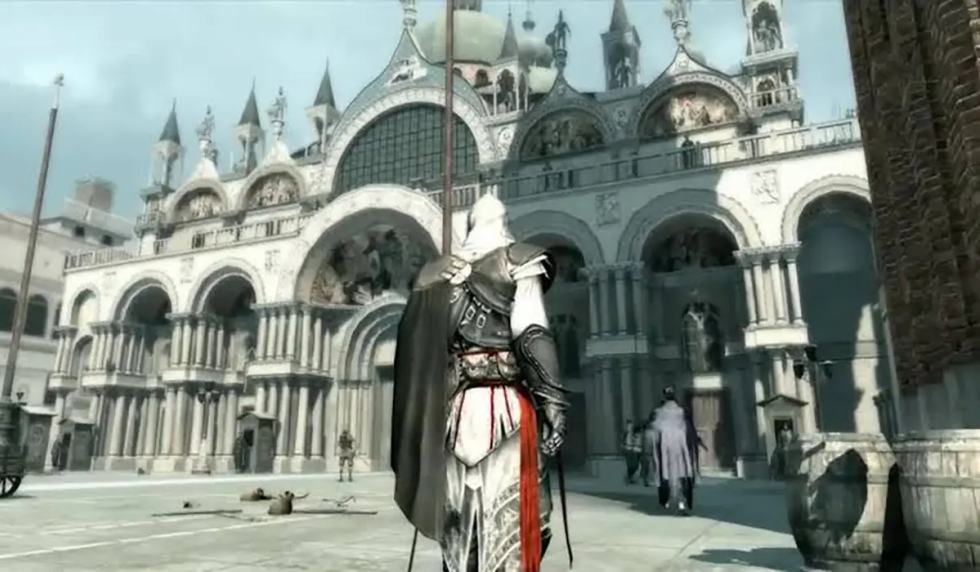
The Assassin’s Creed series took another route, turning historical reconstruction into a space to explore and drawing heavily from real periods, places and historical figures. From the Crusades and Renaissance Italy to the French Revolution and ancient Egypt, Ubisoft has created some of the most recognisable virtual representations of distant eras.
Behind these reconstructions lies extensive research, even if the final result must inevitably adapt history to the demands of a videogame. Cities, events and historical figures become the stage for stories involving Assassins, Templars and mysteries. Documented reality and fiction constantly coexist.
In this sense, Assassin’s Creed does not simply tell history. It allows the player to walk, climb and act within a reconstructed version of it.
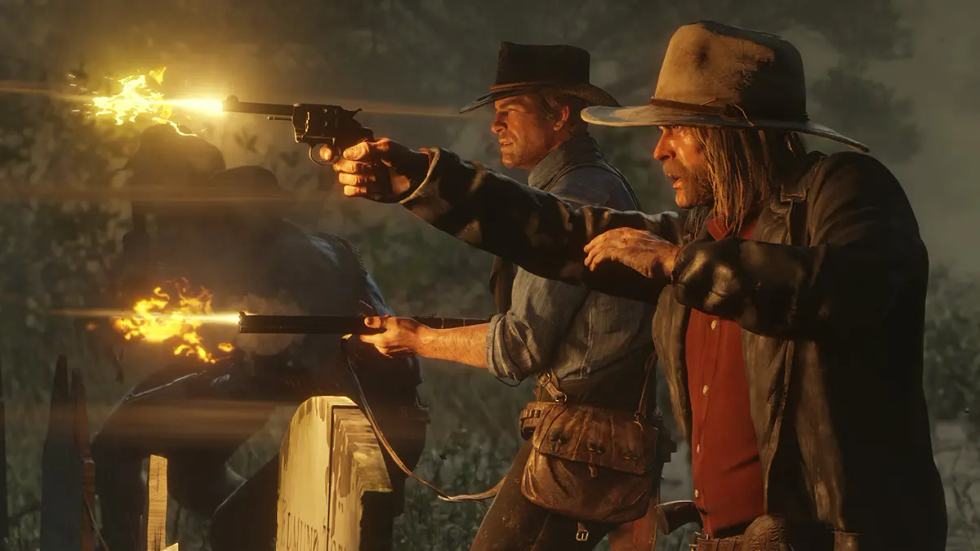
Red Dead Redemption 2 also moves through history by following an individual life. Arthur Morgan does not witness the birth of the West, but its end. America in 1899 is changing: the law is pursuing the last outlaw gangs, cities are expanding and the world of the frontier is giving way to new forms of control.
Rockstar begins with a West already transformed into legend by literature and cinema, but shows it increasingly becoming part of the past. Arthur and Dutch’s gang continue to pursue an idea of freedom that no longer has a place in the world around them. History itself becomes the force slowly pushing them out of it.
How Many Forms Can War Take?
War is probably one of the historical subjects videogames have explored most frequently, but it has never been represented in only one way.
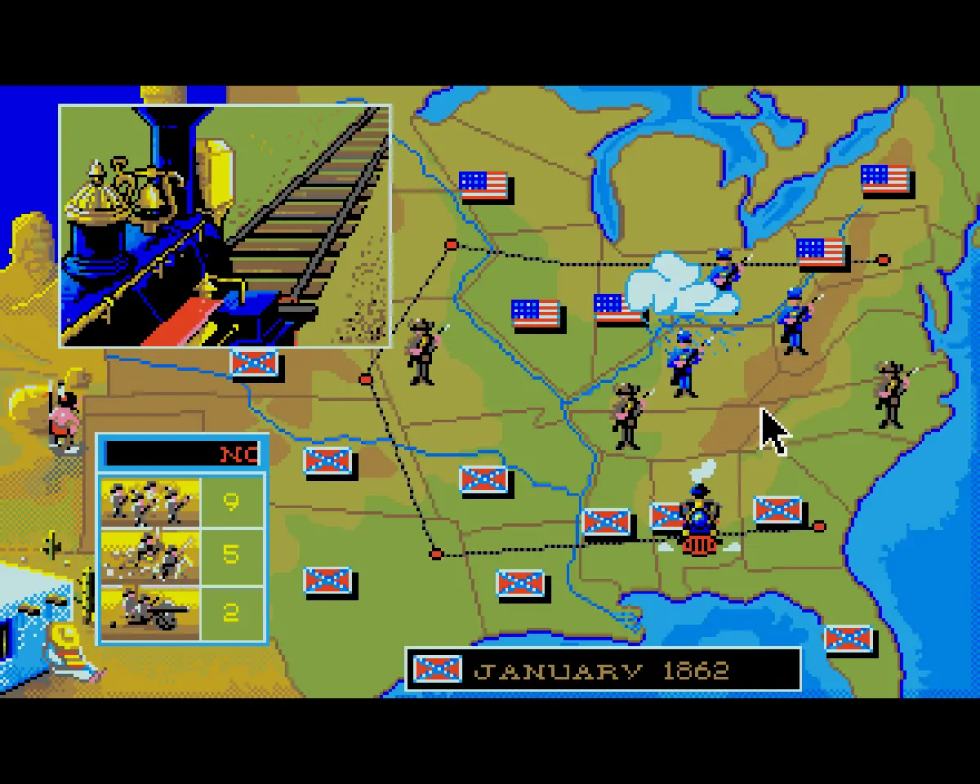
When I played North & South on the Amiga, the American Civil War was not a distant chapter in a history textbook. It was a map divided into territories, with armies to move, forts to conquer, trains to attack and battles where infantry, cavalry and artillery chased one another across a confined battlefield. It was one of the games I loved most.
Published by Infogrames in 1989, North & South was based on the Franco-Belgian comic Les Tuniques Bleues. The war had therefore already passed through another medium before becoming a videogame: from history to comics, then from comics to the screen and the rules of strategy and action.
Its tone was caricatural, full of gags and cartoon-like situations. It never pretended to reproduce the tragedy of the conflict, but it made control of railway lines, territorial conquest and troop movements immediately understandable. It certainly did not teach me what the American Civil War really was, but it made me realise that behind that division between North and South there was a history worth exploring.
That was one of the strengths of historical videogames during our adolescence. They did not always give us precise knowledge, but they sparked curiosity.
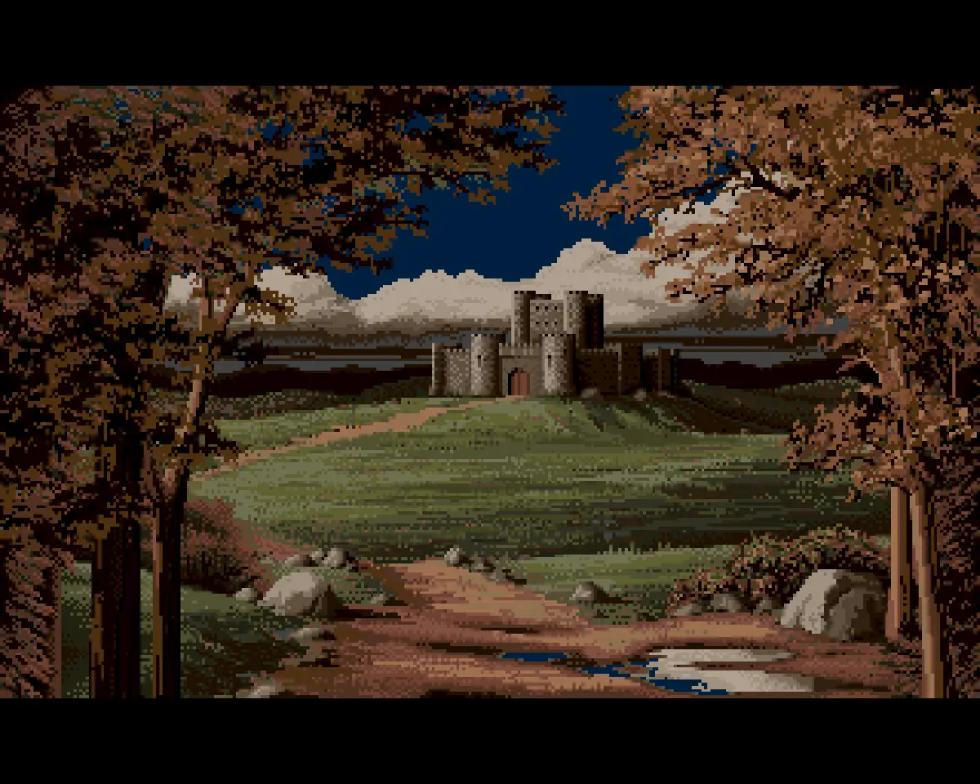
Cinemaware followed a similar path through the language of cinema. Defender of the Crown, originally released on the Amiga in 1986, transformed medieval England into sieges, tournaments, territorial conquest and rescue missions. More than the Middle Ages of historians, it staged the Middle Ages of adventure films, Robin Hood and lavish costume productions.
Wings, in 1990, brought the same sensibility to the First World War. Through a pilot’s diary, aerial missions and the passing of time, the conflict gained a personal dimension. Names disappeared from the list of comrades, missions continued and the war slowly consumed those taking part in it.
Arcades offered yet another interpretation of war, largely replacing people with machines. Capcom’s 194X series took the Pacific theatre and transformed it into waves of aircraft, bullets and evasive manoeuvres. Beginning with 1942, war became immediate action, recognisable but largely separated from its historical consequences.
Medal of Honor, released for PlayStation in 1999, originated from an idea by Steven Spielberg and shared part of Saving Private Ryan’s tone and sensitivity towards the Second World War, while telling a different story.
Here, war became a mission to complete. Players received clear objectives, crossed occupied territory, sabotaged installations and fought enemy soldiers. The confusion of a real conflict was organised into levels with a beginning, a clear direction and an ending.
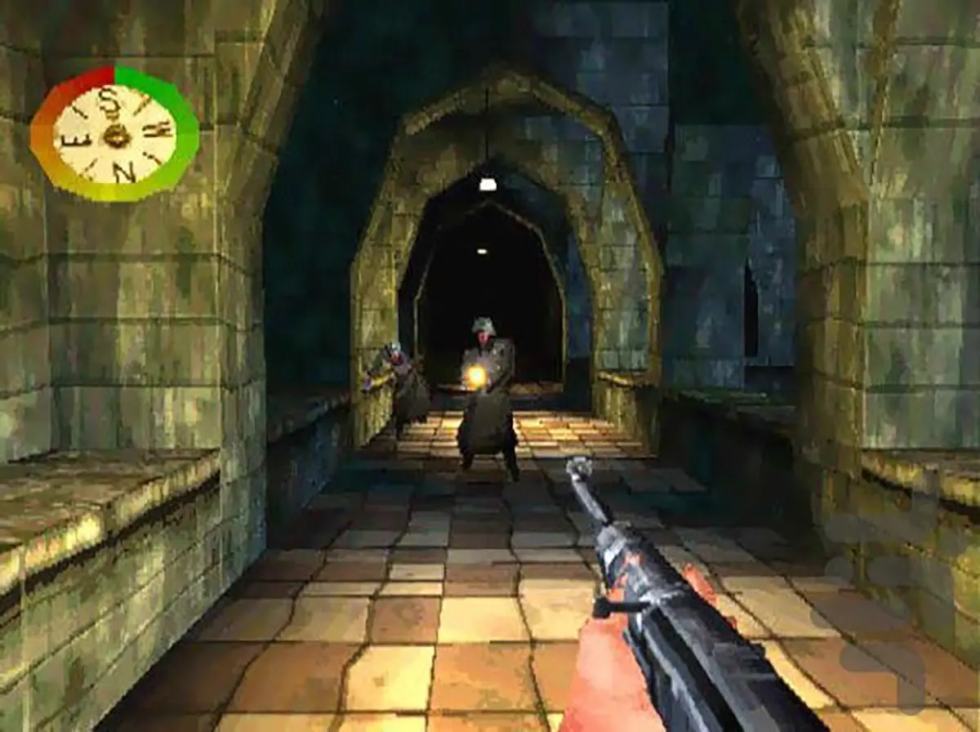
The series, followed by the early Call of Duty games, helped establish an increasingly spectacular and scripted vision of war. The soldier controlled by the player repeatedly found himself at the centre of decisive events, creating a particular memory of conflict: personal, heroic and dominated by action.
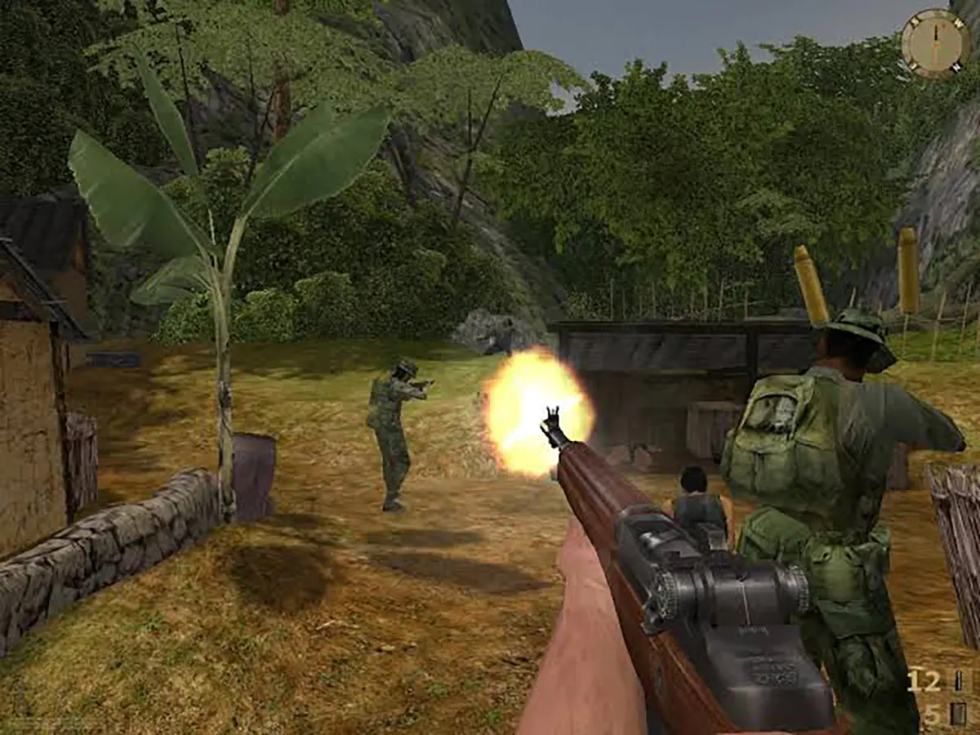
In 2003, Vietcong took players to Vietnam in 1967, alternating jungle patrols, ambushes, close-range combat and tunnel exploration, where visibility and any sense of safety could disappear in seconds.
I still remember how strongly that atmosphere affected me. The jungle was not simply a backdrop, but a presence capable of hiding the enemy in any direction. I also remember the breaks between missions, when I could listen to Jimi Hendrix’s version of Hey Joe. A few notes were enough to place the game within the cultural imagery I had learned to associate with the Vietnam War.
Vietcong was not a complete or perfectly faithful reconstruction of the conflict, but it succeeded in conveying the feeling of moving through a place that was constantly hostile.
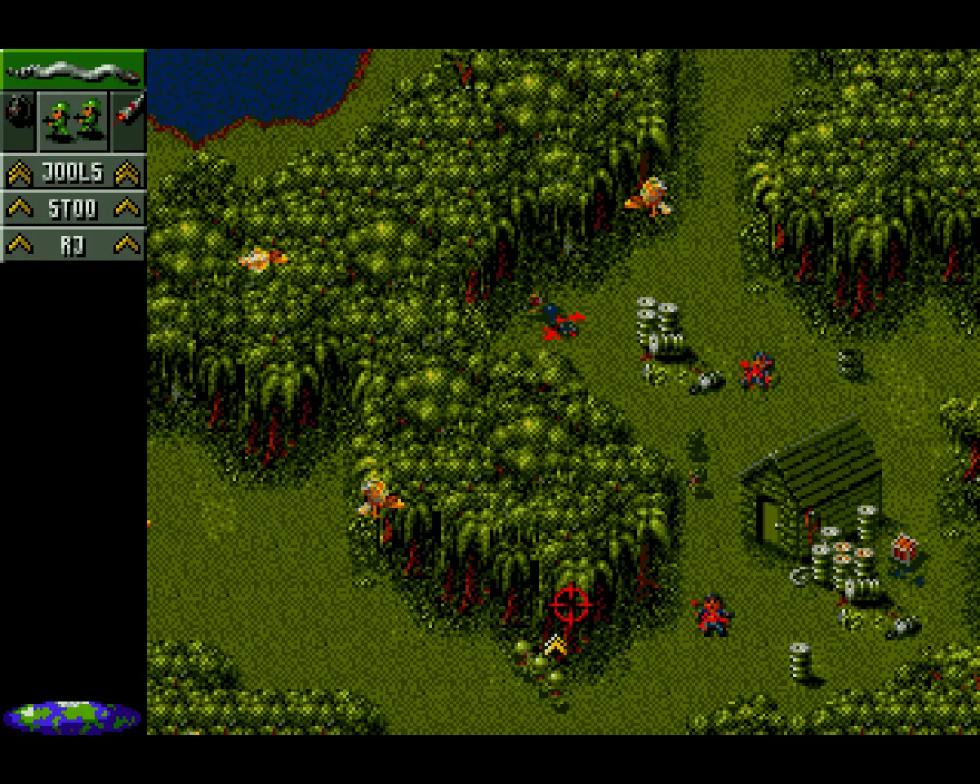
Cannon Fodder took yet another route. Sensible Software’s war did not belong to any specific conflict. It mixed jungles, deserts, snow, military vehicles and enemies without establishing a real historical context.
On the surface it was fast, colourful and almost carefree, accompanied by the provocative “War has never been so much fun”, the refrain of the song written by Jon Hare and made unforgettable by its sampled vocals on the Amiga.
And yet every soldier had a name. Survivors gained experience and rank, while every casualty added another grave to the hill shown between missions. The longer you played, the more the cemetery grew. The entertainment of virtual warfare was therefore challenged by the consequences the game continued to leave on screen.
Raid over Moscow and Desert Strike also deserve mention, even though neither recreates a war that actually happened. The former transformed the nuclear fears of the Cold War into an action scenario, while the latter absorbed the imagery of Middle Eastern conflicts as they were experienced through television in the early 1990s. Both turned the political and military tensions of their own time into gameplay.
The Cold War found a more complex representation in Metal Gear Solid 3: Snake Eater. Set in 1964, it used espionage, nuclear deterrence and the conflict between the United States and the Soviet Union as the foundation for a fictional story built around political manipulation and sacrifices destined to remain unrecognised.
It is only one of the many occasions on which Metal Gear has questioned the relationship between war, power and narrative, but I will try to resist the temptation to drag Hideo Kojima into every chapter of this series.
The Middle Ages Between History and Legend
Few periods have been reinvented as often as the Middle Ages. Videogames contain at least two different versions of them.
The first is made up of feudal societies, dynasties, trade, religion, warfare and everyday life. It is the Middle Ages that games such as Medieval: Total War and Kingdom Come: Deliverance attempt to reconstruct through political systems or believable environments.
The second belongs to legend. It is populated by noble knights, just rulers, witches, tournaments, princesses in need of rescue and forests where Robin Hood fights oppression. This vision matters too, because for centuries it has shaped the way we imagine the period.
Defender of the Crown sits squarely within this territory. Its England is not intended as the setting for an academic lesson, but for a medieval adventure. The same is true of Conquests of the Longbow, which turned the legend of Robin Hood into a graphic adventure built around puzzles and decisions, or Chronicles of the Sword, which I played on PlayStation and which brought the Arthurian cycle to the screen through Gawain, Camelot and Morgan le Fay.
In games like these, history is difficult to separate from literature, cinema and folklore. Robin Hood and King Arthur may tell us little about the daily lives of medieval people, but they reveal a great deal about how successive generations have reinvented the past to talk about justice, power, courage and identity.
When Myth Becomes Action
Mythology changes the relationship once again. There is no single definitive version of Greek, Norse or Egyptian myths. They are stories that have travelled through centuries of traditions, rewritings and interpretations.
Videogames have found in this heritage an almost inexhaustible reserve of heroes, monsters, places and conflicts.
Gods, developed by The Bitmap Brothers and released in 1991, built its identity around temples, statues, creatures and challenges inspired by classical imagery. It did not adapt one specific myth, but used its forms to construct an ancient, supernatural world.
Age of Mythology transformed gods and legendary creatures into units, powers and strategic factions. Invoking a deity was no longer simply a narrative or religious act. It produced a concrete effect on the game.
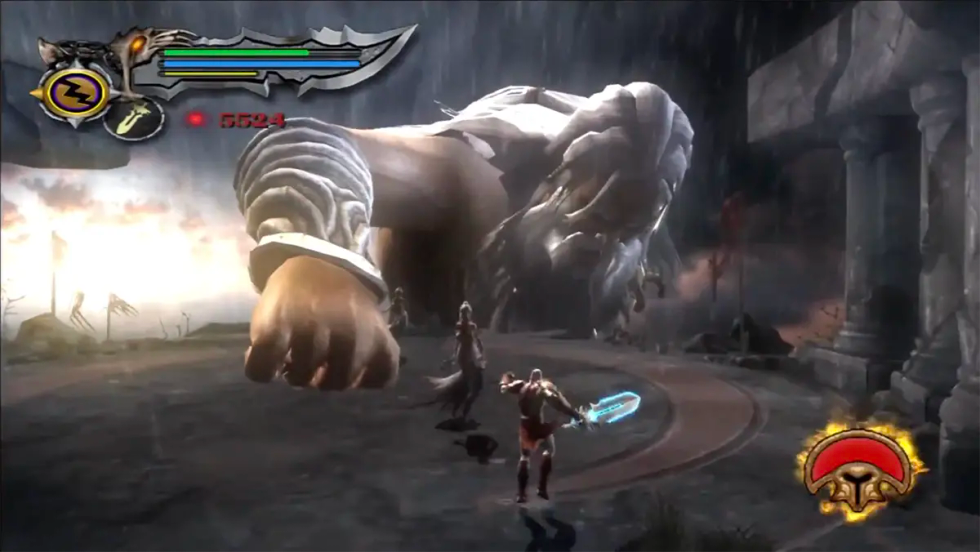
With God of War, myth was reorganised around a new protagonist. Kratos is a modern fictional creation who moves through this inherited tradition, fights its creatures, confronts its gods and alters the relationships between its figures.
The series does not attempt to repeat the deeds of ancient myths. It uses them as material for a new tragedy built around rage, guilt, revenge and, in the games set within the Norse world, the relationship between a father and his son.
The player no longer simply witnesses stories about the deeds of gods. They enter their world and challenge their authority through their own actions.
The Past Never Returns in the Same Form
A historical videogame is not a transparent window onto the past. It is always an interpretation. It could hardly be otherwise.
Developers decide which period to show, who the player will control and which elements will become rules. A civilisation can become a sequence of technologies; a war, a mission to complete; the Middle Ages, either a place to inhabit or a knightly adventure; mythology, a system of powers and combat.
Civilization asks us to imagine paths that never existed and impossible encounters. The Oregon Trail shows the vulnerability of those who move through history without being able to control it. North & South turns a conflict into a personal memory and a gateway to curiosity. Kingdom Come: Deliverance tries to restore the tangible weight of living in another period.
Assassin’s Creed travels through the past, drawing heavily on real people and historical periods. Red Dead Redemption 2 tells the story of a world as it gives way to the one that follows it. God of War demonstrates that even the myths of the gods can be rewritten when the player enters the story as its protagonist.
The past cannot be changed. Inside a videogame, however, it can be explored, reconstructed, simplified and even contradicted.
We do not, of course, actually travel back in time. Instead, we move through a version of the past built around our actions. By looking at what a game allows us to do, and at what it prevents us from even seeing, we can understand what kind of history it has chosen to tell us.
A history that no book from the past could have told in quite the same way.
Reader memories
Comments, memories and points of view stay here, beside the article.
Comment rulesLog in or register to leave a comment.
Leave a comment
Create your account
Loading comments...