





Microsoft Windows
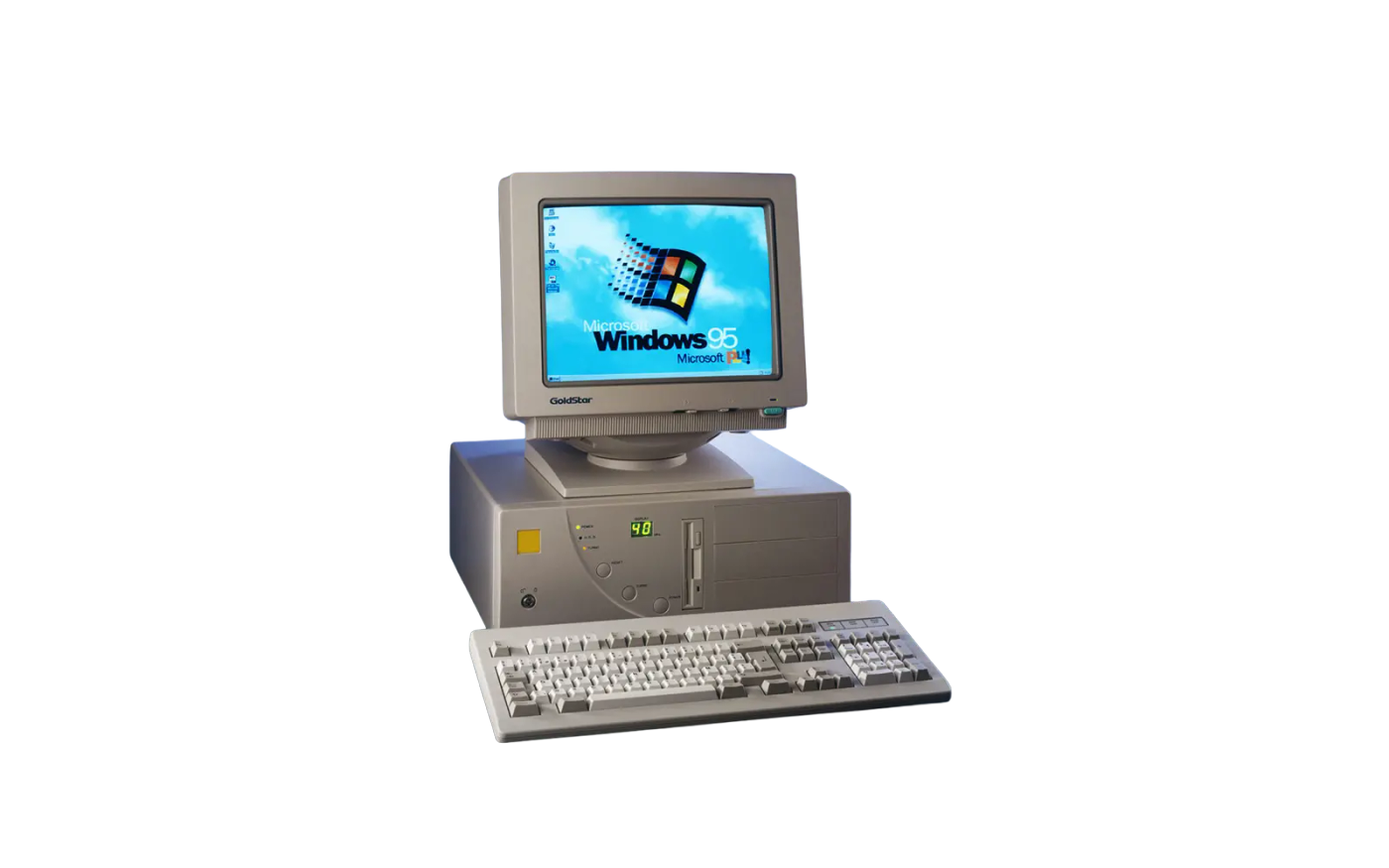
Released by Microsoft in 1985 as a graphical environment for MS-DOS, Windows became a major PC gaming platform mainly from the 1990s onward. Windows 3.x began to sit alongside DOS, but Windows 95, Windows 98 and DirectX gradually moved PC gaming toward a more accessible and standardized environment, better suited to modern multimedia hardware.
Unlike a console or a home computer, Windows does not represent a single hardware configuration. Its technical identity depends on PC-compatible machines, x86 and later x86-64 CPUs, available RAM, VGA, SVGA and accelerated 3D graphics cards, and increasingly integrated audio solutions. Media evolved from floppy disks and CD-ROMs to DVD-ROMs and digital distribution, while DirectX gave developers a common layer for graphics, audio, input and networking.
Its rivals changed over time: first MS-DOS, Amiga, Macintosh and 16-bit consoles, then PlayStation, Nintendo 64, Dreamcast, Xbox and later console generations. Windows has no sales figure comparable to a single console, but it shaped modern PC gaming more than any one machine. Its legacy runs through Age of Empires, Half-Life, Diablo, StarCraft, The Sims, Unreal Tournament, Max Payne and World of Warcraft.