



At a time when people are reading less and less, it is easy to forget where some of the characters we know so well actually came from. Batman, Spider-Man and the X-Men, but also Tintin, Asterix, Diabolik, Dylan Dog, Goku and Kenshiro, already had a face, a world and a language of their own before appearing on television or computer screens.
Unlike what we saw in the previous chapters, especially with literature as a source of inspiration, comics did not require developers to start from words alone and imagine an entire world. The characters already had faces, along with framing, scenes, rhythm and onomatopoeia, all elements that provided a clear visual direction. The developer's task was therefore to understand how to translate something audiences already knew and recognised into something that could work on a screen and, above all, be played.
When superheroes filled the arcades
American comics made this transition almost naturally in arcades around the world.
Superheroes were practically made for arcade machines. Costumes, poses and special powers remained instantly recognisable even when reduced to a handful of pixels. Players already knew what Wolverine, Cyclops, Spider-Man or Captain America were supposed to do.
Between the late 1980s and the 1990s, the invasion of arcade cabinets by comic-book characters became almost inevitable. Teenage Mutant Ninja Turtles, X-Men, The Punisher, Captain America and the Avengers and Spider-Man: The Video Game reduced complex fictional universes to their most immediate components: movement, combat, powers and cooperation.
It was an inevitable simplification, but one that worked precisely because the comic books had already done much of the groundwork. Wolverine had his claws, Cyclops his optic blast, Hulk his brute strength. Video games simply turned those characteristics into rules the player could understand immediately.
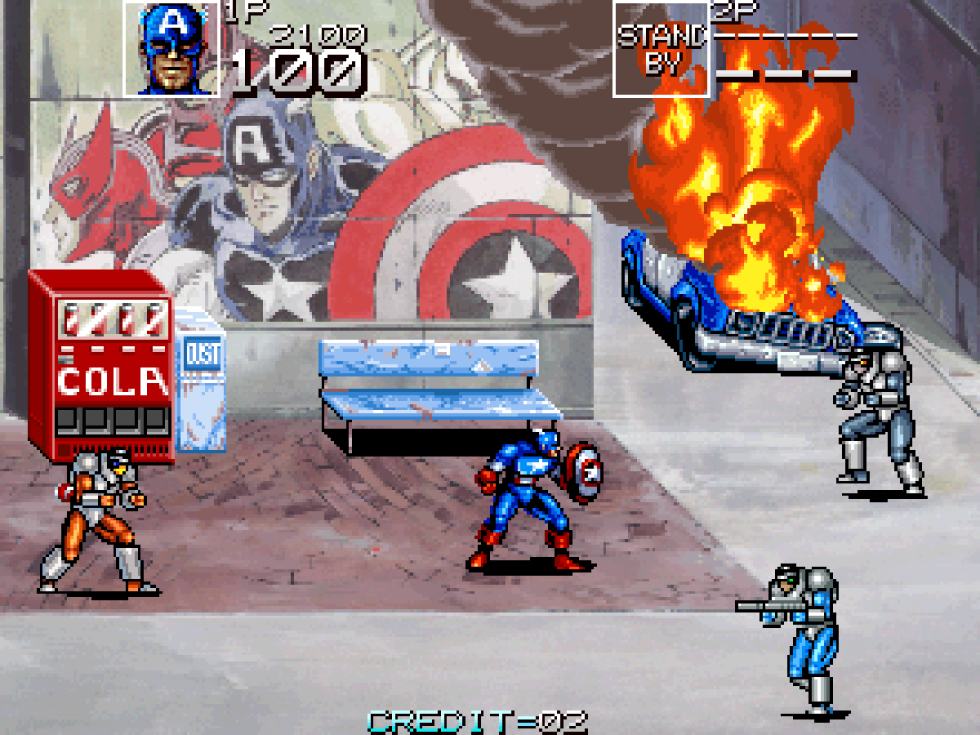
Capcom would push that relationship even further. After X-Men: Children of the Atom and Marvel Super Heroes, X-Men vs. Street Fighter arrived in 1996. Wolverine and Cyclops were no longer simply lifted from their own universe and placed inside a video game. They were fighting Ryu and Chun-Li, sharing the same space with characters who had been born directly on a screen.
Video games were no longer simply borrowing characters and their worlds from comics. They were beginning to make them coexist within the same shared imagination.
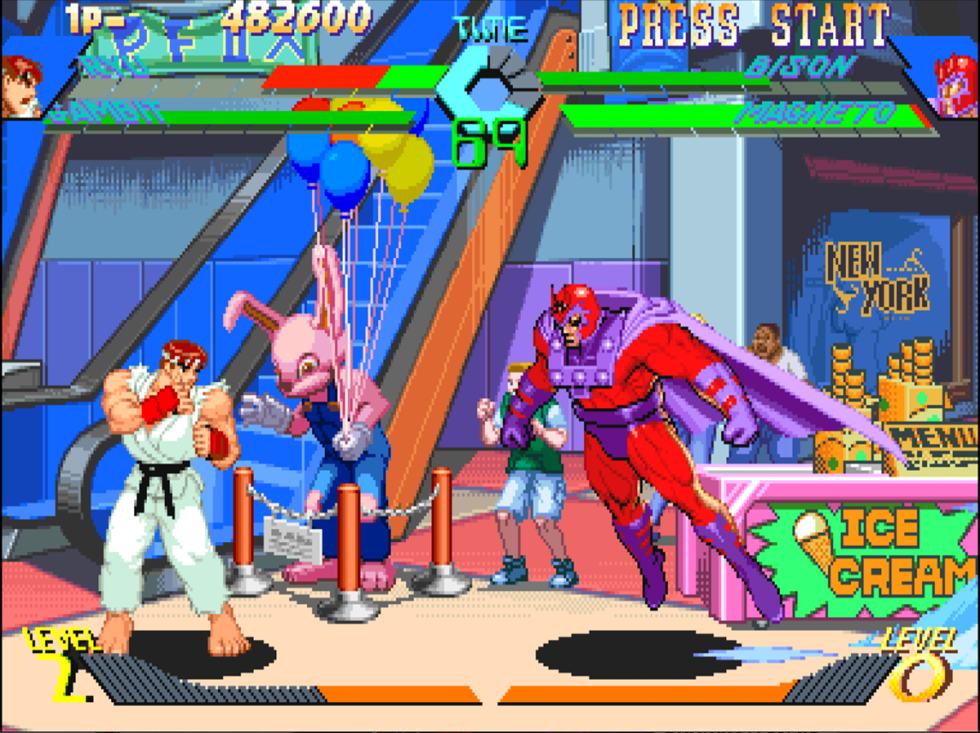
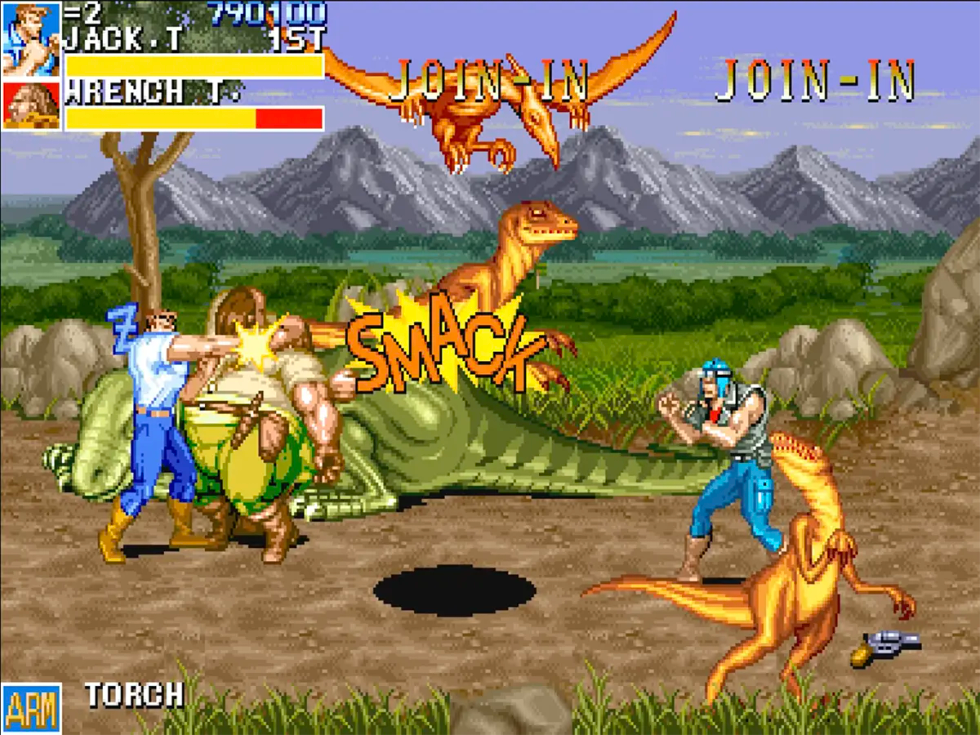
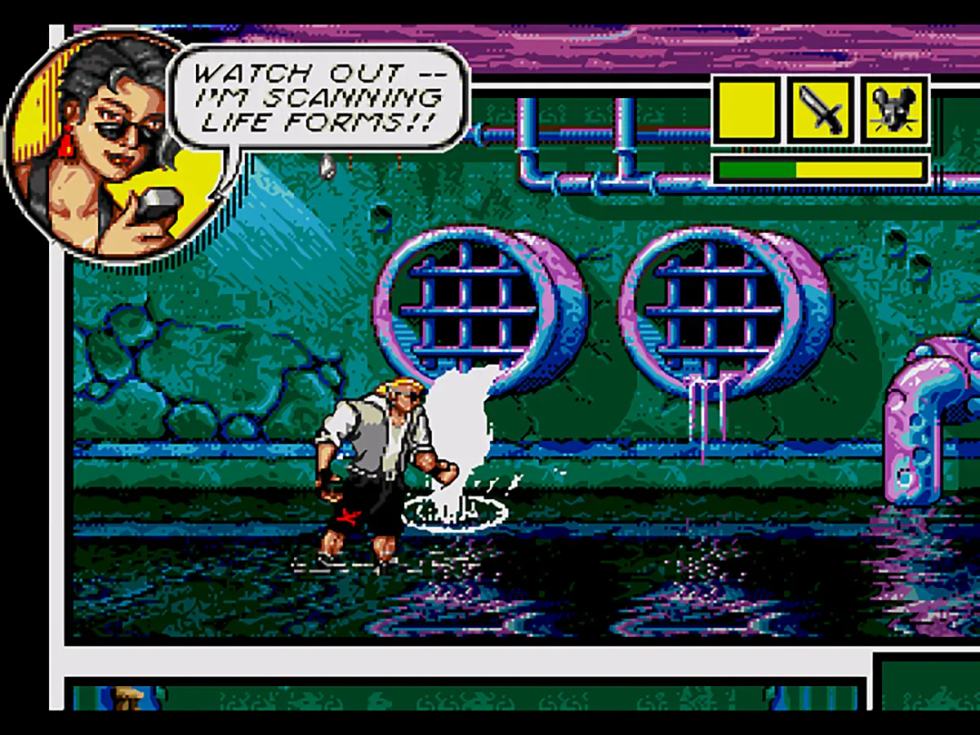
But a few years earlier, Cadillacs and Dinosaurs had already shown that developers could go beyond the simple licensed adaptation.
Capcom's 1993 coin-op took its characters and setting from Mark Schultz's Xenozoic Tales, a comic far less familiar to European audiences than Marvel's properties. For many players, Jack Tenrec, Hannah Dundee and that bizarre post-apocalyptic world populated by dinosaurs were discovered through an arcade cabinet, often without them ever having seen the original comics.
During the action, comic-book onomatopoeia and graphic effects also appeared on screen: BOOM, SMACK and other words made sound visible. They did not alter the gameplay, but they constantly reminded the player of the language that world had come from.
Comics were beginning to leave something more than their characters on the screen.
From the Italian newsstand to the computer
In Italy, the relationship between comics and video games became particularly close.
Before movies, streaming platforms and huge multimedia franchises made it normal to encounter the same character across dozens of different media, there was one place where millions of Italian readers regularly met their heroes: the newsstand.
Tex, Dylan Dog, Nathan Never, Diabolik, Lupo Alberto and Cattivik belonged to very different worlds, but they had something in common. Their identities were deeply tied to the printed page.
Between the late 1980s and especially the early 1990s, some of those characters began appearing on our computers.
Simulmondo is probably the most interesting case because the Bologna-based software house attempted to transfer not only comic-book characters, but even part of the publishing habits surrounding them. It brought characters such as Dylan Dog, Tex and Diabolik to home computers and experimented with regular episodic releases much like a comic series. Simulmondo's collections were published serially and even distributed through newsstands.
From a strictly gaming perspective, not every release was memorable. Technical and production limitations were often obvious, as were rigid gameplay and uninspired level design. But the idea was far more ambitious than it might appear today: turning the computer into a place where players could wait for the next issue and discover how the story would continue.
Diabolik was perhaps the most ambitious attempt, with a long sequence of episodes that brought the King of Terror to life on screen and freed him from the static nature of the printed page.
In some cases, the connection came full circle.
With Dylan Dog: Gli Uccisori, for example, the video game and comic arrived together. The package included the short unpublished comic Il ritorno degli uccisori, which introduced the events of the adventure. This was no longer simply about taking a familiar character and putting him inside a video game. You read the beginning of the story on paper, then continued it in front of the computer.
You opened the box, read the comic, then switched on the computer.


Paper and computers met directly in Simulmondo's Dylan Dog games, from the comic included with Gli Uccisori to the episodic adventures released as a series.
For those who had grown up discovering these characters at the newsstand, the connection between comics and video games became even stronger.
But comic-book history is not made entirely of heroes, detectives and action characters. Some were created primarily to entertain through humour. Lupo Alberto and Cattivik are good Italian examples, while Garfield offers an obvious American counterpart. Even a comic strip built around jokes and characterisation could find a new dimension when translated into bits.
Tintin, Asterix and European comics
The United States and Japan have undoubtedly made enormous contributions to comic-book history, but Europe has an equally important tradition of its own.
Franco-Belgian bande dessinée produced some of the most enduring and recognisable characters of the twentieth century.
Tintin, Asterix, Lucky Luke, the Smurfs, Spirou and Marsupilami have appeared repeatedly on computers and consoles across very different hardware generations.
Once again, moving from one medium to another was not automatic. Developers had to work out how to translate characters and stories with very different characteristics into video games.
Tintin is fundamentally rooted in exploration, investigation and adventure. Asterix is driven by pace, fighting, comedy and the superhuman strength that sends Roman legionaries flying through the air. Lucky Luke brings the western with him, filtered through caricature.
The same medium of origin, comics, could therefore suggest entirely different kinds of video games.


Tintin and Asterix show how the same European comic tradition could inspire very different kinds of video games.
Disney: comics or animation?
With Disney characters, the distinction becomes even more complicated.
Mickey Mouse and Donald Duck originated in animation, but it would be impossible to tell the history of twentieth-century comics without acknowledging their enormous second life on the printed page. Carl Barks, Floyd Gottfredson, Romano Scarpa and many other artists and writers built worlds and characters that became an integral part of Disney's identity for generations of readers, especially in countries such as Italy.
For many of us, Donald Duck was not simply a character moving across a screen.
He was also, and perhaps above all, the character we encountered while turning the pages of Topolino.
By the time Mickey, Donald and the rest of the Disney cast reached Sega consoles and countless other systems, comics and animation had become so deeply intertwined that it was difficult to determine which side was influencing the video games more strongly.
Disney deserved a mention in this chapter, but I would rather leave the deeper relationship between these characters and video games for the next instalment. Castle of Illusion, World of Illusion, QuackShot, Goof Troop and, much later, Kingdom Hearts are particularly useful for understanding how the language of animation was translated into playable form.
And if the boundary between comics and animation is thin with Disney, it becomes even harder to draw when manga and anime enter the picture.
Manga, anime and video games
When we look at Japan, separating the different media becomes even more difficult.
Dragon Ball, Ranma ½, Sailor Moon, Hokuto no Ken, JoJo's Bizarre Adventure and Naruto all originated on paper, yet much of the international audience first encountered them through animation. In some respects, it is almost the reverse of the Disney situation.
Video games therefore ended up drawing from both languages at once.
Dragon Ball is probably the clearest example.
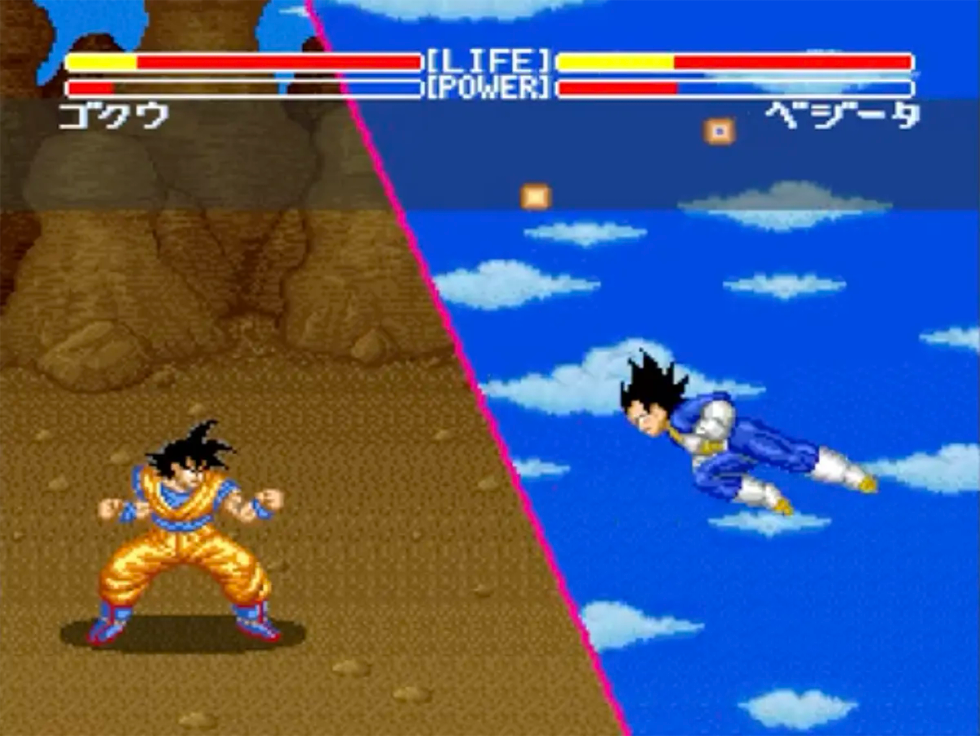
Turning the fights imagined by Akira Toriyama into video games meant dealing with characters who could fly, move at impossible speeds and launch energy attacks across enormous distances. The Super Butōden series was already attempting to translate those elements into game mechanics: opponents could move far apart, fight over large distances and continue battling even when they no longer shared the same screen.
The challenge was not simply to put Goku into a fighting game. It was to find the most convincing way possible to reproduce the distinctive style of combat from the original manga in playable form.
Ranma ½ also found a natural home in fighting games. Sailor Moon appeared on both consoles and arcade machines. Hokuto no Ken fitted easily into action games: the 1989 Mega Drive title based on the series was released in the West as Last Battle, after the licence was removed from the international version. Many years later, Naruto would show just how closely manga, animation and video games could now feed into one another.
Drawing a strict boundary here becomes almost impossible. The character may originate on the page, but movement, colour, voices and the spectacle of the fights often come directly from the anime.
Then there is Dragon Quest: The Adventure of Dai, where the relationship between comics and video games becomes even more curious.
This time, the starting point is a video game. The universe of Dragon Quest supplied the ingredients for a fully fledged manga. The Adventure of Dai began on paper in 1989, became an anime and, many years later, returned to video games through new productions based directly on its own story.
The circle closes and immediately starts chasing itself again: video game, manga, anime, video game.
By this point, it becomes very difficult to decide which medium is adapting which.
Sam & Max: when the creator crosses the boundary
Graphic adventures have always had a particularly natural relationship with comics.
Images, dialogue, framing, humour and characters were already central to their language. The difference was that the player could intervene in the rhythm of the story, deciding how to proceed rather than simply following the sequence of panels chosen by the author.
Sam & Max Hit the Road is one of the most interesting examples because Sam and Max originated on the printed page, while their creator Steve Purcell also worked at LucasArts and was directly involved in the game's development.
The transition was therefore not a simple licensing deal handed over to people unfamiliar with that universe. The person who had created it was directly involved.
Purcell brought his characters into video games while preserving their absurd humour, surreal violence and hilarious parody of the archetypal American detective. Sam and Max were not reshaped simply to fit the usual LucasArts formula.
LucasArts gave their creator the opportunity to build an adventure around his own characters.
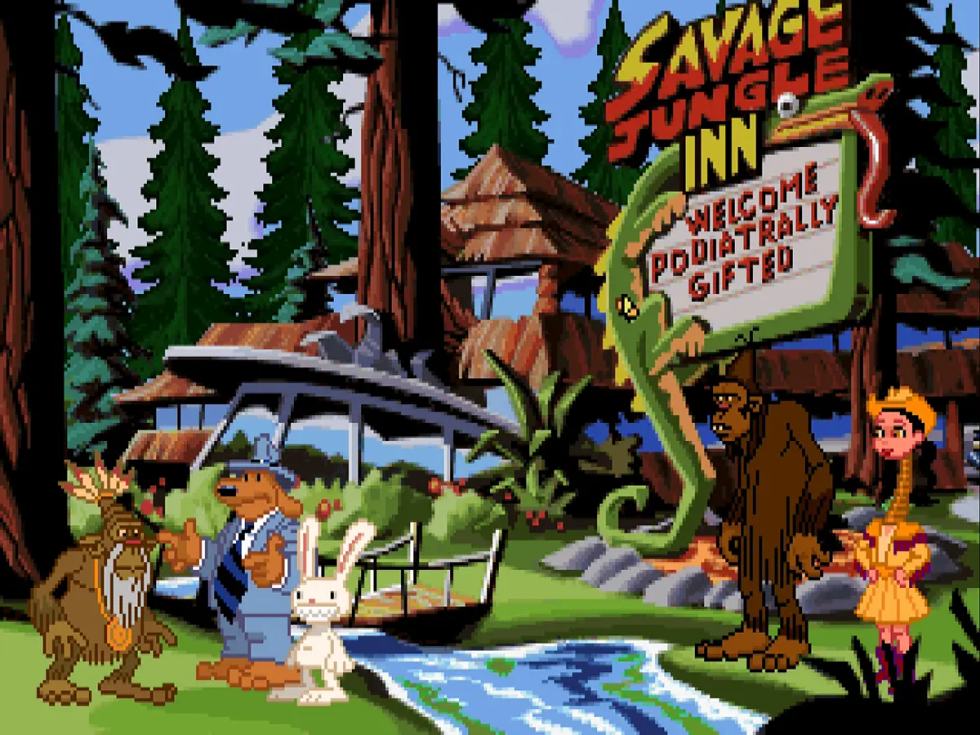
Purcell's story becomes even more interesting when we remember that he had already contributed directly to the visual identity of the first two Monkey Island games, working on backgrounds and animation and creating their famous cover artwork. It is a revealing detail, showing how permeable the boundaries between comic artist, illustrator and video game artist could be during those years.
Dave Gibbons beneath a steel sky
Beneath a Steel Sky has something in common with Purcell's work at LucasArts, but with some important differences.
There was no existing comic to adapt. Revolution Software was creating an original universe and brought in Dave Gibbons, one of the most recognisable visual artists in British comics and already famous for Watchmen, to help shape the project's visual identity. Gibbons contributed to the design of characters and environments, bringing years of comic-book experience into the development process.
As we already saw with Simulmondo, the relationship did not remain confined to the screen.
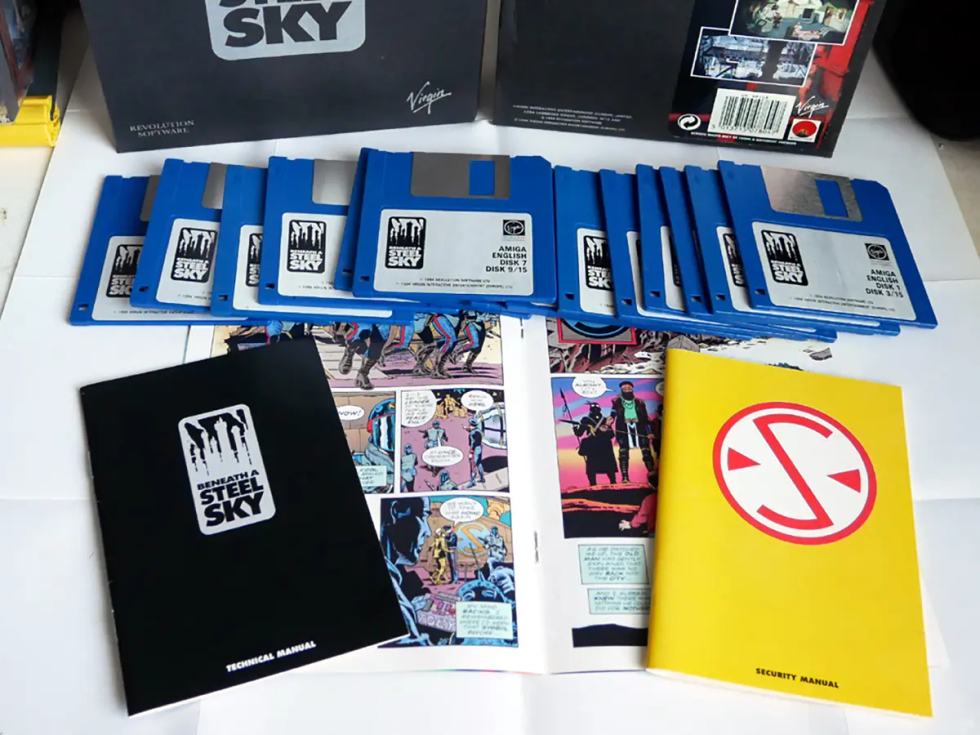
The original package also contained a short comic drawn by Gibbons, designed to introduce Robert Foster and his world before the player even started the adventure.
It is one of those cases where the physical edition actually meant something to us players. Right, Sony?
You opened the box, read the comic and then inserted the disk. Once the game had loaded, the universe you had just encountered in panels came alive on the screen.
Purcell and Gibbons therefore tell us something very similar. Both show that the relationship between comics and video games did not necessarily have to begin with the adaptation of an existing work.
In both cases, the comic-book artist was not simply providing drawings. He was helping to create the visual identity of the video game itself.
Comix Zone: the game that put you inside the page
In 1995, Sega released Comix Zone.
Sketch Turner did not come from an existing comic. He was an original character, an artist who was literally sucked into his own creation.
The levels were pages to cross. The environments were panels. Enemies were drawn in front of the player's eyes. Sketch broke through borders, moved between frames and physically travelled from one part of the page to another.
This was not an adaptation of comic-book content.
The structure of the comic itself became gameplay.
That distinction is fundamental. Cadillacs and Dinosaurs retained some graphic elements from its source material; Comix Zone turned the page itself into the environment the player had to navigate.
The player was no longer reading a sequence of panels arranged by the author.
They were walking through it.
When the panel became three-dimensional
With the transition to 3D, the relationship changed again.
Turok: Dinosaur Hunter transformed a character whose publishing history had begun decades earlier into a Nintendo 64 first-person shooter in 1997. For many players, Turok was primarily a world of dinosaurs, relentless fog, exploration and hugely powerful weapons. Its comic-book origins almost disappeared into the background.
Shadow Man did something similar a few years later with another property associated with Valiant, transforming it into a dark action-adventure with strong horror elements.
Comic-book origins no longer needed to reveal themselves through speech balloons, panels or other recognisable graphic devices. Panels gave way to polygons, three-dimensional environments and a language that was now unmistakably that of video games.
The comic became the source for characters, stories and worlds, while the video game was free to rebuild them according to its own rules.
In 2003, XIII took almost the opposite approach.
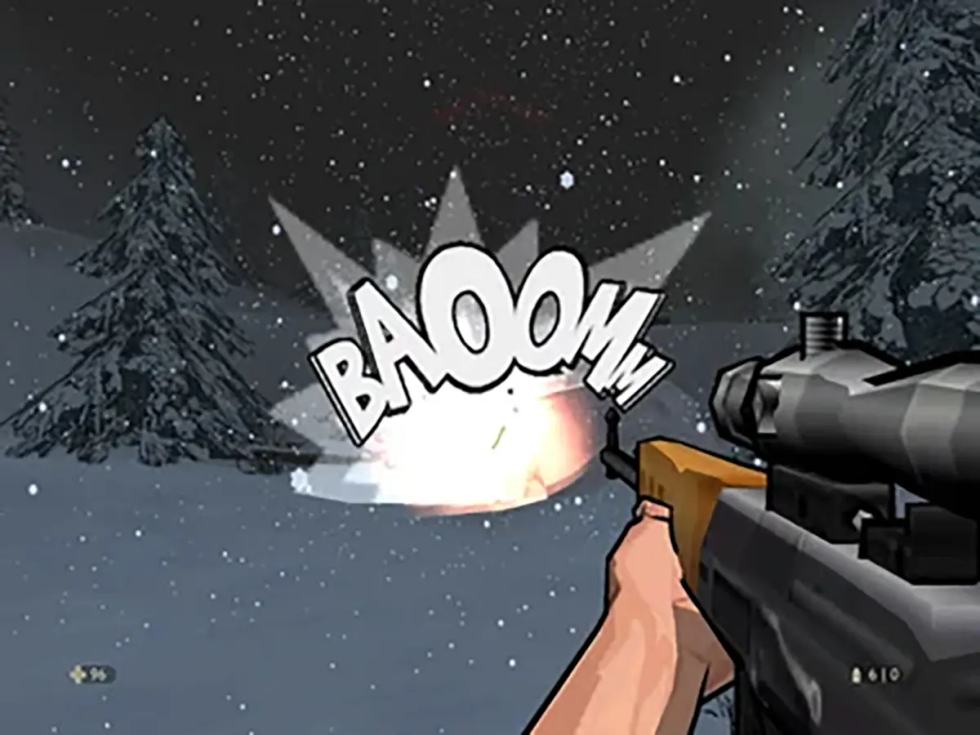
Ubisoft's FPS, based on the Franco-Belgian series by Jean Van Hamme and William Vance, created a three-dimensional world without forgetting where it came from. And not simply through cel shading. Panels, close-ups, onomatopoeia and small frames showing events happening elsewhere appeared directly on the screen. Even the sound of footsteps could become visual information.
It was a three-dimensional FPS that tried to preserve as many elements of comic-book language as possible.
Where Turok and Shadow Man left comics behind the scenes, XIII stubbornly kept showing them on screen.
In 2007, The Darkness would move the relationship back towards a freer reinterpretation. Jackie Estacado came from Top Cow's comics, but Starbreeze's game now spoke fully in the language of three-dimensional action games without losing the darkness and supernatural character of its source material.
And, as a side note, calling it a modern action game still feels strange: almost twenty years have passed!
Comics strike back
Meanwhile, narrative adventure games had never really stopped talking to the printed page.
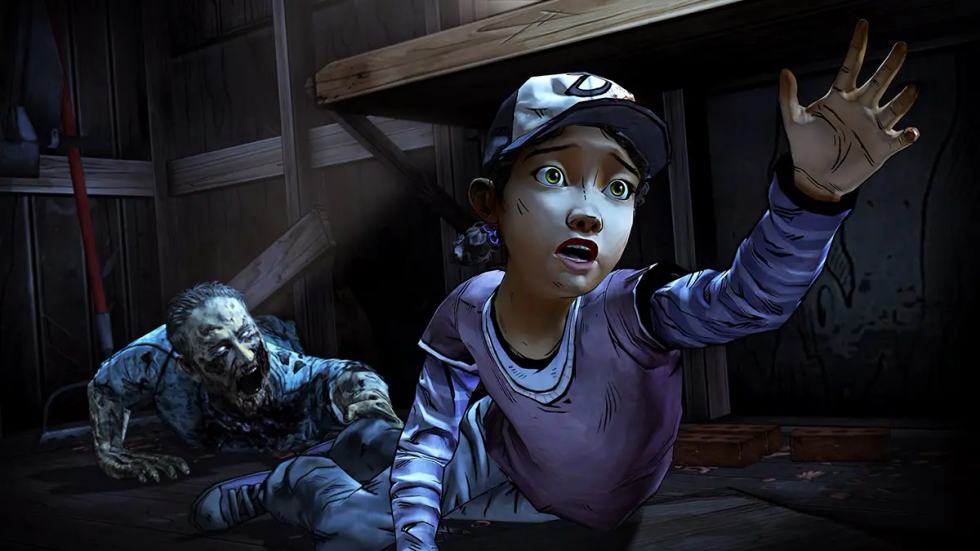
Bone brought Jeff Smith's comic into the world of the graphic adventure. Telltale's The Walking Dead later showed just how effective that relationship could still be, creating new characters and new stories within the universe created by Robert Kirkman.
The Wolf Among Us did something similar with Fables, turning it into an interactive noir, while Blacksad: Under the Skin brought the European tradition back into focus through the world created by Juan Díaz Canales and Juanjo Guarnido.
Decades after Sam & Max, the affinity was still obvious.
Comics move through separate images that the reader mentally connects. Graphic and narrative adventures add something new: between one image and the next, there can be a decision made by the player.
A world inside a panel
Comics have given video games thousands of characters, but simply listing every licensed title would tell us very little about how deep the relationship really became.
They provided worlds, archetypes, framing and ways of representing movement. They taught us how a character could be recognised through just a few visual signs and even how a sound could be made visible through a written word.
Sometimes the transition was almost direct, even in terms of format and distribution: from Italian newsstands to home computers with Diabolik, Dylan Dog or Tex. In other cases, a character crossed decades of printed pages before being reborn in three dimensions, as happened with Turok.
Sometimes video games openly preserved the language of the printed page. Cadillacs and Dinosaurs accompanied the dull impact of punches with comic-book onomatopoeia, XIII built an FPS that continued to use panels, and Comix Zone turned the panel itself into a space the player could enter.
In other cases, the comic artists themselves crossed to the other side. Steve Purcell and Dave Gibbons brought their experience into video game worlds that did not simply copy comics, but absorbed some of their visual sensibility.
And in Japan, manga, anime and video games eventually formed a circuit in which each language continued to chase and influence the others in an almost endless exchange.
When a novel is translated into a video game, the player can finally see something they had previously imagined mainly in their own mind.
With comics, it is different.
That imaginary world had already been turned into images. It already had faces, colours, framing and even a way of making sounds visible.
What it still lacked was movement.
And the possibility for the player to step inside it.
Reader memories
Comment on the article and join the discussion.
Comment rulesLog in or register to leave a comment.
Create your account
Loading comments...