


Revolution Software holds a special place in the history of European adventure games. Before the international success of Broken Sword, the British studio had already tried to push the genre beyond its established boundaries with Lure of the Temptress and its ambitious Virtual Theatre system. Soon afterwards, Beneath a Steel Sky showed how atmosphere, writing and a distinctive visual identity could work alongside technology that was still evolving.
Behind those games, however, there were not only creative ideas and memorable characters. There were small budgets, rudimentary tools, publisher pressure, production problems and a constant search for new technical solutions.
Tony Warriner, co-founder of Revolution Software, experienced all of this first-hand. In our interview, he discusses his early years with the Commodore 64, Camputers Lynx and Amstrad CPC, the creation of Virtual Theatre, working with Dave Gibbons, the evolution of Revolution’s internal tools and the huge amount of animation hidden behind George Stobbart’s apparently natural movements.
It is a conversation that explores Revolution’s history without turning it into a perfect legend. Instead, it shows how difficult those games were to complete, and why they can still inspire anyone trying to create something personal today.
Before Revolution became associated with adventure games, what kind of games and systems shaped you as a developer? What made you want to build narrative-driven games?
My introduction to games came on the C64 more than any other system in the 1980s. We played a lot of different game styles on it.
I really liked the Jeff Minter games, then Andrew Braybrook’s Paradroid, and Elite, of course. But I also loved the text adventures from Level 9. They might have been text only, but, like with a good novel, your imagination fills in the world for you.


Andrew Braybrook’s Paradroid and Elite were among the games that made the strongest impression on Tony Warriner during his Commodore 64 years.
Curiously, perhaps, I never actually tried to program the C64. Instead, I had a very niche Camputers Lynx, on which I learnt Z80, and later an Amstrad CPC 464.
Lure of the Temptress introduced the Virtual Theatre system, which was very ambitious for the time. What was the original idea behind it, and what did you want it to achieve that other adventure engines did not?
We looked at a few Sierra adventures and decided to try to find a way to advance the genre with new engine technology, basically.
We had also been to a show and seen Level 9 demonstrate its new engine running a game called Raj. The game featured autonomous characters walking around, which further cemented our ideas.
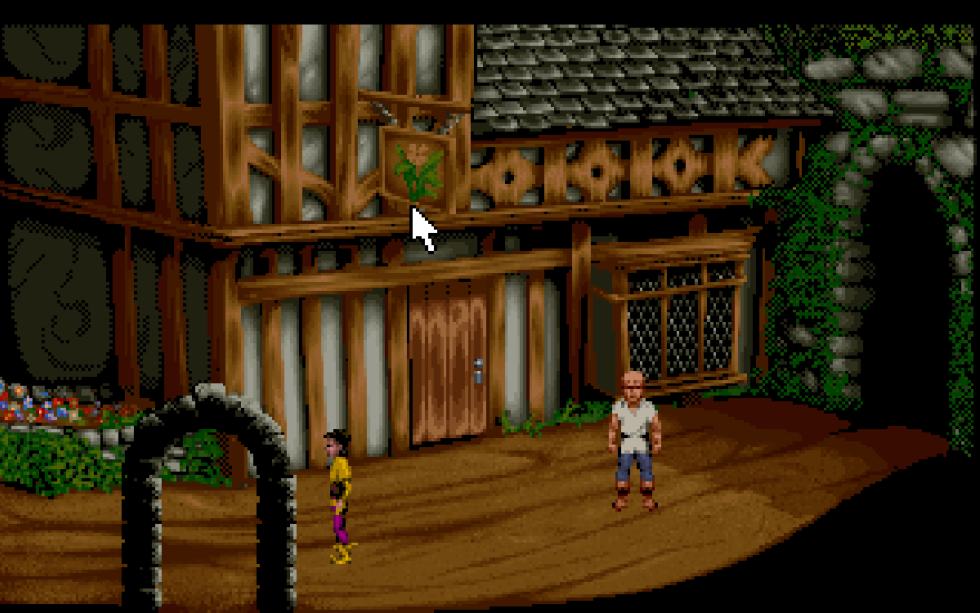
From a technical point of view, how did Virtual Theatre actually work? What were the hardest parts to make believable on machines with limited memory and processing power?
It did actually work, in the sense that all the character objects continued to run when they were off the current screen.
What was difficult was stopping characters from getting stuck as they entered or exited locations at the same time. The problems were more conceptual than CPU or RAM based.
When I thought about it recently, I realised we could have just faked the whole thing and no one would have known, and it would have been easier! But you have to try new things to see where they lead…
Lure of the Temptress has a very different feel from many other graphic adventures of the early 1990s. How did you balance player freedom, puzzle design and the risk of making the world too unpredictable?
I guess it feels different because we made this crazy engine and then had to fit the game around it.
It was all a big experiment to try to do something different. Probably we should have pivoted to some kind of top-down RPG, as it would have been a better technical fit.
But then, if we had, there would be no Broken Sword. 😉
Beneath a Steel Sky feels like a major step forward in atmosphere, writing and presentation. What changed inside Revolution between Lure and Beneath a Steel Sky, both technically and creatively?
For sure, we took a step back from the Virtual Theatre autonomy goals, although the engine could still do it, and leaned further into story and character design.
We had a slightly bigger budget this time around, and Dave Gibbons’ artistic input helped form a distinct look and feel.
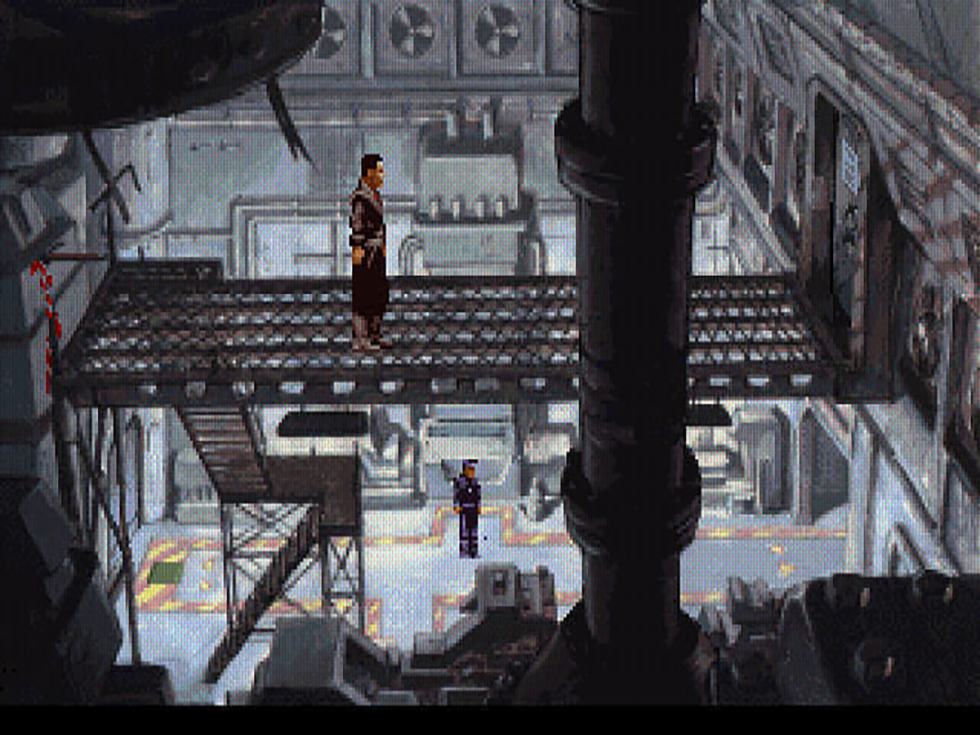
How did the collaboration with Dave Gibbons influence the way Beneath a Steel Sky was built? Did his visual storytelling change your approach to scenes, characters and pacing?
He created the look, and that certainly framed the game world from which the details of the design flowed.
Before all of that, we had written a top-level design, and that was what Dave worked with. So, us, then Dave, then us!
Adventure games depend heavily on tools: scripting, dialogue, object interactions, testing and debugging. What kind of internal tools did Revolution use in those years, and how did they evolve from one project to the next?
We did not have much for the first two games, in truth. It was very crude and command-line based.
Halfway through Beneath a Steel Sky, we took on the task of creating the Amiga version of King’s Quest VI. For this, we created some tools to organise the game assets, albeit in a very simple way.
Later, when we started Broken Sword, we looked at those King’s Quest tools and decided to create a much more ambitious asset tool that we called LINC.
That tool was then used for Broken Sword, Broken Sword II, Broken Sword 3 and In Cold Blood. LINC was very similar to a later commercial product called Alienbrain.


LINC, created during the development of the first Broken Sword, was later used for Broken Sword II, The Sleeping Dragon and In Cold Blood.
Broken Sword became one of the defining European adventure games of the 1990s. When you started working on it, did you already feel that Revolution was making a much bigger and more cinematic project?
We did, and that was indeed the idea.
The publisher wanted to go up against Monkey Island and was prepared to fund a far more ambitious project in order to do so. Even then, it was not until the reviews started coming in that we began to understand we had scored a major hit with it.
Looking back, what was the biggest technical or production challenge behind Broken Sword that players probably never noticed?
Firstly, it is a really big game! There is a lot of animation and a lot of dialogue. You can try any crazy interaction and you will get a unique response from George. Controlling that size was its own challenge.
But at a closer level, if you watch George walking around, you will see a lot of subtlety in his animation. There are actually hundreds of animation frames being carefully choreographed to avoid any kind of foot slippage.
No one has ever come close to matching this with 2D sprites, not even Revolution.
Your book covers the history of Revolution and the reality behind game development. Was there something you especially wanted to preserve or clarify by writing it?
Two things.
Firstly, to set down the way we did it and correctly assign credit where it was due.
Secondly, to understand how we did it, in order to regain some of the spirit of those early Revolution teams and continue to take risks and make interesting games.
Many players remember those games with nostalgia, but developers often remember the compromises, pressure and technical problems behind them. When you look back at Lure, Beneath a Steel Sky and Broken Sword today, what are you most proud of?
Lure of the Temptress and Beneath a Steel Sky were written on crazy-small budgets, which made finishing them at all a major achievement.
Broken Sword was slightly less pressured in that respect. I guess I am most proud of how well they all turned out, despite all the financial and creative pressure that everyone had to deal with from publishers back in those days.
Is there anything about Revolution’s history, your book or the making of those adventure games that you would like to add, but that I did not ask?
In the case of Revolution, I hope the studio and its games serve as an inspiration to others to follow their dreams.
The road was never easy for us, but we got those games done, and they were not bad.
Anyone can do this if they are determined enough!
The determination behind the adventures
What Tony Warriner describes is not only the story of three adventure games that entered the collective memory. It is also the story of a small studio that kept trying to move beyond its own limits, often without the time, money or tools it might have needed.
Virtual Theatre could have been faked, but Revolution chose to make it work for real. Lure of the Temptress might have become a completely different kind of game, but that experiment helped open the way for what followed. Broken Sword could feel natural and immediate to the player, while hundreds of carefully coordinated frames were hidden behind every step George took.
This contrast between apparent simplicity and invisible complexity is one of the clearest themes to emerge from Warriner’s words. Revolution’s games were not the result of an easy or inevitable journey. They were completed despite small budgets, publisher pressure and tools that still had to be invented.
Perhaps that is also why they are still remembered: not only for the stories they told, but for the determination required to make them possible.
Reader memories
Comments, memories and points of view stay here, beside the article.
Comment rulesLog in or register to leave a comment.
Leave a comment
Create your account
Loading comments...