



Steven Turner is one of the names behind Graftgold, the British development studio responsible for some of the most memorable games of the 8-bit and 16-bit era.
Alongside Andrew Braybrook and the other developers at Graftgold, he helped build a studio known for its technical expertise and attention to gameplay. Titles such as Paradroid, Uridium, Ranarama, Magnetron and Bushido remain an important part of British gaming history.
We had the pleasure of interviewing Steven about his first experiences with computers, the creation of Graftgold, his friendship and collaboration with Andrew Braybrook, and the changes that transformed the games industry.
We also talked about what he's doing today. Because, after all these years, Steven hasn't stopped programming.
Could you tell us how your journey into game development began? What first attracted you to programming, and what eventually led to the creation of Graftgold?
Our maths teacher started up a computer club. This was around 1969, before the age of home computers.
We built a simple computer that added two binary numbers and learnt ALGOL 60.
This was the age of punched tape and teletype terminals. We had to feed a tape containing our program into the computer, which compiled it onto a second tape. Then we waited for the machine to be loaded with the ALGOL runtime program before feeding in the compiled tape.
The results came back on another tape, which we fed into a teletype to get a printout.
It all seemed like magic.
Years later, I went on a government programming course and learnt COBOL. I worked for HMRC, then for an insurance broker. I was promoted to Systems Analyst, so I started programming at home, first on a ZX80 and then a Spectrum.
My inspiration came from the arcade machines in the local pubs. I was convinced I could create better games, but found it hard to make the ZX80 display a screen while the game was running.
3D Space Wars was the first game I created. When I found a publisher, I decided to leave work to make the most of the opportunity while it lasted.
I had saved a year's wages to enable me to take the risk. I had the feeling that the games market was going to be around for a while, but did not know how long.
I soon became isolated writing on my own, so I asked my friend Andrew to join me as an employee.
Graftgold was formed when royalties became too much for a sole proprietor. I would have had to pay excessive tax in a good year. Forming a company meant the royalties could stay in the company rather than attracting a high tax rate.
Graftgold became one of the most respected British studios of the 8-bit and 16-bit era. Looking back today, what do you think made the studio special compared to many of its contemporaries?
Andrew and I were both professionally trained programmers as well as avid games players.
This professionalism gave us an edge. We already knew how to write quality structured code.
This meant the games had fewer bugs and also let us design more complex algorithms that worked.
You worked closely with Andrew Braybrook on several legendary projects. How would you describe your collaboration, and how did your respective strengths complement each other?
At first, Andrew was converting my code to the Dragon 32 and then the C64.
Even at this stage, he would improve on my original game to use the extra capabilities of the target machine. He would take a routine and see ways it could be optimised.
I would adopt any improvements in my next game.
We shared methods to save space or to make things work a little faster. These were the two critical things you needed for the limited micros.
When Andrew started programming his own games, we spent most of the time working on our own individual games.
However, we had a friendly rivalry, so we would try to outdo each other and adopt ideas and techniques from each other.
Our training in structured programming gave us a good diagrammatic way to communicate ideas to each other. We would often share problems to come up with the best solution.
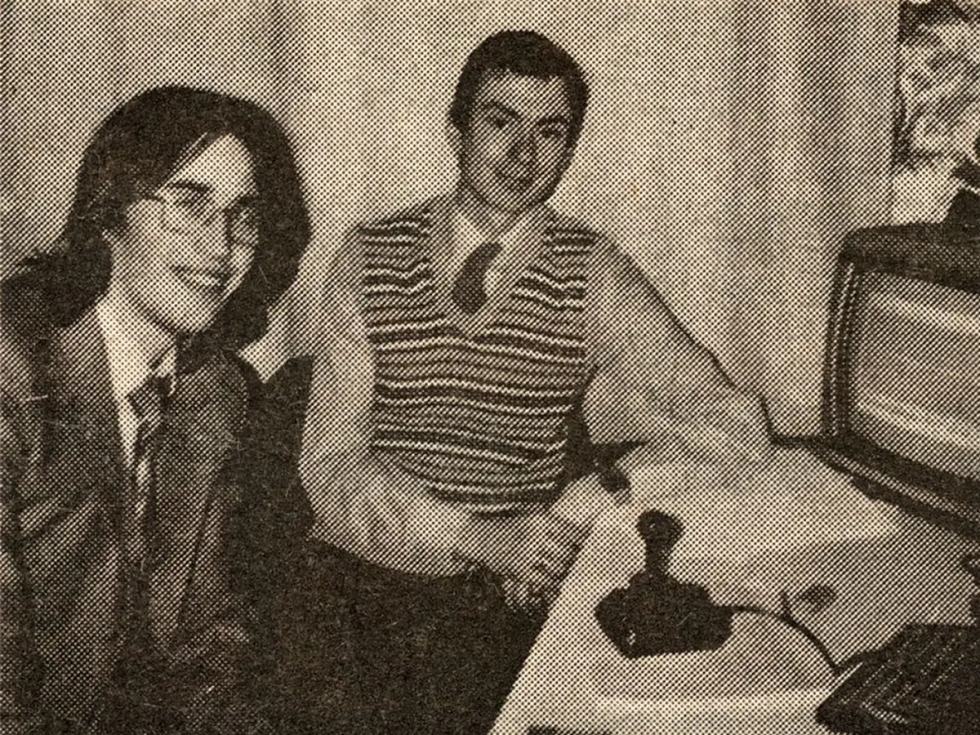
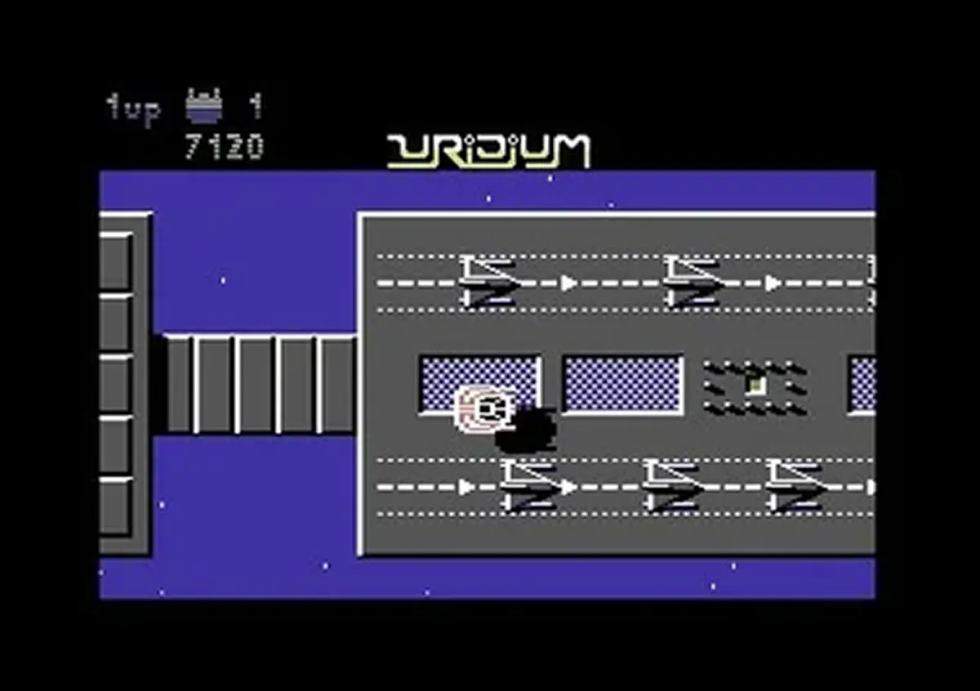
Paradroid and Uridium are still regarded as milestones in British game design. Did you realise at the time that you were creating something that would remain so influential decades later?
They both seemed special at the time.
I liked the gameplay design of Paradroid from the start. It was the only game that Andrew wrote that had an upfront design. Usually, he added things as he went along.
It was when the graphics changed to the Bas Relief style that the game really looked promising.
Uridium was more of a technical marvel.
The scrolling was there at the start, and we knew that if he could add a game and keep to the full frame rate, it would be the closest thing to an arcade game on a home micro.
We did not know that the games would last.
We considered them like pop singles, here today, gone tomorrow. But with hindsight, even pop singles are cherished years later.
The transition from 8-bit computers to more powerful systems brought many technical opportunities, but also new challenges. From your perspective, what was the biggest change during that period?
The biggest change was the way we needed to work.
Sound and graphics became specialist fields, and the era of solo programming was gone.
I realised we needed a team to create each game. I did not want to lose the individual aspect, so our method was to have a lead programmer supported by a team of experts.
Later, we tried to pair a lead artist and programmer.
For games with tight deadlines, we had to have a larger team.
Also, the development budgets increased dramatically. This meant more financial and project planning.
Keeping to schedule became a matter of survival.
Many players remember Graftgold games for their smooth controls, technical polish and addictive gameplay. Was there a particular philosophy behind your approach to designing games?
There were a few principles.
We would only do the best we could. We never settled for anything less.
We learnt early on to separate code that could be reused from code unique to a game. Reused routines were constantly improved, so they were lean, mean and reliable.
Our actual game design philosophy was to have a really good control mode and an interesting world to move in.
Choices of view and graphic style varied between games but were chosen considering the target machine.
We always played our own games with few cheat codes. That way, you hone the gameplay.
We tested the games on each other. You tend to get very good at your own game and need to calibrate the difficulty.
We liked to keep gameplay as simple as possible, with few rules.
So, like chess, complexity comes from the actual permutations of game moves rather than from too many features.
Looking back at your career, is there a game you're especially proud of, perhaps one that doesn't always receive the recognition you think it deserves?
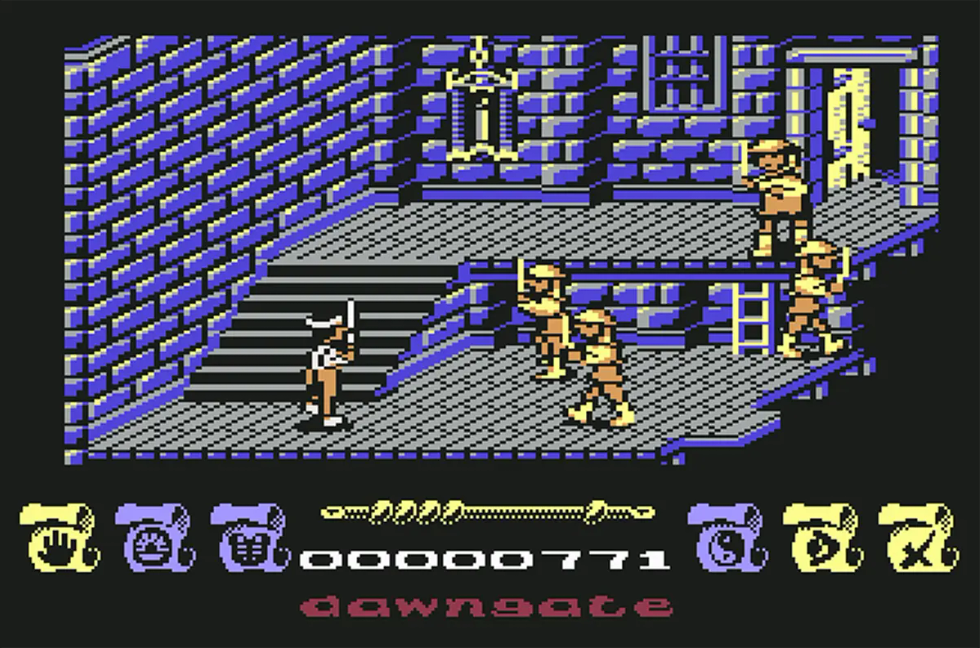
Perhaps my best underrated game was the final game I created on the C64.
I technically pushed the machine to use double-height hi-res sprites that could overlay each other in Z-order.
This meant you would not get a character's trousers going in front of another character while his body went behind.
No reviewer seemed to notice this. I have not seen it in any other C64 game before or since.
I made the NPC characters react to the player's actions and hunt the player when disturbed. You could try a stealthy approach to avoid waking the guards.
I made the music truly interactive, so it reacted to what happened on the screen.
In tense moments, like a film score, it reduced to the odd beat of a drum or bass note, changing instruments as the action built up.
I remember my son playing the game. He would not play it at night without company, as it got so tense.
Editor's note: Turner is referring to Bushido: The Way of the Warrior (1989), which featured the advanced sprite management and dynamic music system he describes.
The British development scene of the 1980s was incredibly creative. What do you remember most fondly about that era, and do you think something has been lost since then?
It was a time when we could do whatever we wanted.
Hewson accepted that we were the game designers and he was the publisher.
We had no advances and no financial worries, with a steady royalty stream.
All those things made it a very creative period for us.
It was a time of originality when games did not have to follow a set formula.
I think it has gone full circle now, and if you look beyond all the hyped franchise games, there are plenty of original indie games.
The difference is that the media seem to ignore them. Perhaps there are just too many.
If you look at any of the bigger media feeds, they seem to concentrate on a few titles with huge development and marketing budgets.
I did a press pack for my new game and did not even get a reply from any of the online magazines I sent it to.
Retro gaming has become more popular than ever. Why do you think games from that period continue to resonate with both longtime fans and younger generations?
I think that when people reach a certain age, they cherish the things that were around during their formative years, and have the money and time to revisit them.
There is also something in the old games that gets swamped by the amount of content in today's games.
Games from the 1980s had to play well. They could not compete with movies in graphics and storyline.
Have you ever replayed any of your own games in recent years? If so, did anything surprise you when seeing them through today's eyes?
I have played a few, notably Dragontorc, when I decided to reverse-engineer an online copy to recreate the source code.
Back in the day, the only source code for Dragontorc was handwritten on squared paper.
I thought the game stood up very well, especially the AI for the NPCs.
Some of the game ideas were way ahead of their time.
I had forgotten how immersive the game was. I jumped when I entered the first underground section and a skeleton ambushed me.
What advice would you give to young programmers and game developers who dream of creating games with the same passion and creativity that defined the early days of the industry?
Starting off on a retro system is a brilliant way to start.
There are many exciting developments appearing on the Spectrum Next or the C64.
Learning the skill of game development in a constrained space means the focus is on gameplay.
Learn how to do that before tackling the huge resources needed by games on modern machines.
If you want to do it as a career today, a good university degree is needed.
Do not think it's an easy trade. It is the hardest I have ever worked.
It's a volatile industry, with lots of developers losing their jobs.
Being independent is not really a commercial option unless you are very talented and very lucky.
All that said, it's something that is totally rewarding.
I still program just for fun and find it as addictive as ever.
Finally, what are you working on these days? Are there any current projects or activities you'd like to share with our readers?
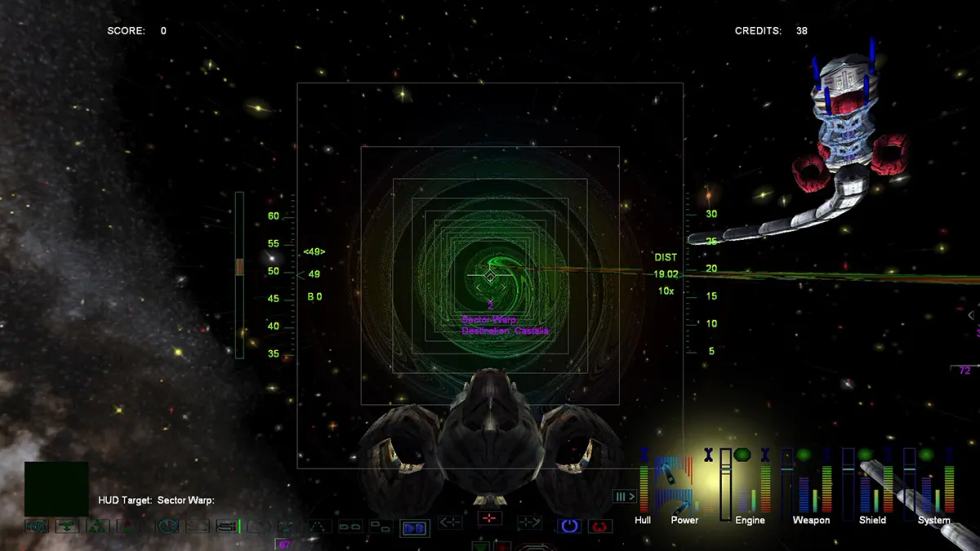
I have been working on a reprise of my first game, 3D Space Wars, for over ten years.
It was pre-released on Steam last year, and I am coming close to completing the release version.
It is called Deepest Blue, the name of the AI computer system that controls the ships of the Sol Alliance.
It is set in deep space.
The old enemy, the Seiddab, are back.
Both sides strive to gain a foothold in a deep-space environment connected by warp paths.
It is war. The Seiddab, a rogue AI mission originally intended to pioneer space colonisation, are competing with the Sol Alliance for resources.
The unique thing about the game is that the player can buy up to nine ships and send them on missions controlled by AI copilots.
The player can take over control of any of these whenever they want.
Thus, you can jump into a ship for the most exciting bits or switch to the copilot for a rest.
You can do your own thing or take on missions ranging from scouting, collecting resources, transporting freight and base building to fighting the Seiddab.
Discover Deepest Blue on Steam
We would like to thank Steven Turner for taking the time to answer our questions and for sharing so many memories from his career, from his earliest programming experiences to the present day.
And, of course, we wish him all the best with Deepest Blue!
Reader memories
Comment on the article and join the discussion.
Comment rulesLog in or register to leave a comment.
Create your account
Loading comments...