



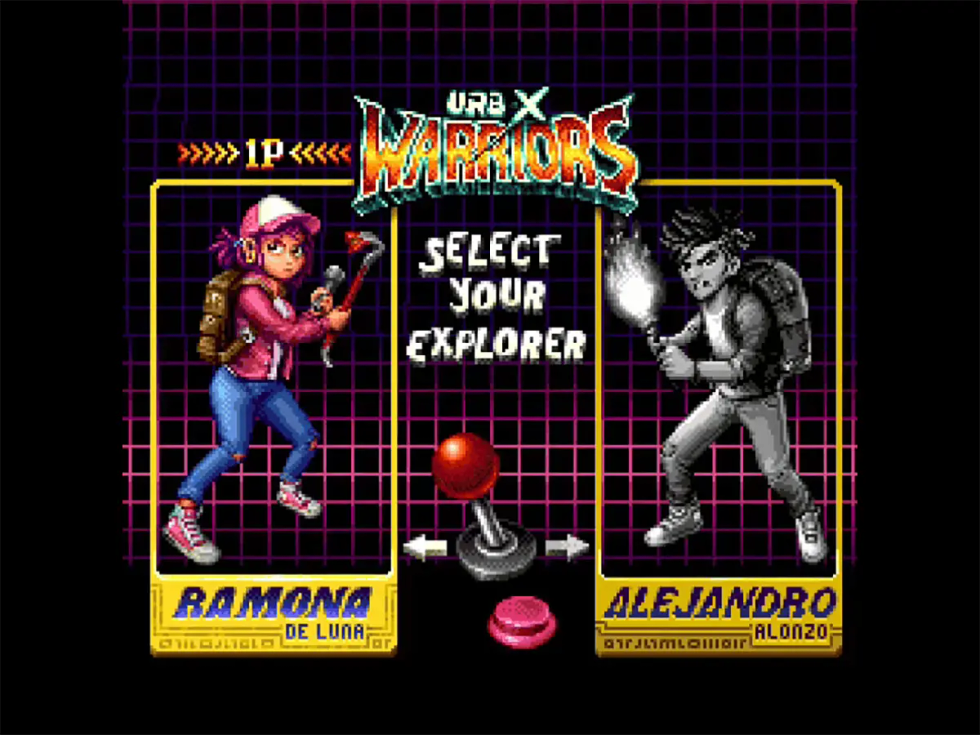
UrbX Warriors is back on Kickstarter, this time with a very specific goal: bringing its arcade action to Amiga AGA and Sega Mega Drive/Genesis. Behind the project are two names representing very different sides of British game development in the Nineties: Tony Warriner, co-founder of Revolution Software and part of the history behind games such as Beneath a Steel Sky and Broken Sword, and Stoo Cambridge, an artist closely associated with the Sensible Software era and titles such as Cannon Fodder.
The two actually met much more recently than you might expect. It began at Zzap! Live 2023, almost by chance, with a conversation about their respective experiences in the games industry. That led first to a Spectrum Next project that ultimately fell through, and then to the decision to create something entirely original.
That something became UrbX Warriors.
The new Kickstarter campaign for the 16-bit Edition is now live. At the time of writing, it has raised more than €11,000 towards its €22,090 goal, with more than one hundred backers and several weeks remaining before the campaign closes on September 17, 2026.
We asked Tony Warriner directly how the project came about, why he and Stoo chose Amiga and Mega Drive, and what it means to develop once again with the limits and characteristics of 16-bit hardware in mind.
Tony Warriner on UrbX Warriors
Retro-Gamers: What is the origin of UrbX Warriors, and how did the idea for the project first come about?
Tony Warriner: Stoo and I actually only first met when we were on a panel together at Zzap! Live 2023. Afterwards we got talking about our shared experience of the games industry and saw that we had a lot in common.
It was interesting that when we at Revolution were working on the early Broken Sword games, back in the 1990s, Stoo, at Sensible Software, was working on games like Cannon Fodder. We even shared a publisher at the time.
Out of all this came the vague notion that the two of us teaming up would be a pretty good idea. Then, a few months later, we were approached to consider porting a classic 1980s ZX Spectrum 48 game onto the new Next machine.
We actually made a start before the project fell through for other commercial reasons. But at this point we were already enjoying the process of working together and so we quickly came up with the idea of simply writing an original game. UrbX Warriors was born!
Why did you choose the Amiga AGA and Mega Drive/Genesis as the target platforms?
Tony: Well, the problem with the Spectrum Next is that while it has a passionate userbase, it’s still very niche. So, from the start, we always planned to bring the game to further legacy platforms.
We actually have it running on several 90s consoles but decided Amiga and Mega Drive/Genesis would be a good place to start. Not least because the Amiga has a lot of buzz at the moment.
We both have past experience with Amiga and feel strongly that we want to contribute to its revival and this game is our way of doing that.
What kind of gameplay experience can players expect from UrbX Warriors?
Tony: The idea was that the game should be as easy to learn as an arcade cabinet game. So, it’s easy to just pick up and play.
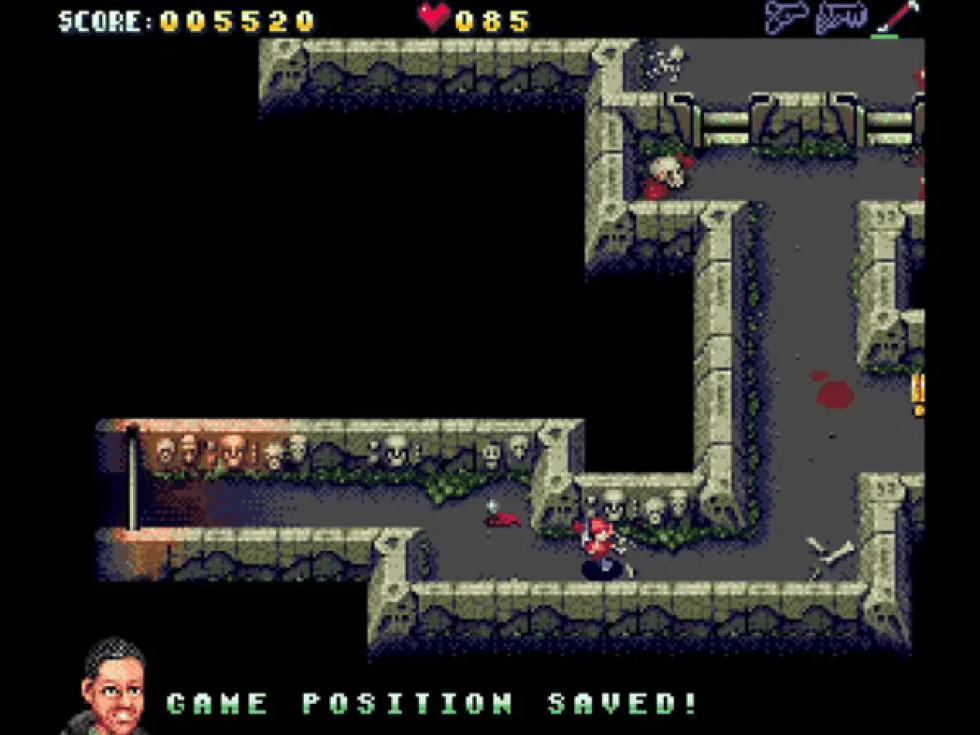
But, as it progresses, we layer in puzzles and narrative on top of the classic arcade action. What we eventually end up with is an Arcade Adventure.
Were there any particular games, films or influences that inspired the project?
Tony: We looked at some classic arcade games that we liked. Obviously Gauntlet, which both of us admire.
Beyond that nothing contemporary really. That said, UrbX is a child of its creators so there is lineage to Cannon Fodder, but also to adventure games, too.
It’s a crazy combo, but we think it works!
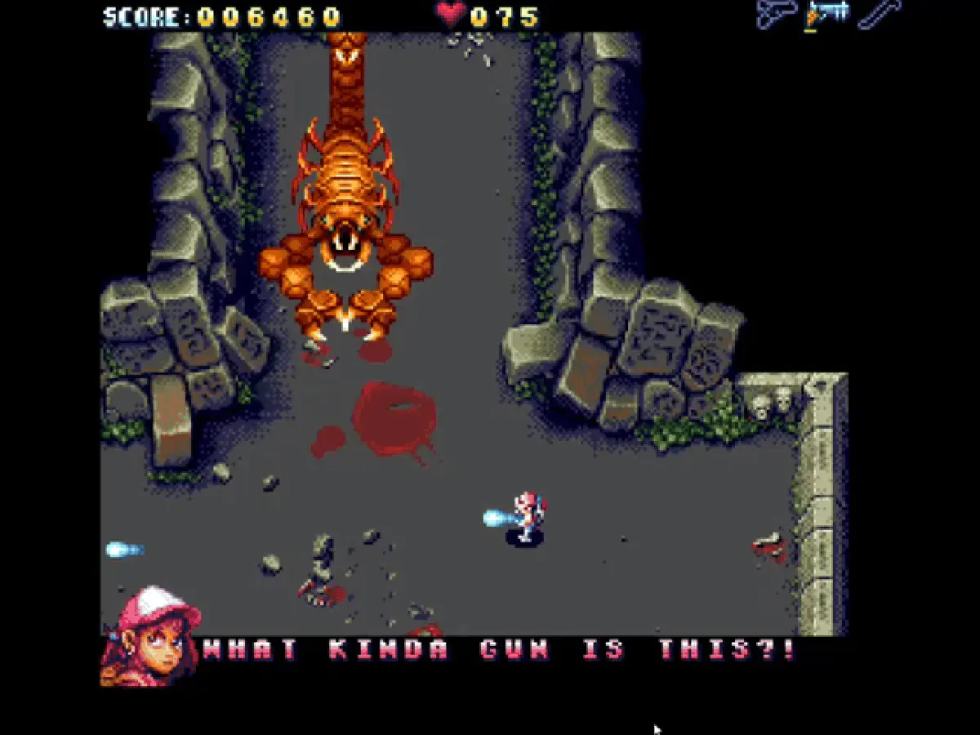
What has been the biggest technical or creative challenge in bringing UrbX Warriors to life on 16-bit hardware?
Tony: So far we’ve not hit any major problems to be honest. Always you have to watch the memory and CPU speed.
Genesis is a little tighter on CPU so we had to account for that and adjust some early code. But, we are coming from 8-bit so we’re not unaccustomed to that sort of issue.
Amiga was initially tricky with the eight direction scrolling, and for sure the blitter could be faster!


What are your hopes for the Kickstarter campaign and for the future of UrbX Warriors?
Tony: The hope is that it does extremely well. ;)
If it does, that’s not only good for us, at Brazen, but also good for retro and indie, and Amiga, etc.
Everyone wins!
Finally, is there anything you’d like to say directly to Retro-Gamers.it readers and the Amiga and Mega Drive communities?
Tony: Check it out! Watch the vid for a special guest at the end. :)
UrbX Warriors and the return to 16-bit development
Tony’s answers make it clear that UrbX Warriors was not conceived simply as “another retro game”. There is a deliberate return to a way of designing in which available memory, CPU speed, scrolling and the specific characteristics of each machine once again have a direct influence on development choices.
Just as interesting is the stated desire to contribute to the current vitality of the Amiga scene, not simply by bringing back a game from the past, but by creating something new that is intended to run on hardware from that generation.
At the same time, the Mega Drive/Genesis version places two very different architectures side by side, machines that represented equally distinct approaches to gaming during the Nineties. UrbX Warriors will have to find its own balance on both.
The Kickstarter campaign for UrbX Warriors: The Lost City (16-bit Edition) is currently live, with videos, screenshots, information about the different editions and the available rewards.
Visit the UrbX Warriors: The Lost City (16-bit Edition) Kickstarter campaign
Reader memories
Comment on the article and join the discussion.
Comment rulesLog in or register to leave a comment.
Create your account
Loading comments...