



Some music only needs a few notes. A track starts and immediately brings back that screen, that game, that computer and perhaps even a very specific period of your life.
For many Amiga players, Allister Brimble’s name is tied to exactly that kind of memory. Alien Breed, Project-X, Superfrog, Assassin and many other titles found an important part of their identity in his music.
Back then, of course, nobody thought of those compositions as something that would one day become “retro”. They were modern pieces, created by pushing four audio channels, 8-bit samples, trackers and limited memory as far as possible.
We spoke to Allister about his first experiments on the Amiga, his work with Team17, the synthesisers with which he gradually began creating his own sounds, and the technical limitations that would deeply influence the way he composed.
But we did not talk only about the past. Today Brimble has returned to 16-bit machines too, moving into the world of Mega Drive FM synthesis and UrbX Warriors: The Lost City, the project by Stoo Cambridge and Tony Warriner that he is contributing to in his spare time.
When you think back to the Amiga years, what is the first memory that comes to mind?
My first memory was playing the game Sidewinder just to hear what David Whittaker could do with the Amiga! It was great, and led me to download a music package called Aegis Sonix where I started playing with sampled sounds.
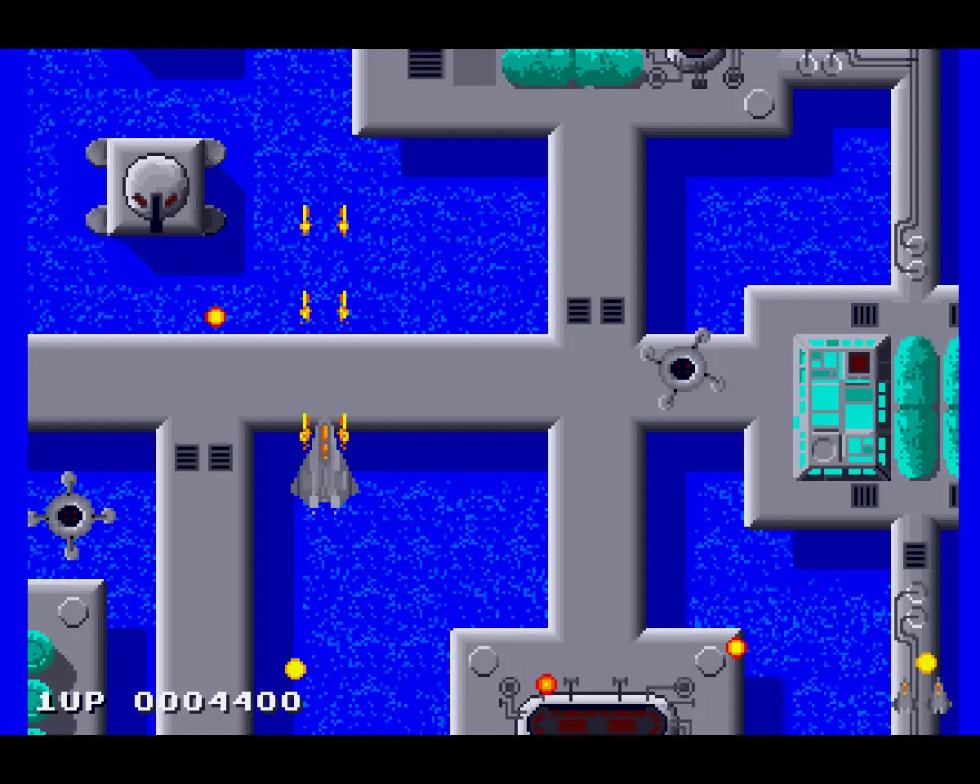
Your music for games like Alien Breed, Project-X and Superfrog became part of the identity of those titles. Did you feel at the time that those soundtracks would remain so strongly connected to players’ memories more than thirty years later?
Not at all. I really didn't think these tracks would ever become retro because they were modern, often new styles at the time. It's great that people remember the games so fondly, and the music as well.
The Amiga had a very distinctive sound. What did you enjoy most about composing for it, and which of its technical limitations forced you to be the most creative?
I loved the immediacy of it. You could drop a sample into ProTracker, tweak a pattern, and instantly hear the result.
The biggest limitation was the four channels that forced you to think very carefully about arrangement, voicing, and rhythm. You had to make every note count.
The 8-bit samples were another challenge; achieving warmth or depth required clever filtering, resampling, and sometimes outright trickery.
But those constraints pushed me to be more inventive, which is part of why the Amiga has such a distinctive sound.
What did your actual working process look like in those years? Which tools did you use, and how did you build or choose the samples that eventually became part of a finished soundtrack?
To start with I'd experiment with other people's samples or the ST-01 sample pack that came with SoundTracker... anything I could find.
But as we entered the Team17 era, I purchased my own synthesizers and started recording many of my own samples.
The samples for Full Contact were pan flutes from a Roland D-110 which I carefully looped. I still borrowed the occasional sound, of course!
By the time we got to Superfrog, and later Assassin, every sound used was created in my studio, as I had built up quite a nice selection of synth modules by then.
I used SoundTracker initially and later moved to SoundMon by Brian Postma, which allowed for new possibilities! For the first time, I could synthesize sound in real time on the Amiga, thus saving precious RAM while introducing super-clean, small waveforms.
This can be heard in Alien Breed.


From Full Contact to Alien Breed, Brimble gradually began creating his own samples in the studio and experimenting with real-time synthesis techniques.
When composing for a game, how much did you know about the levels, graphics and atmosphere beforehand? Did you work closely with the developers and artists, or were you often left to interpret the game in your own way?
I'd often be given a build of the game, sent by post on a floppy disk, as in those days we had no internet, just a very slow modem for small files!
Developers sometimes gave me an idea of what they'd like, sending cassette tapes, etc., but for games like Alien Breed I came up with my own thing completely.
For Project-X, they did specify a modern rave track, so I had to research that style carefully as it wasn't something I'd ever covered!
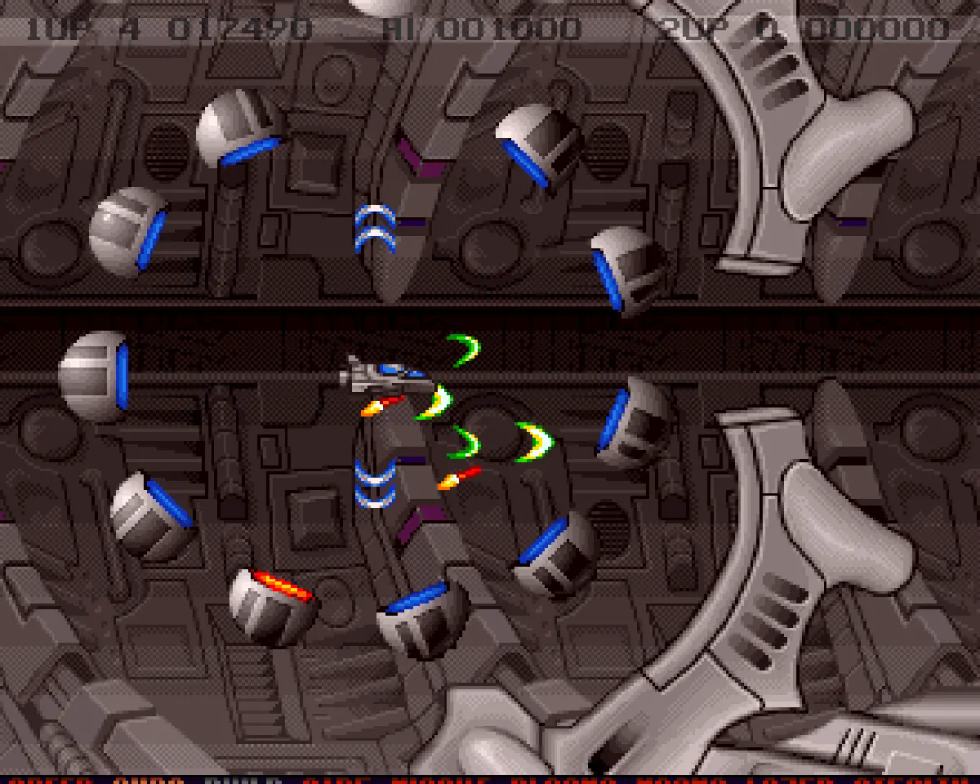
Is there one soundtrack or individual track from your Amiga and Team17 years that you still feel especially attached to today, and why?
I think Superfrog was a good one as it was the only Team17 game for which I did in-game music.
There were lots of different styles to cover and composing them was a lot of fun, mostly using my own sampled sounds.


By the time of Superfrog and Assassin, Brimble had built up a studio with several synth modules and was creating the sounds used in the games himself.
Many players can hear only a few seconds of one of those tracks and immediately remember the game, the machine and even a particular period of their lives. What does it mean to you to know that your music has become part of those memories?
It's a great honour to me that people remember them!
I have a feeling that it's partly because the games were so great, so people associate the music with them. I mean, the first ever 1-meg-only games, running at 50 frames per second! It was awe-inspiring at the time!
Today you can compose without many of the restrictions you had on machines like the Amiga. Do you ever miss those limitations? Can having almost unlimited resources actually make some creative decisions more difficult?
Yes, the limitations meant you had to organise your samples very carefully, perhaps even putting drums in-between bass notes to save precious channel usage.
When I moved to full studio music for my album Sounds Digital in 1992, it was a big challenge to remember that some of the restrictions learnt while composing for 4 channels had to be maintained.
Having a snare in an empty space, for instance, was great on the Amiga for saving channels, but also made for a clean sound, something we also need when composing in a studio.
Since we first spoke, you’ve become involved in UrbX Warriors: The Lost City with Stoo Cambridge and Tony Warriner. How did you become part of the project, and what attracted you to it?
Yes, Stoo Cambridge was in touch a few months back and asked me if I'd like to have a go!
It's not something that I'm doing professionally, but in my spare time, as I have great memories of Stoo and his team and the amazing games they produced!
I've also been getting into Mega Drive music; games like Daemon Claw and Metal Mac, which I composed for, so I really wanted to have a go with a different style of music on the platform!
UrbX Warriors is bringing you back to machines such as the Amiga and Mega Drive/Genesis, with very different sound hardware. How are you approaching the soundtrack for the 16-bit edition, and does returning to those constraints change the way you compose compared with your modern work?
I've gone back to my roots and am using a SoundTracker-style package called Furnace Tracker!
Creating instruments for the Mega Drive is very different to the Amiga, as it uses all FM synthesis + 1 sample channel. At some point I need to make an Amiga version, which will need a whole new sound set.
Now that I am fluent in writing full-on studio-quality tracks, going back to limitations actually allowed me to bring across some new things I've learnt over the years.
Better compositional ideas, better use of delays and echoes, and better knowledge of how to utilise a synth sound to its best all help when working with limited formats, so it wasn't too much of a shock, thankfully!
───────────────────────────────────────────
Allister Brimble began experimenting on the Amiga by listening to what David Whittaker could coax out of the machine and playing with those early samples. More than thirty years later, he once again finds himself in front of a tracker, this time also dealing with the Mega Drive’s FM synthesis.
In between came Alien Breed, Project-X, Superfrog, Assassin and countless other projects, but one thing seems to have remained the same: understanding what a machine can do, accepting its limits and finding a way to turn them to your advantage.
Perhaps that is also why those tracks have remained so deeply etched in the memories of the people who experienced those games at the time.
Reader memories
Comment on the article and join the discussion.
Comment rulesLog in or register to leave a comment.
Create your account
Loading comments...