


Before the icon
Before the covers, posters, movies, reboots and the pop image of Lara Croft, there was a much quieter game than many people remember today. The first Tomb Raider, released in 1996 by Eidos Interactive and developed by Core Design, was not just a 3D action adventure. It was a slow, solitary and almost suspended exploration experience.
The PlayStation version played a crucial role in turning it into a global phenomenon. Lara quickly became one of the most recognizable faces of the 32-bit generation, but reducing Tomb Raider to its protagonist would be unfair. Beneath the icon there was an ambitious, rough, technical and sometimes demanding game, built around a very strong idea: making the player feel inside ancient tombs, forgotten ruins and three-dimensional spaces that still had to be understood.
An adventure built around space
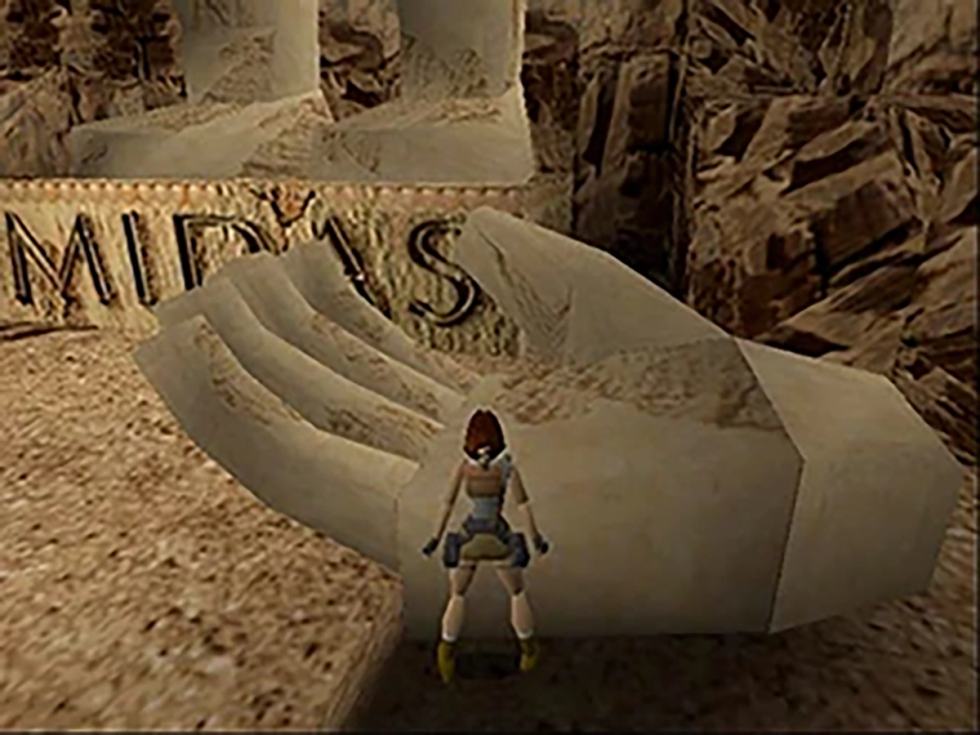
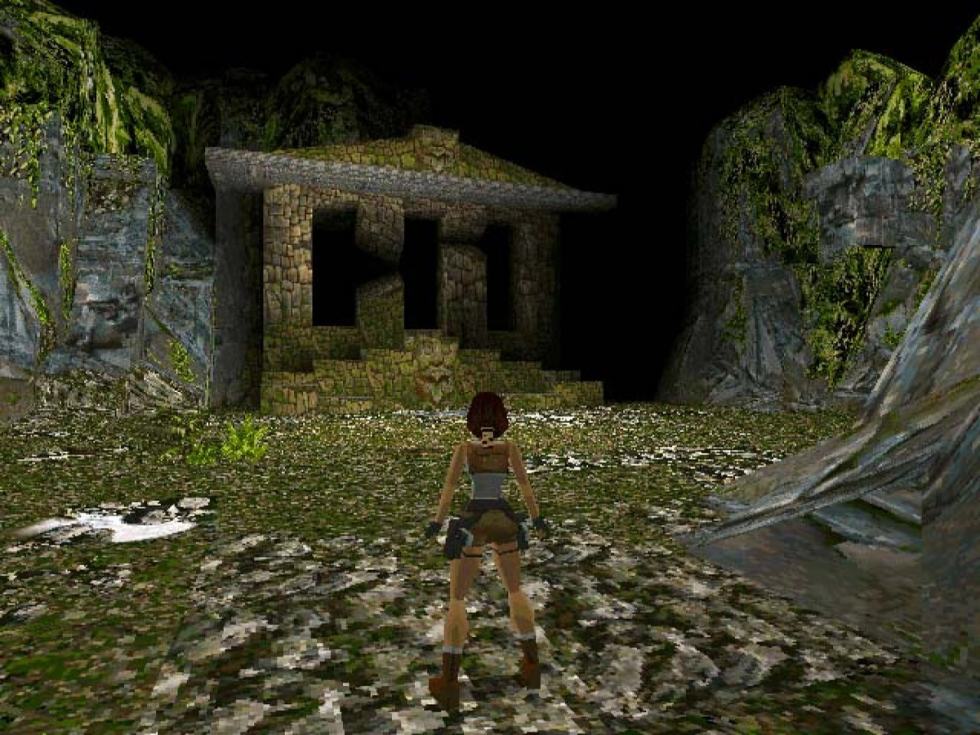
Played today, Tomb Raider stands out above all for the way it uses space. Its levels are not simple three-dimensional corridors, but environments that must be read carefully. Caves, temples, pools, hidden passages, columns, platforms and monumental rooms form a precise, almost geometric language.
The game asks the player to observe before acting. Every jump must be measured, every ledge understood, every lever may open a distant path. Progress does not come from speed, but from understanding the environment. Tomb Raider is a game about movement, certainly, but also about mental orientation.
This makes it very different from many modern action games. There is no direction constantly pushing the player forward, no invasive markers, no continuous flow of rewards. There is Lara, the level and the silence.
The fascination of solitude
One of the strongest qualities of the first Tomb Raider is its solitude. The tombs really feel abandoned, outside time. Music does not follow every step: it often stays in the background, appears at specific moments and leaves room for footsteps, ambient sounds, sudden animal cries and the tension of what might be hiding around the corner.
This choice gives the game a very specific identity. Despite limited technology, simple textures and essential polygonal models, Tomb Raider still communicates a strong sense of mystery. Peru, Greece, Egypt and Atlantis are not just settings: they are spaces to cross carefully, almost respectfully.
When the game works at its best, the player feels small inside ancient architectures, forced to think about every movement. It is a feeling that many later episodes, even more spectacular ones, struggled to reproduce with the same purity.
Tank controls, precision and patience
Of course, Tomb Raider is also a product of its time, and today the first obstacle is the control system. Lara moves with what is often described as “tank controls”: rotations, measured steps, jumps that must be prepared, runs that must be calculated. For players coming from modern action games, it can feel rigid, even unfriendly.
And yet that system was not accidental. It was designed around level design based on grids, precise distances and calculated movements. A jump was not just an athletic gesture, but a small technical operation: positioning Lara, stepping back, running, jumping, grabbing. The difficulty also came from this almost mechanical relationship between body, space and command.
This means Tomb Raider has not aged evenly. Some sections still retain enormous charm, while others can feel slow or frustrating. But those limits also tell us a lot about a crucial phase in the transition to 3D, when developers were still inventing a new vocabulary for adventure games.
Combat is less memorable than exploration
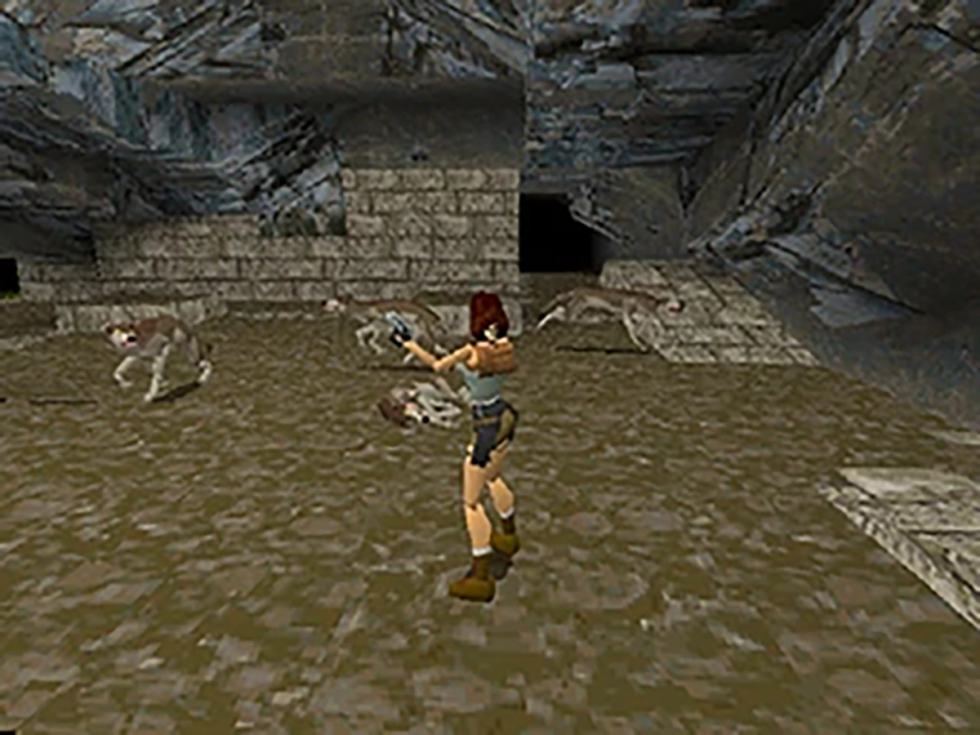
Compared to exploration, combat is the part that shows its age the most. Lara’s dual pistols became a symbol, but the encounters are often simple, based on automatic lock-on, lateral movement and a somewhat awkward use of space.
Wolves, bats, bears, dinosaurs and more disturbing creatures are mostly there to interrupt exploration and create sudden moments of danger. They do not always work with the same elegance as the environmental puzzles, but they contribute to the overall tension. Tomb Raider is never truly a pure action game: when it tries to be one, it loses part of its strength. When it lets the level breathe, it becomes special again.
Lara Croft before the media myth
It is impossible to talk about Tomb Raider without talking about Lara Croft. In 1996, Lara felt new: a female protagonist, athlete, archaeologist, adventurer and instantly recognizable character in a market still dominated by mascots, soldiers, drivers and fighters.
Her design quickly became iconic, sometimes for reasons only partially related to the game itself. The marketing of the time strongly pushed Lara’s image, turning her into a pop phenomenon and a symbol of the PlayStation generation. But in the first Tomb Raider her identity is still drier, more functional to the game: Lara is the body through which the player measures space.
She jumps, swims, climbs, falls and gets back up. Before being a poster, Lara is movement. And perhaps this is why the character lasted so long: behind the media surface there was a strong gameplay idea.
A PlayStation milestone
Tomb Raider was not born exclusively on PlayStation, but it was on Sony’s console that it entered the mainstream imagination with the greatest force. Together with other mid-1990s titles, it helped define the more adult, cinematic and three-dimensional identity of the new generation.
It was not perfect, and time has not made it perfect. Some rigidities weigh more today than they did then. Some passages require a kind of patience that many modern games no longer ask for. But its importance remains enormous. Tomb Raider showed that 3D could mean exploration, verticality, atmosphere, spatial puzzles and environmental storytelling.
For many players, it was one of the first moments when PlayStation truly felt like a door opening toward something different.
Playing it today
Playing the first Tomb Raider today means accepting a pact. You should not look for the fluidity of modern chapters, nor the spectacular direction of the reboots. You need to enter the rhythm of a 1996 game, made of precise but rigid controls, silence, attempts, falls and observation.
Those who manage to do so can still find a fascinating adventure. Not only because of nostalgia, but because of the clarity with which Tomb Raider builds its world. It is a game that is not afraid to leave the player alone, to ask for attention, to let them make mistakes.
And that is where its value still lives. When Lara is hanging from a ledge, inside an empty tomb, with a jump to calculate and no voice explaining what to do, Tomb Raider becomes again what it was in 1996: a promise of adventure inside a new digital space.
Conclusion
The first Tomb Raider has aged, but it has not become irrelevant. If anything, many of its rough edges help us understand how bold it was. Not everything still works in the same way, but the atmosphere, level structure and idea of exploration retain a rare strength.
It is the game that launched Lara Croft, of course. But above all, it is one of the titles that taught the PlayStation generation to move, get lost and think in three dimensions.
Not only a classic to remember. A place to cross again.


Reader memories
Comment on the article and join the discussion.
Comment rulesLog in or register to leave a comment.
Create your account
Loading comments...