


1993 was one of those years when you could feel something was about to change, even if you could not fully understand it yet.
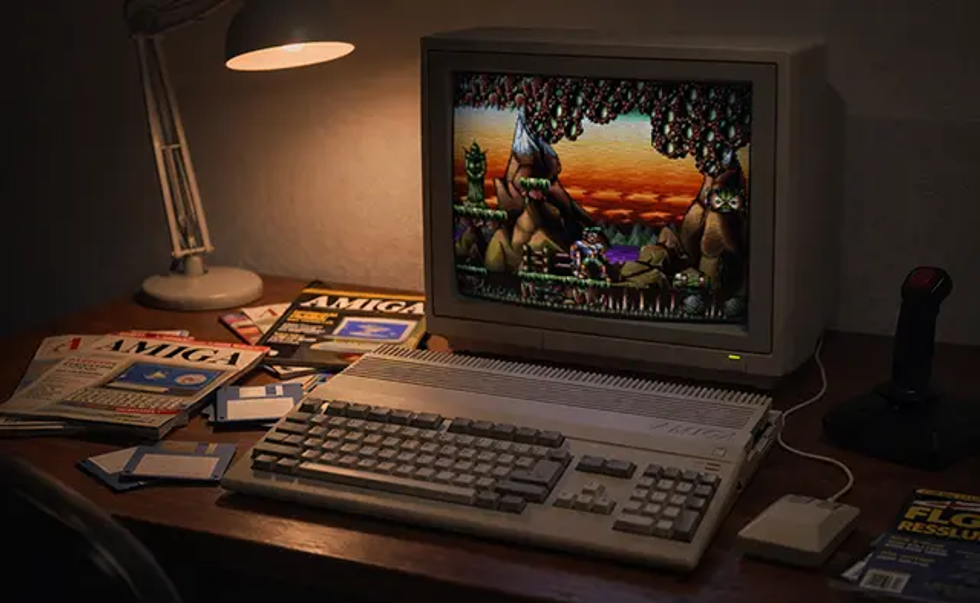
Until then, my video game world had been clear and almost perfectly defined. The Amiga was at the centre of everything. I used it mostly to play games and, every now and then, to draw freely with Deluxe Paint, without any real ambition, but with a kind of pleasure that is still hard to explain.
It was a simple and complete balance, made of floppy disks, long afternoons and the feeling that I already had everything I needed. And yet, just when nothing seemed to be missing, something different began to appear. An idea of the future that no longer belonged entirely to that world, but was starting to show itself quietly, just out of reach.
That future was behind a shop window.
Amiga CD32: the natural choice
When Commodore introduced the Amiga CD32, it did not feel to me like one option among many. It felt like the natural evolution of something I already knew.
It was not simply a console. It was the continuation of a world that felt like mine, translated into a newer, more modern form.
Only one unit arrived in my trusted video game shop, displayed more like a precious object than an ordinary product. It was not something you could simply pick up and take home. It was something to look at, to desire, to imagine.
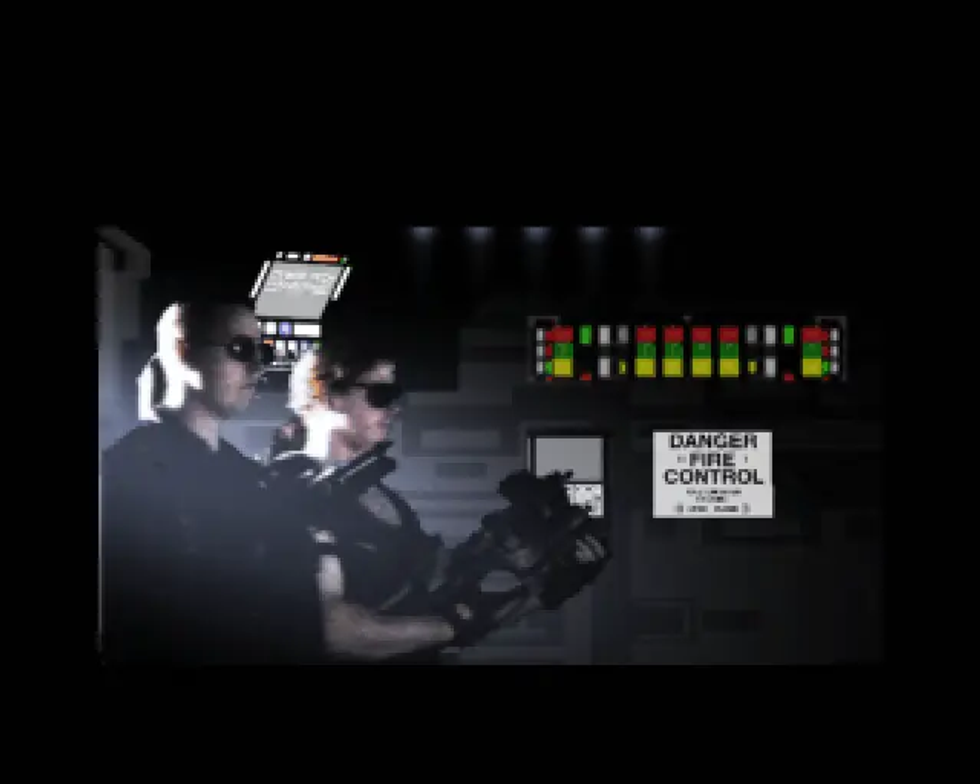
The demo running on the machine was Microcosm, accompanied by a CD full of full-motion video sequences that, at the time, seemed almost unreal.
Those images felt as if they belonged to a completely different technological level, closer to cinema than to video games. It was easy, back then, to believe that this was the right direction. For a moment, it really seemed as if Commodore was once again ahead of everyone else.
The world was moving faster
That feeling did not last long, because the market was changing at a speed that was difficult to fully grasp at the time.
Early news about the Sega Saturn began to appear more and more often, while Sony announced a console with an unusual name: PlayStation.
Then came the hardest blow, the one that changed everything: Commodore went bankrupt. The Amiga CD32, which only shortly before had felt like a real promise, suddenly found itself without a future, already under technical pressure and now without a company strong enough to guide it forward.
That was the moment when I found myself in a strange in-between space, without the reference point I had always taken for granted.
Between Mega Drive, Super Nintendo and arcades
During that period, I began to look around more carefully, trying to understand where the video game world was really going.
Friends’ consoles became both a place to play and a way to observe two different ideas of gaming. The Super Nintendo, with Donkey Kong Country, showed how much 2D could still evolve and surprise. The Mega Drive, with Virtua Racing, offered a first taste of three-dimensional graphics, still rough but already full of potential.
At the same time, however, the real revelation came from arcades.
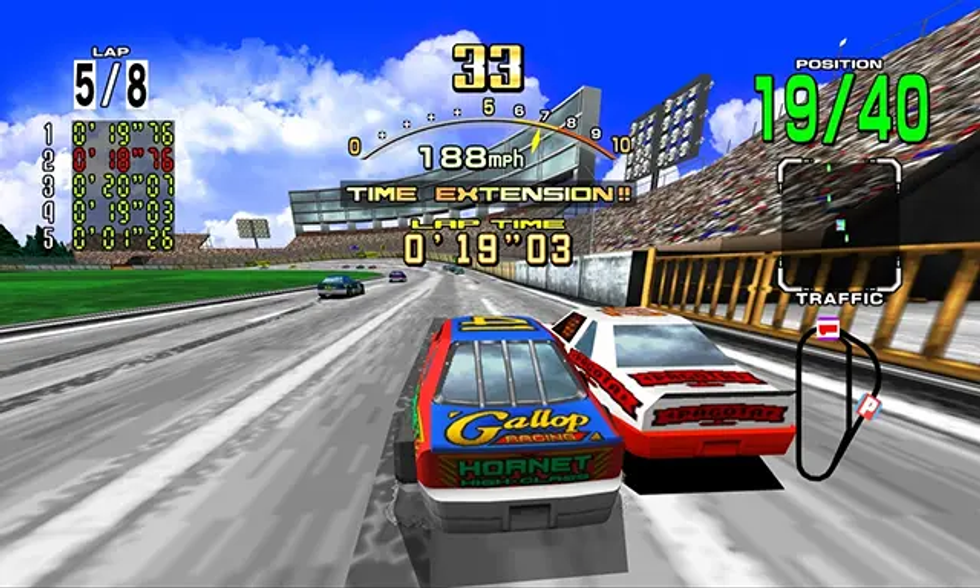
Almost without realising it, I began hunting for Sega’s most advanced cabinets. Every time I found myself in front of Virtua Fighter, I was completely absorbed by what I was seeing. Soon after came Daytona USA, whose speed and visual impact seemed to bring the future directly in front of my eyes.
In that context, it was almost inevitable that I would begin to think my first console would be a Sega machine. Looking at what Sega was doing in arcades, it seemed like the most natural choice.
The doubt: Saturn or PlayStation?
Just when that idea seemed settled, doubts began to appear.
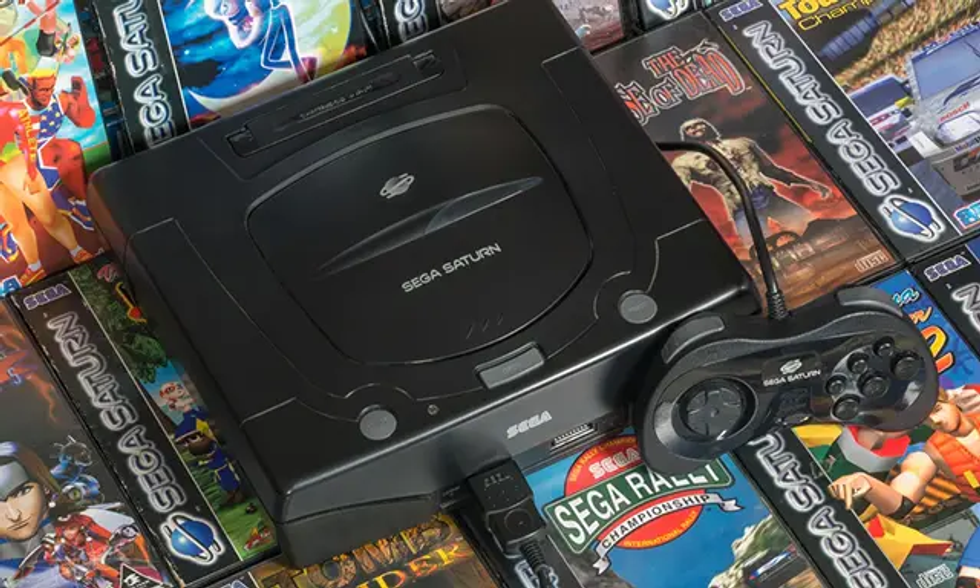
From magazines, it became increasingly clear that the Saturn, at least at first, was a machine with a strong 2D soul, arriving precisely when 3D was becoming the real turning point.
Sony, meanwhile, kept showing PlayStation, and its specifications felt almost shocking for the time. It was not an arcade board like Sega’s Model 2, but it seemed to offer the closest thing you could hope to have at home, with an architecture clearly built around 3D.
Sega tried to recover ground by modifying the Saturn’s design, creating a complex architecture based on two separate processors. On paper it was powerful, but in practice it was difficult to exploit, especially during the early years. The result, at least at first, was uncertain 3D. Later, the Saturn would receive games capable of showing its real strengths, but at the moment when a choice had to be made, those certainties did not exist yet.
Ridge Racer and the turning point
The turning point came in the same shop as always, but with a completely different protagonist.
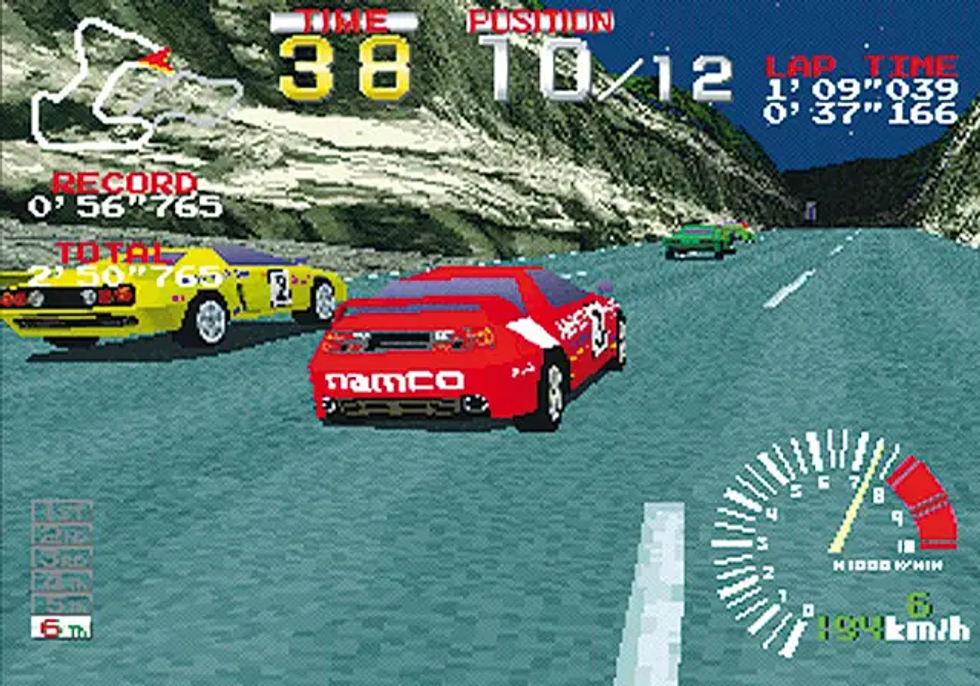
In the place where the Amiga CD32 had once stood, there was now a PlayStation. And on the screen, Ridge Racer was running.
It was not just a technical demonstration. It was one of those moments when you immediately understand that what you are watching already belongs to the future. The fluidity, the clean image, that real sense of three-dimensional space: there was very little room for doubt.
From there, a new kind of search began, this time in arcades, looking for Tekken. I wanted to understand how it moved, what it felt like, how different it was from everything I had played until then. It was only a first contact, still partial, but enough to make the direction clear.
At that point, the choice was no longer a preference.
It was a consequence.
The wait
Between that decision and the arrival of the console, nine months passed. At that age, they felt endless.
The wait was filled mostly by magazines, especially Console Mania, which became a constant window onto a world I still could not experience directly. Every review, every screenshot and every preview made those games feel familiar even before I had played them.
There was something almost painful in that distance, but also something beautiful. The future did not arrive all at once. It was built slowly, issue after issue, image after image, rumour after rumour.
By the time the console finally arrived, I had already lived part of it in my imagination.
Before everything changed
Looking back now, the most interesting part was not the arrival of the PlayStation itself, but everything that came before it.
That suspended phase between two eras, when nothing was fully defined yet and every new machine, every arcade cabinet, every magazine preview carried the weight of a possible revolution.
Back then, the future was not something already announced, explained and packaged in a marketing campaign. It was something you discovered little by little, through a shop window, a worn-out magazine, an arcade machine found at the right moment.
And sometimes, that was enough to understand that everything was about to change.
Reader memories
Comment on the article and join the discussion.
Comment rulesLog in or register to leave a comment.
Create your account
Loading comments...