


There is a funny thing about Star Wars games: they were never really one thing.
Ask ten retro players what a “classic Star Wars game” means and you may get ten completely different answers. For one person, it is the glow of vector lines in an arcade cabinet. For another, it is a DOS cockpit, a flight stick, and the quiet panic of rerouting shield power while TIE fighters scream past the canopy. Someone else will think of Kyle Katarn opening another suspicious Imperial door. Another will remember a Nintendo 64 controller, a rented cartridge, and the simple pleasure of making an X-wing feel heroic in three dimensions.
That is why Star Wars games still matter to retro players. Not because every old Star Wars game was great. They were not. Some aged beautifully, some aged awkwardly, and a few probably deserve to remain in whatever dusty drawer history politely placed them in. But as a body of work, classic Star Wars games tell a fascinating story about licensed games, genre experimentation, home computers, consoles, arcade culture and fan memory.
For readers of Retro-Gamers.it’s English edition, that makes them more than nostalgia objects. They are part of the wider history of how games learned to translate cinema into systems.
Not into cutscenes. Not into lore dumps. Into things players could actually do.
The useful mistake: thinking Star Wars is one genre
The weakest Star Wars games often made the same mistake: they tried to contain too much galaxy.
The strongest ones usually did the opposite. They chose one fantasy and trusted it.
Be a pilot. Be a Jedi. Be a commando. Be a racer. Be a general. Be a smuggler-shaped problem walking through Imperial architecture with a blaster and a suspiciously calm expression.
That sounds simple, but it was not always obvious. Licensed games have often been trapped between two pressures: serve the brand and make a good game. Star Wars, because it was so visually and emotionally powerful, could easily tempt developers into copying the surface: the ships, the music, the lightsabers, the familiar planets. But the better games understood that the real question was mechanical.
What does Star Wars feel like when your hands are responsible for it?
That question is why the old catalogue remains so interesting when viewed through classic game history rather than simple fandom. Star Wars games moved across machines and genres with unusual freedom. They belong in conversations about arcades, DOS gaming, Nintendo 64 action design, RPG storytelling, squad shooters, strategy games and online worlds.
In other words, they are not just Star Wars history. They are gaming history wearing a flight helmet.
The cabinet knew first
Before Star Wars games became sprawling PC adventures or console showpieces, they worked because the arcade understood something very basic: Star Wars was already kinetic.
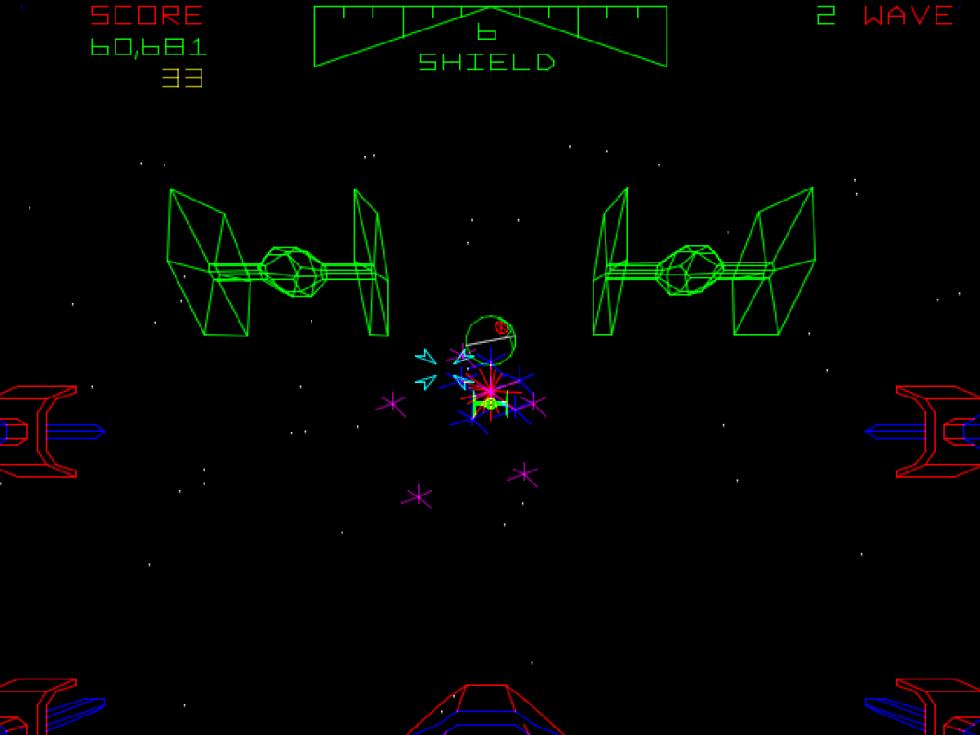
The trench run was practically begging to become a game. It had a target, a timer, incoming fire, enemy pursuit, a narrow corridor, a heroic objective and the perfect excuse for a player to grip the controls a little too tightly. Atari’s Star Wars: The Arcade Game did not need to explain the Force or build a galaxy. It needed to put the player in the attack run and let the fantasy do the rest.
That is why the arcade period still matters. Retro-Gamers.it’s own arcade platform archive is a reminder that cabinets were not just delivery systems for games; they were physical theatre. The controller, the screen, the sound, the shape of the machine — all of it mattered.
A Star Wars arcade cabinet did not merely show you a scene from the film. It invited you to perform it.
This is one of the great lessons of early licensed design. Adaptation did not have to mean “retell the movie.” Sometimes it meant taking one moment and turning it into a ritual of skill. Insert coin. Grip controls. Survive. Miss the shot. Try again. Pretend you were distracted.
That arcade clarity never really left the best Star Wars games.
DOS, manuals and the serious business of pretending to be a pilot
If the arcade translated Star Wars into impact, the PC space combat sims translated it into responsibility.
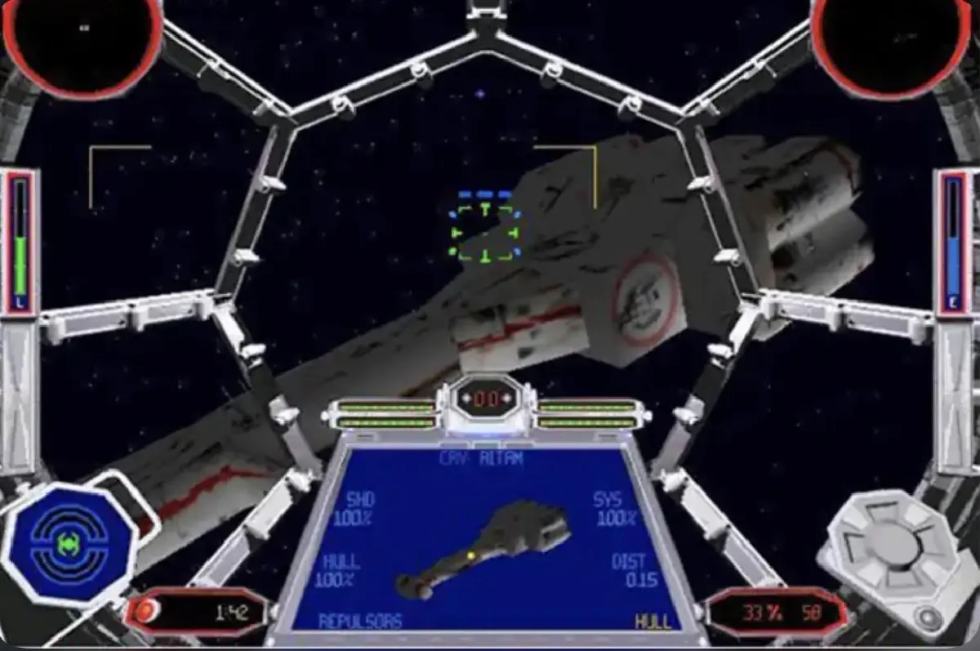
X-Wing and TIE Fighter were not content with letting players admire starfighters. They made players work inside them. Power management mattered. Mission objectives mattered. Targeting mattered. Knowing when to stay calm mattered, although many of us failed that particular test repeatedly.
This was Star Wars for the age of manuals, sound cards, joystick calibration and keyboard overlays. It belongs naturally beside the culture preserved in Retro-Gamers.it’s home computers section and MS-DOS platform coverage. These games came from a period when PC gaming often expected commitment from the player. You did not simply jump in. You learned the machine, the interface, the language.
That was part of the pleasure.
TIE Fighter remains especially important because it trusted the player with a colder fantasy. It let you serve the Empire without turning the whole thing into pantomime villainy. The tone was procedural, military, efficient. You were not the farm boy hero. You were a cog in a terrifyingly organised machine, and the game was stronger for allowing that shift in perspective.
This is where Star Wars games showed real design confidence. They did not always need Luke, Han or Vader at the centre. They could give players a role and let the wider universe become context.
The cockpit was enough.
LucasArts and the genre instinct
To understand why the classic Star Wars catalogue became so varied, it helps to remember LucasArts as more than “the Star Wars company.”
Retro-Gamers.it has already covered the studio’s adventure-game brilliance with Monkey Island 2: LeChuck’s Revenge and Indiana Jones and the Fate of Atlantis. Those games are not Star Wars, obviously, but they reveal something important about LucasArts at its best: genre mattered. Interface mattered. Writing mattered. Tone mattered. Games were not just containers for intellectual property; they were crafted experiences with their own rhythm.
That instinct carried into Star Wars.
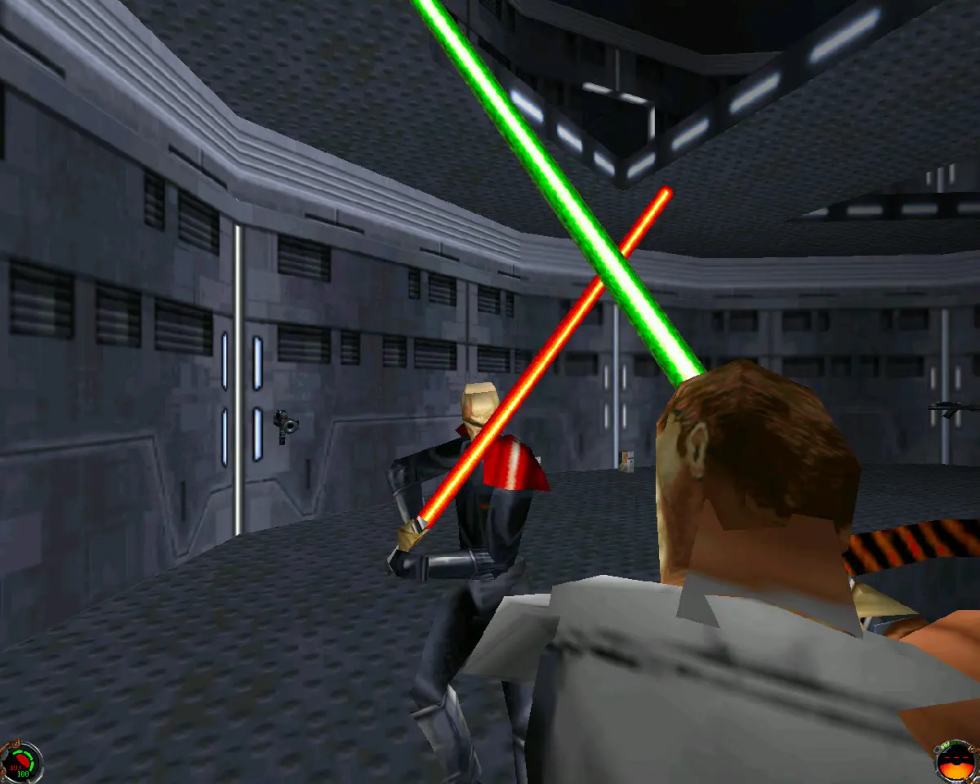
Dark Forces did not become memorable because it placed stormtroopers into a shooter. It worked because the dirty corridors, secret bases, elevators, switches and industrial gloom of Star Wars were already perfect first-person spaces. The films always implied a galaxy full of locked rooms. Dark Forces let players open them, usually by shooting something first.
Jedi Knight: Dark Forces II then pushed that fantasy into stranger territory. It was part shooter, part action-adventure, part Force-powered coming-of-age story, and part “1997 FMV is happening and you cannot stop it.” It is easy to smile at some of its era-specific choices now, but that is also what makes it valuable. It sits at a moment when PC games were experimenting with cinematic identity without yet knowing exactly what that should look like.
Not everything had to be elegant. Sometimes the interesting games are the ones where you can see the medium still arguing with itself.
The Nintendo 64 understood the mission
Console Star Wars had a different job. It had to be immediate.
A PC flight sim could ask players to study systems. A console action game had to deliver the fantasy faster, through a controller, a television and the limited patience of someone who may have rented the cartridge for the weekend.
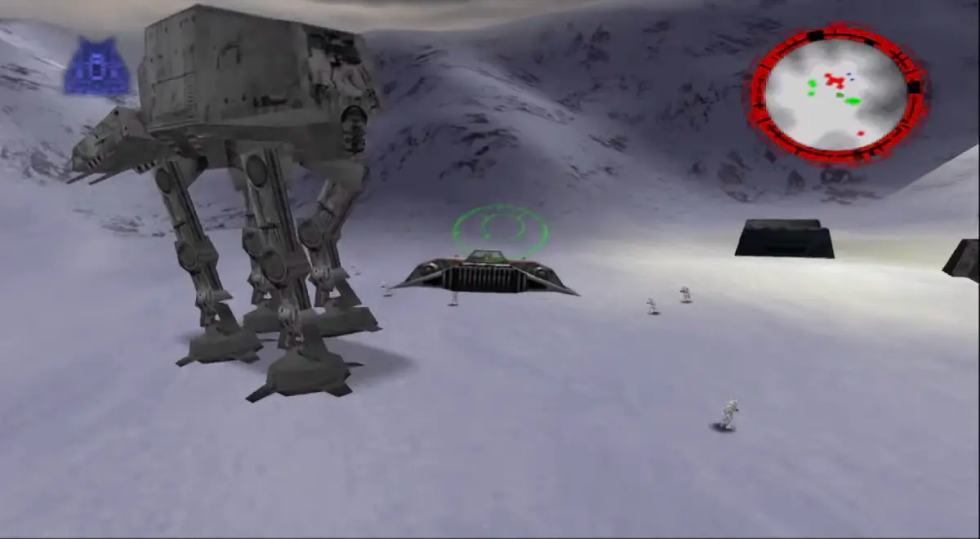
That is where Rogue Squadron was so smart. It did not try to be X-Wing for the living room. It became something else: mission-based, readable, fast, atmospheric and built around the idea that a Star Wars vehicle game should make every sortie feel like a small heroic episode.
That places it firmly inside the world of console history and especially the Nintendo 64 era. Retro-Gamers.it’s review of Star Fox 64 / Lylat Wars is a useful comparison point, because both games understood that space action on N64 needed clarity more than complexity. Radio chatter, readable objectives, strong silhouettes, short missions and replayable structure did a lot of the work.
The Nintendo 64 was not always subtle. That was fine. Star Wars was not always subtle either.
Then there is Episode I: Racer, a game that still feels like it escaped from a more sensible universe. It took one sequence from a film that divided audiences and somehow turned it into one of the most satisfying arcade racers of its time. No grand thesis. No desperate attempt to redeem the entire prequel debate. Just engines, speed, danger and the mild suspicion that every turn is trying to kill you.
That is licensed game design at its purest: find the playable thing, then build around it.
The RPG that asked who you were
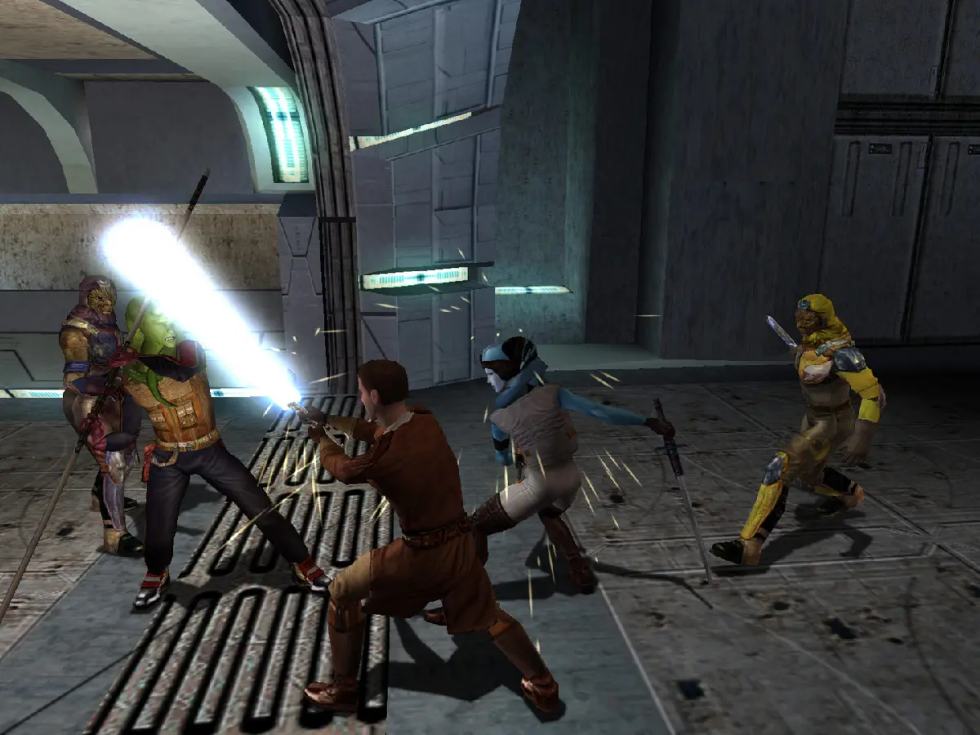
Knights of the Old Republic mattered because it understood that role-playing in Star Wars should not simply mean “eventually you get a lightsaber.”
It asked a better question: who are you when the galaxy gives you power?
KOTOR moved Star Wars away from reflex and into identity. Dialogue, companions, alignment, memory, loyalty and temptation became the mechanics of adaptation. It did not need to recreate the films because it understood their moral architecture. The light side and dark side were no longer only mythic concepts. They became choices inside a game system, sometimes obvious, sometimes clumsy, but always legible.
The Old Republic setting helped enormously. Distance from the film timeline gave the game room to feel familiar without behaving like a museum tour. It could echo Star Wars without constantly pointing at famous props behind glass.
This is also why archive work has value. Looking across a full Star Wars games archive, the pattern becomes clear: many of the strongest entries are not the ones that try to be definitive. They are the ones with a strong genre identity.
KOTOR is not great because it contains everything. It is great because it knows exactly what kind of Star Wars fantasy belongs inside an RPG.
War, tactics and worlds people lived in
By the 2000s, Star Wars games had become confident enough to explore narrower fantasies with surprising force.
Republic Commando made the Clone Wars feel heavy, close and tactical. Its genius was atmosphere. The visor, the squad commands, the chatter, the grime, the sense of being one professional unit inside a much larger war — all of it gave the game a texture different from the Jedi power fantasy. You were not saving the galaxy with destiny. You were clearing rooms.
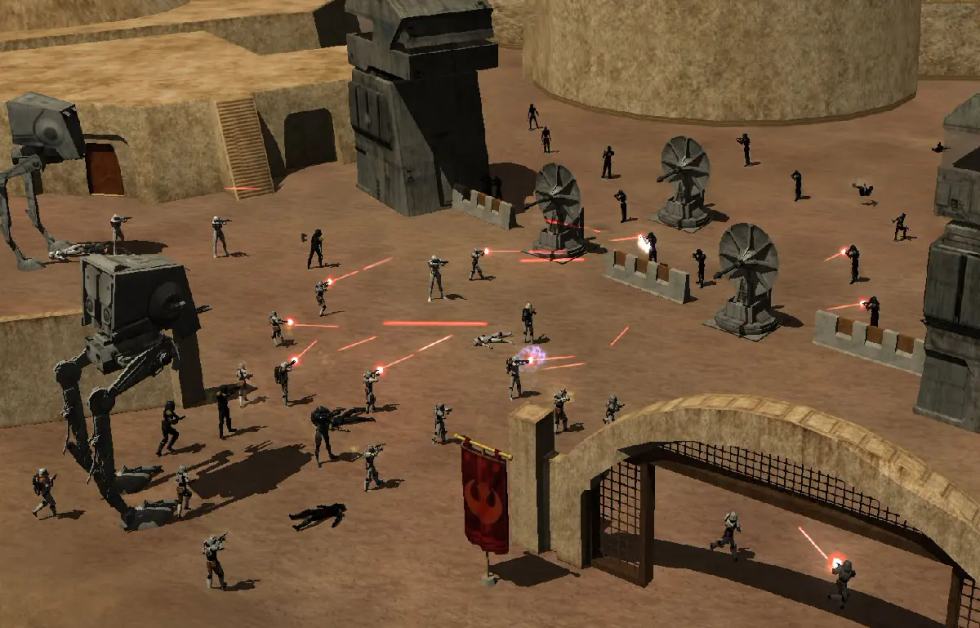
Empire at War, meanwhile, pulled the camera far back. It treated Star Wars as territory, logistics, fleets and pressure. Instead of asking what it felt like to be in the cockpit, it asked what it felt like to move the war machine. That shift matters. Strategy games turn fantasy into structure. They make the galaxy readable as a map.
Battlefront did something else again. It offered the ordinary soldier fantasy: not Jedi, not chosen one, not legendary pilot, just another body inside the battle. That was powerful because it made Star Wars social and repeatable. It let players inhabit the visual memory of the films without always being the centre of myth.
And then there was Star Wars Galaxies, perhaps the most culturally fascinating of them all. Its memory survives because it was not only about content, but about life inside a fictional world: professions, cantinas, player communities, economies, roleplay, strange routines and personal stories that could never fit neatly into a box quote.
Retro gaming is full of these ghosts. Not just the games as sold, but the games as lived.
That is something Retro-Gamers.it often captures well in its memories section: the understanding that old games are not preserved only through screenshots and release dates, but through habits, places, machines, friendships and the rituals around playing them.
Machines shape memory
One reason classic Star Wars games remain interesting is that they changed shape depending on the machine.
Arcade Star Wars was physical and public. DOS Star Wars was technical and private. Nintendo 64 Star Wars was immediate and social, often tied to rentals, sleepovers and someone insisting they were better at the trench run than they actually were. Xbox and PC-era Star Wars became tactical, cinematic and online in new ways.
That machine-specific memory matters. Retro-Gamers.it’s features on machines such as the Commodore 64 work because they treat hardware not simply as specification sheets, but as lived culture: loading times, sound chips, family televisions, disks, tapes, waiting, frustration and discovery. The same lens helps explain Star Wars games.
A game is never only its design. It is also where and how people met it.
The same Star Wars fantasy felt different in an arcade, on a beige PC, on an N64 cartridge, on a chunky CRT, or through an online world with other people refusing to behave sensibly in a cantina. That is why these games remain so rich for retro discussion. They are attached to platforms, not just brands.
They are memories with hardware fingerprints.
The value of being specific
Classic Star Wars games still matter because they come from an era when licensed games were often allowed to be oddly specific.
Not always polished. Not always fair. Not always successful. But specific.
This is something retro players understand well. The past is full of games that would be smoothed out of existence today: too short, too hard, too strange, too dependent on one mechanic, too clearly built around the limitations of one machine. Yet those limitations often gave games their identity.
Retro-Gamers.it’s review of Superfrog makes a useful point about expectation and myth: some games are remembered as larger than they were, while others become interesting precisely because of the gap between ambition and result. Star Wars games live in that gap too. The catalogue is not a clean parade of masterpieces. It is a messy, revealing record of design choices, platform pressures and changing ideas about what a licensed game could be.
That mess is part of the charm.
The most memorable classic Star Wars games did not ask, “How do we put the entire saga into this product?” They asked smaller, better questions.
Can a cabinet make you feel like you are inside the Death Star trench?
Can a DOS sim make you respect shield management?
Can a shooter make Imperial architecture feel dangerous?
Can a console mission make an X-wing feel instantly readable?
Can one film sequence become a full racing game?
Can an RPG make Star Wars feel personal?
Can a strategy game turn the galaxy into a board of consequences?
Those questions produced games with identities. That is why people still talk about them.
The galaxy is still playable
Classic Star Wars games are not important because they preserve a perfect golden age. There was no perfect golden age. There were brilliant games, strange games, compromised games, rushed games, ambitious games and games that mainly taught players the spiritual value of patience.
They matter because they show how flexible games can be when they are allowed to interpret rather than merely reproduce.
A film gives you images. A game must give you verbs.
Fly. Shoot. Sneak. Choose. Command. Race. Explore. Survive. Wait for the loading screen and hope the disk behaves.
The old Star Wars catalogue gave players all of those verbs across arcades, home computers, consoles and online worlds. That is why it remains valuable to retro gamers today. It is not just a licensed archive. It is a map of how different generations of games tried to make a famous universe playable, one machine and one fantasy at a time.
And perhaps that is the real reason these games endure. They understood, at their best, that Star Wars did not need to be swallowed whole.
Sometimes one cockpit was enough.
Sometimes one corridor was enough.
Sometimes one podracer, one squad, one strategy map, one moral choice, one cartridge, one cabinet, one old PC humming in the corner was enough.
The galaxy was never one genre.
That was the point.
Reader memories
Comment on the article and join the discussion.
Comment rulesLog in or register to leave a comment.
Create your account
Loading comments...