





The beginning of the end
By the end of the 1980s, Commodore was still in a position that, at first glance, could seem solid. The Amiga was an advanced machine, loved by an increasingly broad community and capable of doing things that, in many areas, the competition could barely even imagine. It was present in the home market, found space in graphics, music and television, and continued to be perceived as something different, almost special.
And yet, while that perception remained, signs of a less reassuring reality began to emerge beneath the surface.
It was not a single mistake, nor one precise moment in which everything suddenly changed. Commodore’s decline was slower, more subtle, almost imperceptible in its early stages. It was a process made of small shifts, delayed decisions and directions that were never truly defined. The company continued to move, produce and sell, but gradually lost the ability to understand its own role in a market that was changing faster and faster.
And when that ability disappears, even the technological advantage built up in previous years stops being a guarantee.
An extraordinary machine without a clear identity
In many ways, the Amiga represented the highest point ever reached by Commodore, but at the same time it also became the symbol of the company’s greatest limitation. It was a machine that could be many things at once: an advanced home computer, a powerful gaming platform, a professional tool for graphics and audiovisual production. In theory, that versatility should have been a strength; in practice, it became an ambiguity that was difficult to manage.
Commodore never truly managed to choose which direction to follow and, as a result, never managed to communicate it clearly. The result was a powerful but undefined machine, capable of excelling in several areas without truly dominating any of them. While other systems began to build precise identities — the PC as a universal platform, consoles as gaming machines — the Amiga remained in a middle ground that limited its commercial potential.
This lack of identity became even more evident over time. The public did not know exactly what to expect, the market did not know how to place it, and Commodore failed to build a coherent strategy capable of holding together all the different souls of the machine. It was a paradoxical situation: having one of the most advanced computers of the era in your hands and failing to turn it into a dominant position.
The advantage that slowly disappeared
For a few years, Commodore was still able to live off the advantage it had built up. The Amiga’s multimedia capabilities remained superior, especially in audio and graphics, and this allowed the platform to maintain a certain relevance. In the meantime, however, the context changed profoundly. It was not a sudden change, but a gradual transformation that Commodore struggled to understand in its real scope.
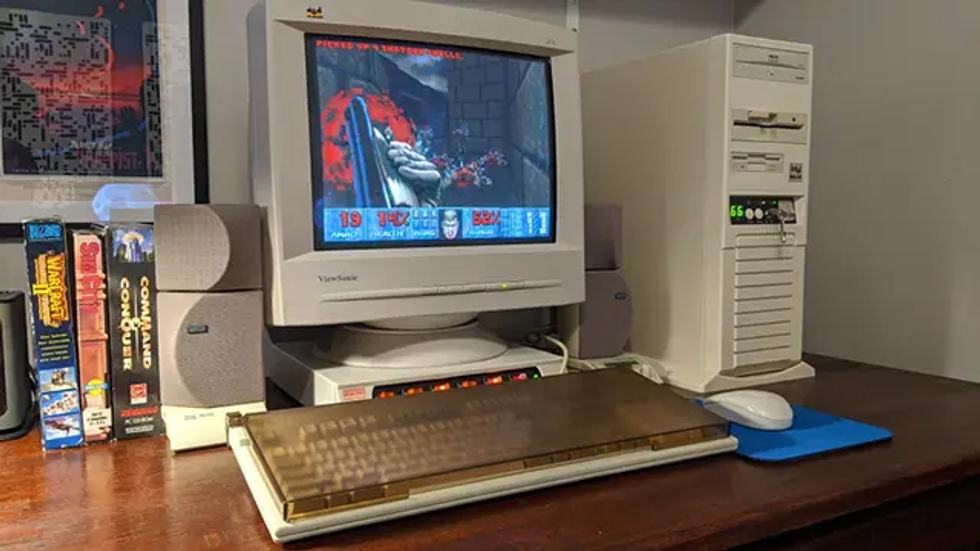
The PC world, initially considered less suitable for entertainment, evolved with surprising speed. VGA cards improved visual quality, sound cards began to close the audio gap, and above all the open architecture allowed continuous, modular, almost inevitable evolution. Unlike the Amiga, which was born as an integrated system, the PC became a constantly transforming platform, capable of adapting quickly to market needs.
Commodore, on the other hand, remained tied to a model that had worked perfectly in previous years but was now showing its limits. Updates arrived, but often later than expected, and when they were introduced they no longer had the same revolutionary impact as before. What had once been perceived as a clear advantage first became a balance, then a disadvantage.
And yet, the paradox is that ideas for a concrete evolution already existed inside the company. Projects such as the AAA chipset, conceived as a true new generation of the Amiga architecture, prove that Commodore was still capable of imagining the platform’s future.
The problem was not the absence of innovation, but the inability to turn it into reality at the right time. Those technologies, which could have brought the Amiga back to the center of the scene, remained on paper and became, over time, the clearest symbol of a missed opportunity.
Commodore and Amiga’s decline was not sudden, but the result of a series of choices that gradually compromised their future.
The management of the Amiga line made the situation even more complex. After the success of the Amiga 500, Commodore introduced several models that, instead of strengthening the platform, ended up fragmenting it. The differences between the machines were not always clear, neither to the public nor to developers, and some choices remain difficult to understand even with hindsight.
The Amiga 600 is perhaps the most obvious example of this confusion: a product that brought no real advantage over previous models, but helped make the range even harder to understand. Other models, although technically valid, were not supported by adequate communication and ended up losing impact.
Meanwhile, the PC followed the opposite path, giving up a strong individual identity in favor of a single, expandable and recognizable standard. It was a subtle but decisive difference: on one side, a platform that fragmented; on the other, one that consolidated.
The absence of leadership
Behind these difficulties, an even deeper problem can be seen: the lack of leadership capable of giving the company a clear direction. After Tramiel’s departure, Commodore never again found a figure able to combine strategic vision with decision-making strength. Choices became more cautious, slower, often reactive rather than proactive.
Management proceeded by trial and error, trying to adapt to a market that instead required clear and courageous decisions. Each decision, taken individually, might even seem reasonable, but there was no overall design to hold them together. And in a sector like technology, where everything evolves rapidly, the absence of vision is a limitation that is paid for over time.
The Amiga paradox
Perhaps the most surprising aspect of this phase is that, despite everything, the Amiga continued to be a beloved machine. Its community grew, organized itself and became increasingly creative and skilled. The demoscene exploded, video games maintained a high level of quality, and software continued to evolve. Those who used an Amiga often felt they owned something special, something that went beyond a simple product.
But that was not enough to reverse the trend. Because while the community became stronger, the market moved elsewhere. Dynamics changed, standards consolidated, and Commodore was no longer able to lead that change. It is a fascinating and, at the same time, bitter paradox: a technically valid, culturally important and deeply loved machine that nevertheless lost its position.
When time runs out
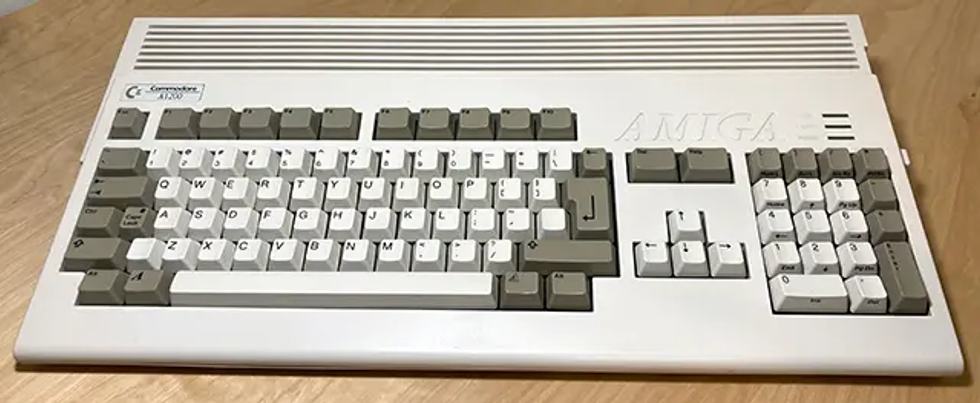
In the early 1990s, the last attempts at revival arrived. The Amiga 1200 and Amiga 4000 introduced significant improvements and showed that the platform still had something to say. However, the context had now changed profoundly. The market was no longer waiting for Commodore, and what would once have been revolutionary now appeared as a late update.
In this scenario, every step forward seemed to arrive at the wrong time. Not because it was technically insufficient, but because it was no longer able to change the balance. And when a company loses the ability to influence the market, it inevitably begins to suffer from it instead.
The collapse and what remains
In 1994, Commodore declared bankruptcy. It was not a sudden event, but the conclusion of a path that had begun years earlier, made of indecisive choices, missed opportunities and a gradual loss of direction. It was the end of a company that had played a decisive role in bringing computers into the homes of millions of people.
And yet, its legacy did not disappear. It remains in the memories of those who learned to program by copying listings, in the hours spent in front of a screen waiting for a game to load, in the discovery of a computer that, for the first time, felt like something personal. It remains above all in the Amiga, a machine that, although it did not win the market, anticipated many of the ideas that would become central in the following years.
Commodore’s story is made of extraordinary intuitions and equally significant mistakes, of moments when it saw before others and others when it stopped looking ahead. It proves that in technology, being first is not enough: you also need to know where to go next.
And at some point, Commodore stopped knowing that.
That is where its industrial history ends — but not its myth.
Your Commodore
If you have reached this point, Commodore is probably not just a story to read, but something you lived.
A cassette load that seemed endless.
A program listing copied with patience.
A game that finally started after countless attempts.
An Amiga left on for hours, between music, demos and discovery.
Tell us about it.
What was your first Commodore?
Which game will you never forget?
When did you realize that computer was something different?
Reader memories
Comments, memories and points of view stay here, beside the article.
Comment rulesLog in or register to leave a comment.
Leave a comment
Create your account
Loading comments...