




Anyone who owned an Amiga in the 1980s and 1990s knows how much the Amiga AAA chipset represented one of the most anticipated evolutions of the platform.
Its architecture, based on custom chips dedicated to graphics, audio and memory management, allowed the machine to achieve surprising performance even with relatively simple hardware.
Even today, I still have a working Amiga on my desk. I do not see it merely as a collector’s item, but as a machine worth turning on from time to time, just to remember how far ahead of its time it really was.
In Commodore’s final years, however, new architectures were already being developed inside the company’s laboratories — architectures intended to take the platform toward a completely different generation.
The Amiga AAA chipset and the Hombre project remain, even today, among the greatest “what ifs” in the history of computing.
AAA: the Advanced Amiga Architecture
The Amiga AAA chipset remains one of the most fascinating projects ever developed by Commodore. Short for Advanced Amiga Architecture, it was meant to be the true successor to the AGA chipset, introduced with the last Amiga models in the early 1990s.
AGA had brought some improvements, especially in color management, but it was not the technological leap many users had expected.
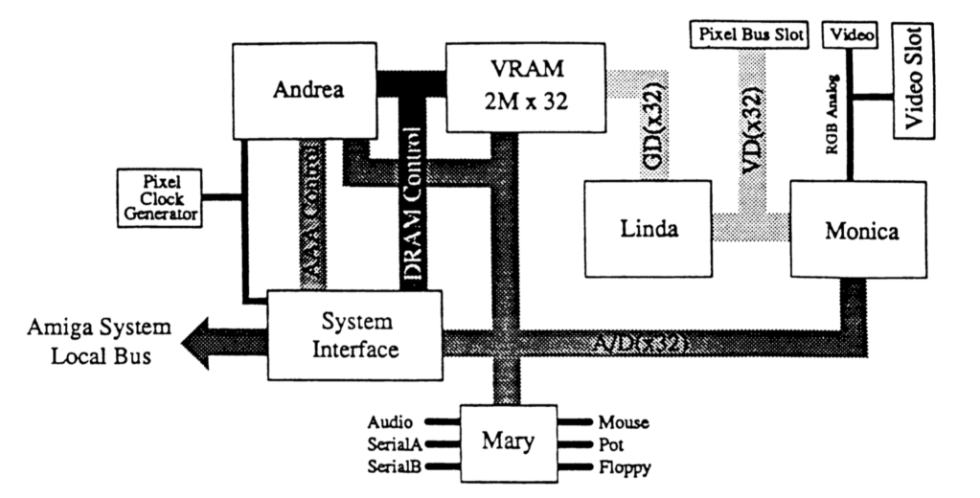
AAA was designed precisely to deeply update the graphics architecture while preserving the original Amiga philosophy: delegating the heaviest operations to dedicated chips, freeing the CPU from much of the work.
The project was already at an advanced stage and included several new custom chips dedicated to graphics, memory management and video output.
Planned features of the AAA chipset
- support for up to 16.7 million colors
- full 24-bit palette
- 64-bit memory bus
- estimated bandwidth of around 100 MB/s
- resolutions from 640×480 up to 1024×768
- VGA video output
- support for chunky pixel graphics
- a much more powerful blitter than in previous generations
One of the most interesting aspects of the project was support for chunky graphics, much more suitable for video game development and 3D graphics engines.
Until then, the Amiga had mainly used planar graphics, which were very efficient for certain operations but more complex to use in more modern games.
With AAA, developing complex titles or porting games from the PC world would have become much easier.
The Amiga Hombre project: the leap into accelerated 3D
After AAA, Commodore engineers began working on an even more ambitious project: the Amiga Hombre project.
The goal was to bring the Amiga into the world of hardware-accelerated 3D graphics, which in the early 1990s was starting to become central to the video game industry.
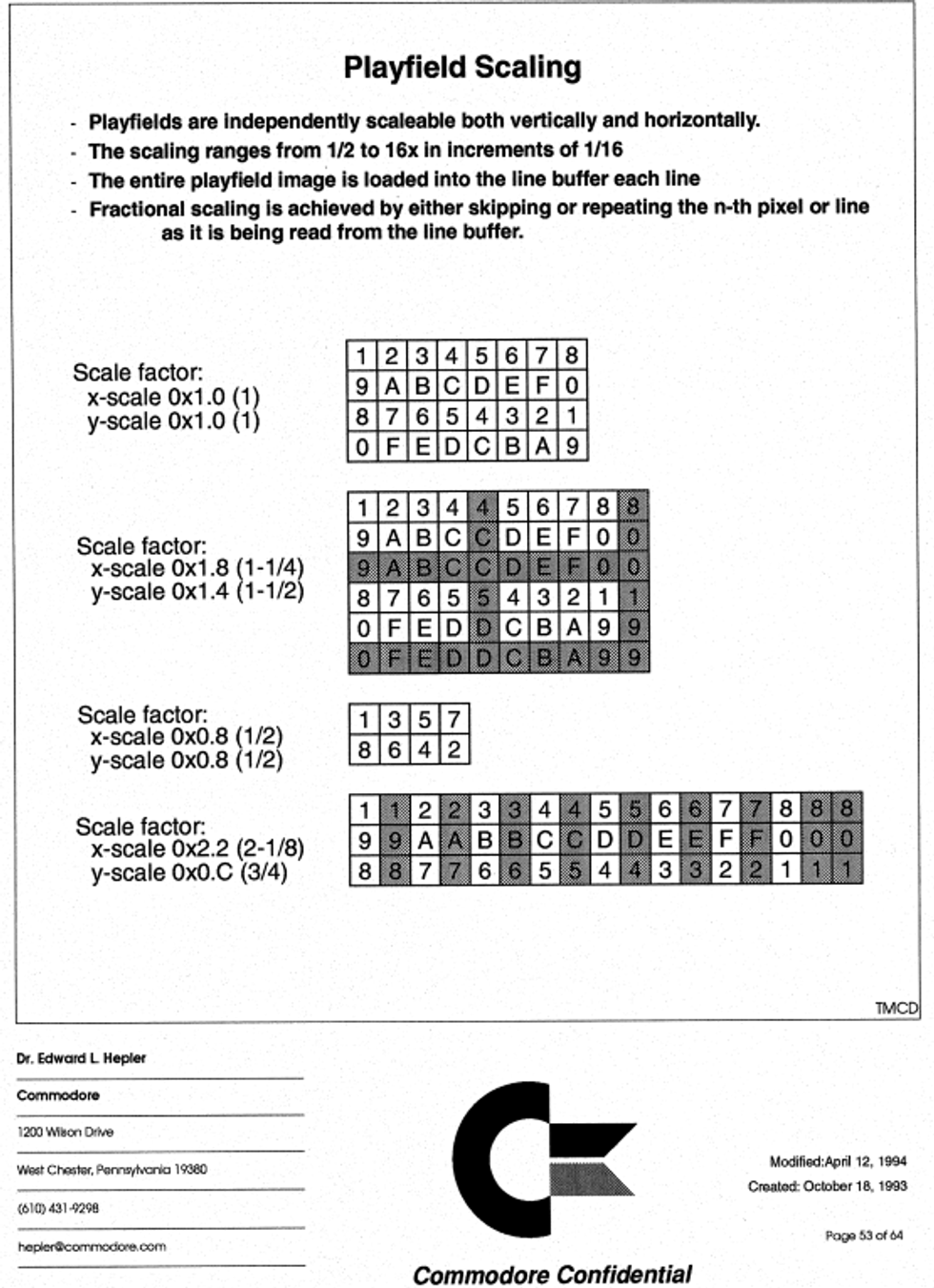
Among the planned features were:
- a graphics pipeline oriented toward 3D rendering
- support for hardware texture mapping
- advanced graphics memory management
- an architecture designed for next-generation CPUs
- high color-depth graphics
The Amiga Hombre project also involved a move to RISC processors, abandoning the historic Motorola 68000 family that had accompanied the Amiga since its birth.
When everything stopped
By the early 1990s, Commodore’s financial situation was rapidly deteriorating.
A series of strategic mistakes and short-sighted management decisions pushed the company into a crisis that became increasingly difficult to control.
In 1994, Commodore declared bankruptcy.
With the company’s collapse, development of the AAA and Hombre projects also stopped. Neither ever reached the market.
The Amiga future we never saw
Every Amiga enthusiast has asked the same question sooner or later: what would an Amiga based on the AAA architecture have been like?
It probably would not have saved the platform on its own, but it might have given it a few more years to evolve and remain competitive in a market that was changing very quickly.
When you turn on an Amiga today, you can still understand how distinctive that machine was.
A computer designed around very clever ideas and technical solutions that, in many ways, were ahead of their time.
AAA and Hombre represent exactly that: the Amiga future we never had the chance to see.
Reader memories
Comments, memories and points of view stay here, beside the article.
Comment rulesLog in or register to leave a comment.
Leave a comment
Create your account
Loading comments...