




The home computer market explodes
At the beginning of the 1980s, home computing finally stopped being an experimental territory for enthusiasts and pioneers. It became a real market: competitive, crowded and increasingly unstable. Companies with very different backgrounds began fighting for a space that suddenly seemed enormous, but also extremely fragile. Every decision could lead to success or failure.
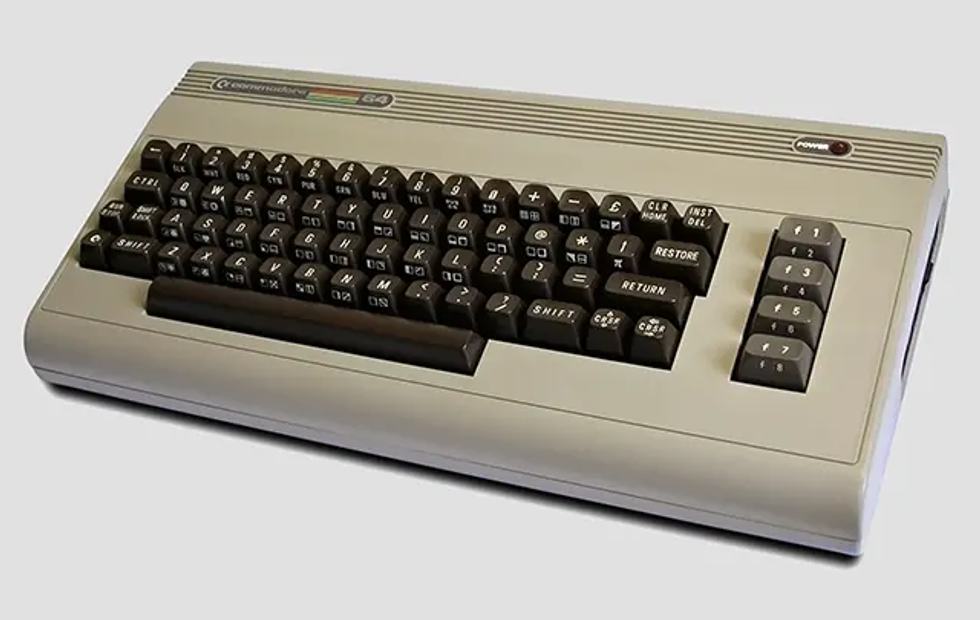
Apple was building its identity around the Apple II, with a more refined vision of the personal computer, where design, usability and integration became central elements. Atari, strengthened by its huge success in video games, entered the sector with a more direct, immediate approach, strongly connected to entertainment.
Commodore observed this evolution from a unique position. It was not merely another competitor. It was a company that directly controlled production, had learned to move between hardware and market pressure, and above all was led by a figure like Jack Tramiel, for whom business was never a theoretical exercise, but a concrete war to be fought every day.
And Tramiel had no intention of simply competing.
He wanted to dominate the market.
The Commodore 64: more than a computer
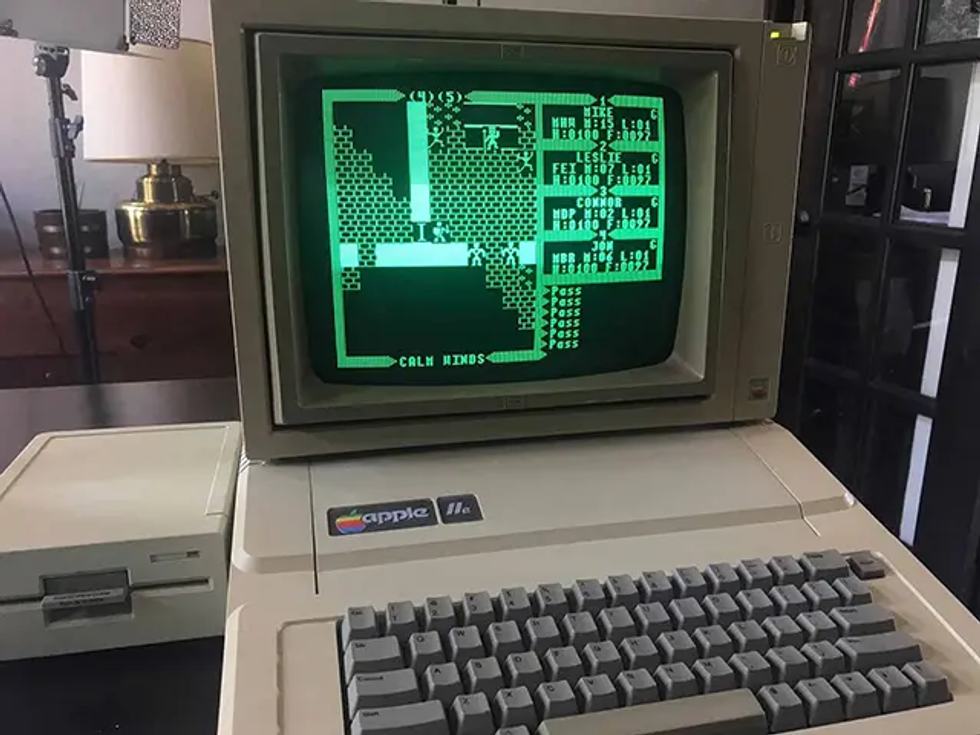
When the Commodore 64 arrived in 1982, it was immediately clear that this was not just another new product entering an already defined market. The C64 was born with a precise goal: to redefine that market, shift its balance and make the home computer accessible to a much wider audience.
From a technical point of view, the machine was solid and well designed. The MOS 6510 processor offered reliability and versatility, but it was in the custom chips that Commodore showed it had truly understood where the battle would be fought.
The SID, designed by Bob Yannes, did not simply produce sound. It introduced a level of timbre and flexibility that, for the time, was astonishing. Even today, it remains studied, collected and loved by musicians and enthusiasts.
On the graphics side, the VIC-II allowed advanced handling of sprites, scrolling and colors, making the C64 particularly well suited to video games and helping to define a quality standard that many competitors struggled to match.
Yet the true strength of the Commodore 64 was not only its architecture, but the strategy behind it. Thanks to direct control over chip production, Commodore could adopt an extremely aggressive pricing policy, putting a powerful machine on the market at a price other manufacturers could not sustain without destroying their margins.
This is where Tramiel’s philosophy became clear: it was not necessary to be the best in absolute terms. It was necessary to be the most accessible at the right time.
The computer that entered the home
The success of the Commodore 64 cannot be understood through numbers alone. Its real importance lies in the cultural and everyday impact it had on an entire generation.
For millions of people, the C64 was their first direct contact with a computer. Not in a professional or academic environment, but inside the home, often connected to a television and shared with family and friends. It quickly became a familiar object, almost natural, part of everyday life.
Even its limitations helped shape its identity. Cassette loading times were long and often uncertain, but the wait became a ritual. The blue startup screen became an instantly recognizable symbol, a shared starting point for an entire generation.
The C64 was not just switched on. It was experienced.
You connected it to the television, loaded a cassette or disk, adjusted the volume, waited, listened, hoped. The machine asked for patience, and that patience became part of the memory. For many people, the first relationship with computing was not immediate, smooth or silent. It was noisy, physical and full of anticipation.
Video games, software and a new culture
With the spread of the Commodore 64, something was born that went far beyond the commercial success of a single product. A true culture of home computing began to develop, where the computer became a personal space for exploration, creativity and learning.
Software houses multiplied quickly, creating a surprisingly rich ecosystem. Companies such as Ocean, Imagine, System 3, Epyx and Thalamus helped build an increasingly ambitious catalogue, while video games grew together with their audience, becoming more complex and more structured.
Titles such as Impossible Mission, The Last Ninja and Elite were not only commercial successes. They represented an evolution of the video game language, showing what the medium could become. Alongside them came productions of remarkable technical quality.
Games like Turrican, developed by Manfred Trenz, showed how far the Commodore 64 hardware could be pushed when placed in the right hands, with a level of fluidity and spectacle that seemed almost impossible for a machine of that generation.
Alongside the official market, however, another phenomenon developed: less celebrated, but extremely widespread, especially in Italy. Piracy was not only a matter of copies exchanged between friends. It became an alternative circuit that also passed through newsstands, where cassette collections such as “Special Program” offered double-sided tapes compatible with Commodore 64 and ZX Spectrum, filled with games that were often modified, renamed or incomplete.
Titles changed names, introductions disappeared, some sections were missing, but for many users this was still an entrance into an enormous world.
It was a different way of discovering video games: less controlled, more chaotic, but incredibly fascinating. You loaded games whose origins you often did not even know. You tried everything. You jumped from one title to another without filters, building a spontaneous and disorderly knowledge of the medium.
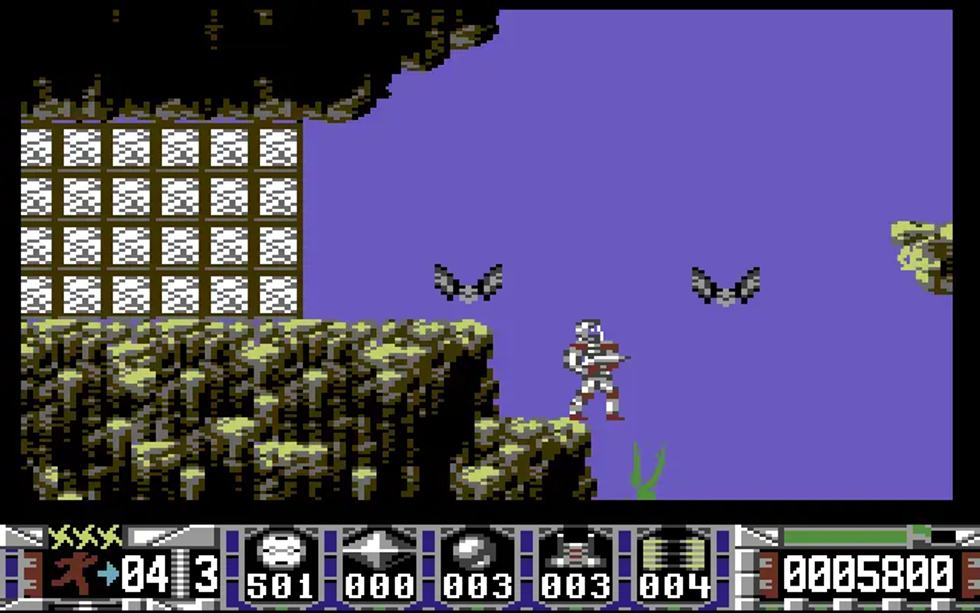
In that context, the value was not so much the originality of the copy, but the possibility of exploring. For many users, those newsstand tapes were the first real gateway into video games.
But to truly understand what the C64 represented, you have to imagine a scene repeated in thousands of homes: an ordinary afternoon, the television occupied by the computer, a cassette inserted into the recorder and that metallic sound accompanying the loading process.
You waited, often in silence, hoping nothing would go wrong. And when the game finally started, the feeling was not only entertainment.
It was conquest.
At the same time, the C64 became a training ground for a generation of programmers. Many users began writing code in BASIC and later in assembly, often guided only by curiosity, while specialized magazines published long listings to copy by hand.
Typing listings was slow, repetitive and sometimes frustrating. But it taught something essential: the computer was not only a machine for consuming software. It was a machine you could command, understand and transform.
An unprecedented success
The Commodore 64 became the best-selling single computer model in history, a result that cannot be explained only through numbers, but through the context in which those numbers were generated.
Commodore managed to capture a precise moment, when technology was ready to leave laboratories and enter homes, and it did so with a strategic clarity that few other companies in the sector showed.
The combination of accessible price, solid performance and wide availability transformed the C64 into something more than a simple technological product. It became recognizable, widespread, almost inevitable for anyone who wanted to approach computing.
It was no longer necessary to be an enthusiast or an expert. For the first time, the computer entered everyday life.
In this sense, Commodore achieved a fundamental shift that others had only imagined. The computer stopped being a tool for the few and became a medium for the many, changing not only the market, but the perception of technology itself.
The dark side of success
Such rapid and aggressive expansion, however, could not happen without consequences. The strategy based on price reduction, which had allowed Commodore to conquer the market, placed constant pressure on margins and made long-term balance increasingly difficult to maintain.
Behind the success of the C64, tensions began to emerge that were no longer only operational, but structural.
Inside the company, two increasingly distant visions were taking shape. On one side was Jack Tramiel, strongly oriented toward market conquest through fast and often aggressive decisions. On the other was Irving Gould, more focused on financial aspects and the overall stability of the organization.
This divergence did not appear suddenly, but grew over time, fed by success itself. The more Commodore dominated the market, the more difficult it became to maintain a balance between growth and sustainability, between ambition and control.
Success had made Commodore powerful. But it had also made its contradictions impossible to ignore.
The price war and the clash with Atari
Meanwhile, the market became even more rigid and competition grew increasingly harsh. Atari, unwilling to give up ground, responded with its own aggressive strategy, helping transform competition into a true price war.
This dynamic had deep effects on the entire sector. Many companies, unable to survive a competition based on continuous price cuts, were forced out of the market or drastically reduced their ambitions. Selection became inevitable and often brutal.
Commodore managed to resist thanks to its production structure and cost control, but that resistance came at a price. Every decision became riskier, every margin thinner, and internal pressure continued to rise.
The same weapons that had made Commodore dominant were now making the company harder to control.
Jack Tramiel leaves Commodore
In 1984, these tensions reached the breaking point. Jack Tramiel left Commodore, marking the end of a fundamental phase in the company’s history.
His departure was not simply a change in leadership. It was the loss of the figure who had defined the very identity of the brand.
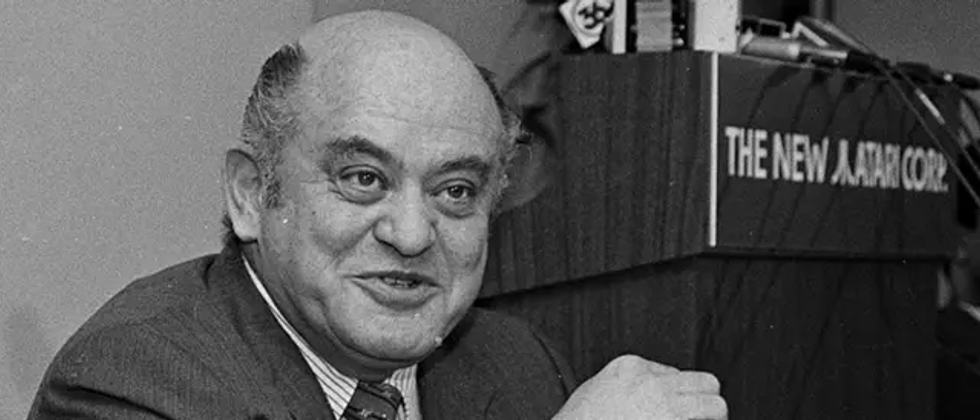
Soon after, Tramiel moved to Atari, bringing with him not only his experience, but also a vision of the market built during the previous years. It was a move of enormous importance, because it transformed a former leader into a direct opponent, ready to use the same logic that had made Commodore dominant.
The man who had pushed Commodore into the homes of millions was now on the other side.
The birth of a total rivalry
From this moment on, the competition between Commodore and Atari changed completely. It was no longer just a battle between companies, products or strategies. It became a clash between visions and, above all, between personalities.
The market polarized. Choices became sharper, consequences more visible. Every decision made by one side found an answer from the other, in an unstable balance that helped redefine the entire sector.
In this context, the rivalry was not only industrial, but symbolic. It represented two different ways of imagining the future of home computing, two approaches openly colliding at the very moment when the market was beginning to mature.
And while this tension grew and became increasingly visible from the outside, something very different was taking shape inside Commodore.
A project that did not simply aim to improve what already existed, but to redefine the rules of the game once again, pushing the concept of the home computer into territories that had previously seemed unthinkable.
That project would be called Amiga.
And for Commodore, it would be both a new beginning and the beginning of a much more complicated story.
Reader memories
Comments, memories and points of view stay here, beside the article.
Comment rulesLog in or register to leave a comment.
Leave a comment
Create your account
Loading comments...