





When computers truly entered the home
There was a moment in the history of technology when the computer stopped being a machine for specialists and began to become something personal. Not just a tool for laboratories, universities or offices, but an object that could enter homes, bedrooms and everyday routines. Something people could use, learn from, play with and eventually grow attached to.
In that transition, Commodore played a central role.
It was not always the most elegant company, nor the most refined from a technological point of view. But perhaps more than any other manufacturer of its time, Commodore understood the importance of timing. It made computers accessible when they were still perceived as expensive, distant and intimidating. It built machines that defined an era, and helped create a culture that still survives today.
This series tells that story. Not only the rise of a company, but the history of an idea: bringing technology into the hands of ordinary people.
From Jack Tramiel’s pragmatic vision to the explosion of the Commodore 64, from the Amiga revolution to the decline of an industrial empire, each chapter follows a different stage of a story that left a deep mark on computing and gaming culture.
Because Commodore was never just a company. It was a turning point.
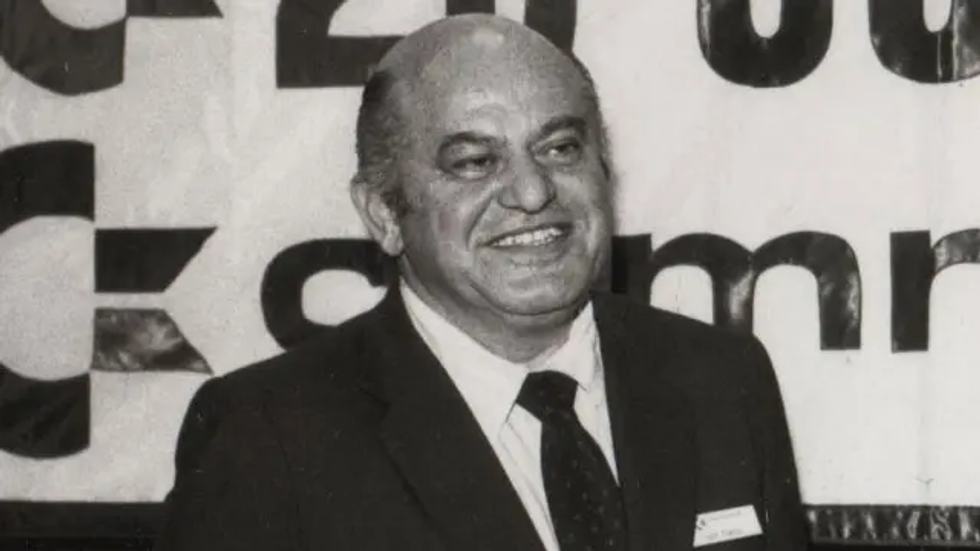
Jack Tramiel: the man behind Commodore
In the years when computing was still a world for the few, nobody would have expected a company that had started with typewriters to become one of the main forces behind the personal computer revolution.
That company was Commodore. At the center of it stood Jack Tramiel.
A Holocaust survivor and immigrant to the United States, Tramiel was not a “visionary” entrepreneur in the romantic sense of the word. He was pragmatic, direct, and obsessed with cost control. His philosophy was famously simple: “computers for the masses, not the classes.”
In the 1970s, that idea was anything but obvious.
For Tramiel, the computer should not remain an elite object. It had to be affordable, widespread and practical. It had to become part of daily life. That vision would shape Commodore’s strategy and, eventually, the entire home computer market.
From typewriters to calculators
Commodore was founded in the 1950s as a typewriter company, operating in a solid but mature market where innovation moved slowly and growth opportunities were limited. For several years, the company remained tied to that world, building an industrial base that would later prove essential.
The first major shift came with electronic calculators. In the 1970s, calculators began spreading rapidly, becoming one of the first electronic devices to reach a broad consumer audience. Commodore saw the potential and entered the sector aggressively. But it soon ran into a major problem: the cost of components.
At that time, whoever controlled the chips controlled the market. And Commodore did not control them.
That dependency exposed the company to unpredictable costs, reduced margins and strategic weakness. For Tramiel, it was unacceptable. If Commodore wanted to compete on price, it had to control production.
The answer was radical: acquire MOS Technology.


MOS Technology and the power of vertical integration
The acquisition of MOS Technology did not simply give Commodore a supplier. It changed the nature of the company.
Commodore became vertically integrated, able to produce key components internally instead of depending entirely on external chip manufacturers. This gave Tramiel the control he needed: lower costs, faster reactions to market changes, and a competitive advantage that many rivals could not easily match.
It was an industrial move, but also a strategic statement.
Commodore was not trying to win by building the most luxurious machines. It wanted to win by making computers affordable. To do that, the company needed to own the chain that made affordability possible.
The secret of the 6502
MOS Technology had been founded by engineers who had left Motorola, with the goal of creating a low-cost but competitive microprocessor. The result was the MOS 6502, one of the most important chips in the history of personal computing and video games.
The 6502 was inexpensive, efficient and surprisingly capable. It became the heart of several defining machines of the era, including the Apple II, the Atari 8-bit family, the BBC Micro, the NES, and of course Commodore’s own computers.
Its importance cannot be overstated. Without the 6502, the home computer boom of the late 1970s and early 1980s would have looked very different. It made powerful enough machines cheaper to build, and therefore easier to sell to a mass audience.
For Commodore, the 6502 was not just a component. It was the foundation of a strategy.
Chuck Peddle and the idea of the personal computer
Inside MOS Technology worked Chuck Peddle, one of the key figures of the early personal computer era. He is often less celebrated than other names from the period, but his role was crucial.
Peddle understood something that now seems obvious, but at the time was far from guaranteed: the computer could become personal.
Not a machine reserved for corporations, laboratories or universities, but an object for individuals. A machine that could sit on a desk, be switched on, and used directly by one person.
That idea found fertile ground at Commodore. Tramiel was not interested in creating elite products for a narrow market. He wanted machines that could reach people. Peddle’s technical vision and Tramiel’s business instincts met at exactly the right time.
The result would be Commodore’s first major step into personal computing.
The Commodore PET: a concrete first step
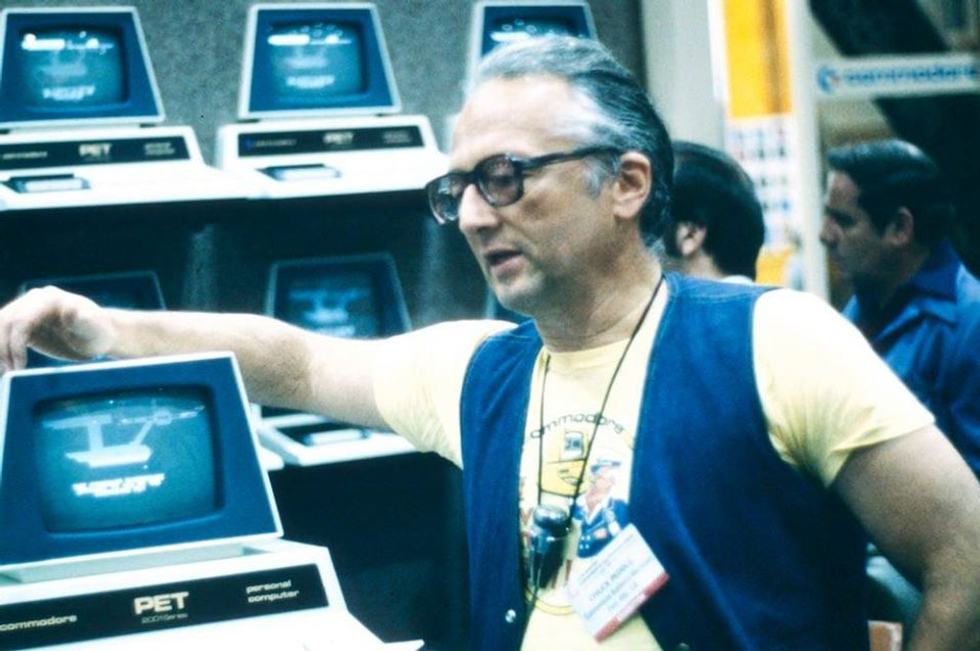
In 1977, Commodore introduced the PET, short for Personal Electronic Transactor.
It was not the most glamorous computer of its generation, but it was one of the most important. The PET was a complete system: monitor, keyboard and main unit integrated into a single machine. It did not require the user to assemble components or configure a complicated setup. You switched it on, and it was ready.
That mattered.
The PET was designed for schools, offices and real working environments, where practicality often mattered more than style. While some competitors imagined the future in more elegant or experimental terms, Commodore began building it in a very concrete way.
The PET showed that a personal computer could be sold as a complete, self-contained product. It was accessible not only in price, but in concept. You did not have to be an engineer to understand what it was.
One chip, three different worlds
The 6502 represents one of the most fascinating intersections in early computing history. Apple, Atari and Commodore were competitors, each with a very different philosophy, yet their machines often shared the same electronic heart.
Apple aimed for refinement and a more polished personal computing experience. Atari came from the world of games and entertainment. Commodore focused on accessibility, cost control and mass-market reach.
Three different visions. One technological foundation.
That shared base shows how fluid the industry still was at the time. The market had not yet fully standardized. Companies experimented, borrowed, competed and evolved quickly. The personal computer was still being defined in real time.
Apple, Atari and the beginning of the battle
As the market grew, the differences between the main players became clearer.
Apple offered a more refined vision of personal computing, focused on design, usability and a sense of quality. Atari entered the space with the energy of a company already tied to video games and home entertainment. Commodore took a different route: it did not try to be the most elegant or the most prestigious. It tried to be the most accessible.
That difference was crucial.
Commodore’s goal was not to sell computers only to enthusiasts or professionals. It wanted to lower prices, expand the audience and bring computing into as many homes as possible. This aggressive approach would define the company’s greatest successes, but also many of its internal tensions.
Commodore’s greatest weapon: price
The real strength of Commodore was its control over production. Vertical integration allowed Tramiel to pursue an aggressive pricing strategy that many competitors found difficult to match.
He was not interested in building the best computer in absolute terms. He wanted to build the computer that more people could afford.
It was a brutal logic, but an effective one.
By lowering prices and controlling costs, Commodore pushed the market toward mass adoption. It helped transform the computer from an expensive specialist machine into a consumer product. This was not just a business tactic. It was the core of Commodore’s cultural impact.
The company did not simply sell computers. It lowered the threshold of entry.
The first cracks: Irving Gould
Even as Commodore grew stronger, tensions inside the company began to surface.
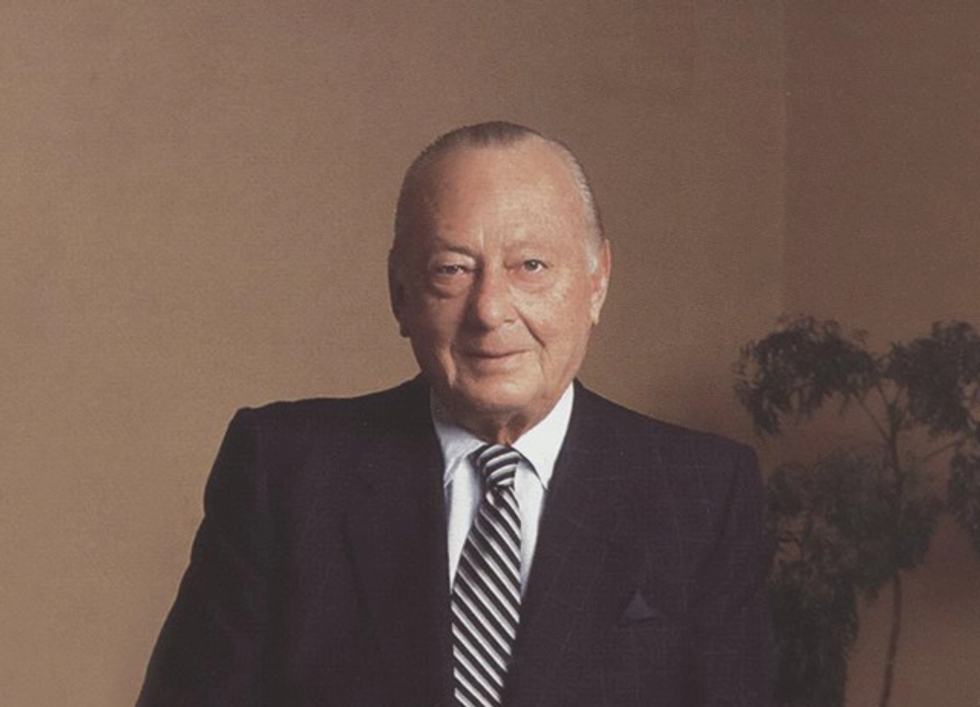
Irving Gould, the company’s main financial backer, represented a different vision from Tramiel’s. On one side there was an industrial, direct and market-driven approach. On the other, a more financial perspective, concerned with balance, control and long-term corporate stability.
At first, the fracture was subtle. But over time it would become one of the key elements in Commodore’s future story.
The company that had risen through aggressive pricing, vertical integration and fast decisions would eventually find itself caught between very different ideas of what Commodore should be.
Toward the revolution
By the end of the 1970s, the computer was no longer just a technical tool for laboratories, universities or large companies. It was slowly changing shape. It was moving closer to people, entering everyday spaces, and beginning to transform the way we worked, studied and approached technology.
Commodore was in the right place at the right time.
It had built an industrial foundation. It had acquired control over chip production. It had a clear vision: make computers accessible. Not perfect, not exclusive, but widespread. That difference may seem small, but it was enormous.
While others tried to innovate by moving upward, Commodore pushed forward by widening the base. It did not want to conquer a niche. It wanted to conquer the mass market.
And from that strategy, something much bigger than a single product was about to emerge.
In the early 1980s, Commodore’s vision would take the form of a machine destined to enter homes, bedrooms and memories all over the world. A computer that would become not only technology, but discovery, creativity, play and identity.
Its name would be Commodore 64.
And with it, the revolution would truly begin.
Reader memories
Comments, memories and points of view stay here, beside the article.
Comment rulesLog in or register to leave a comment.
Leave a comment
Create your account
Loading comments...