


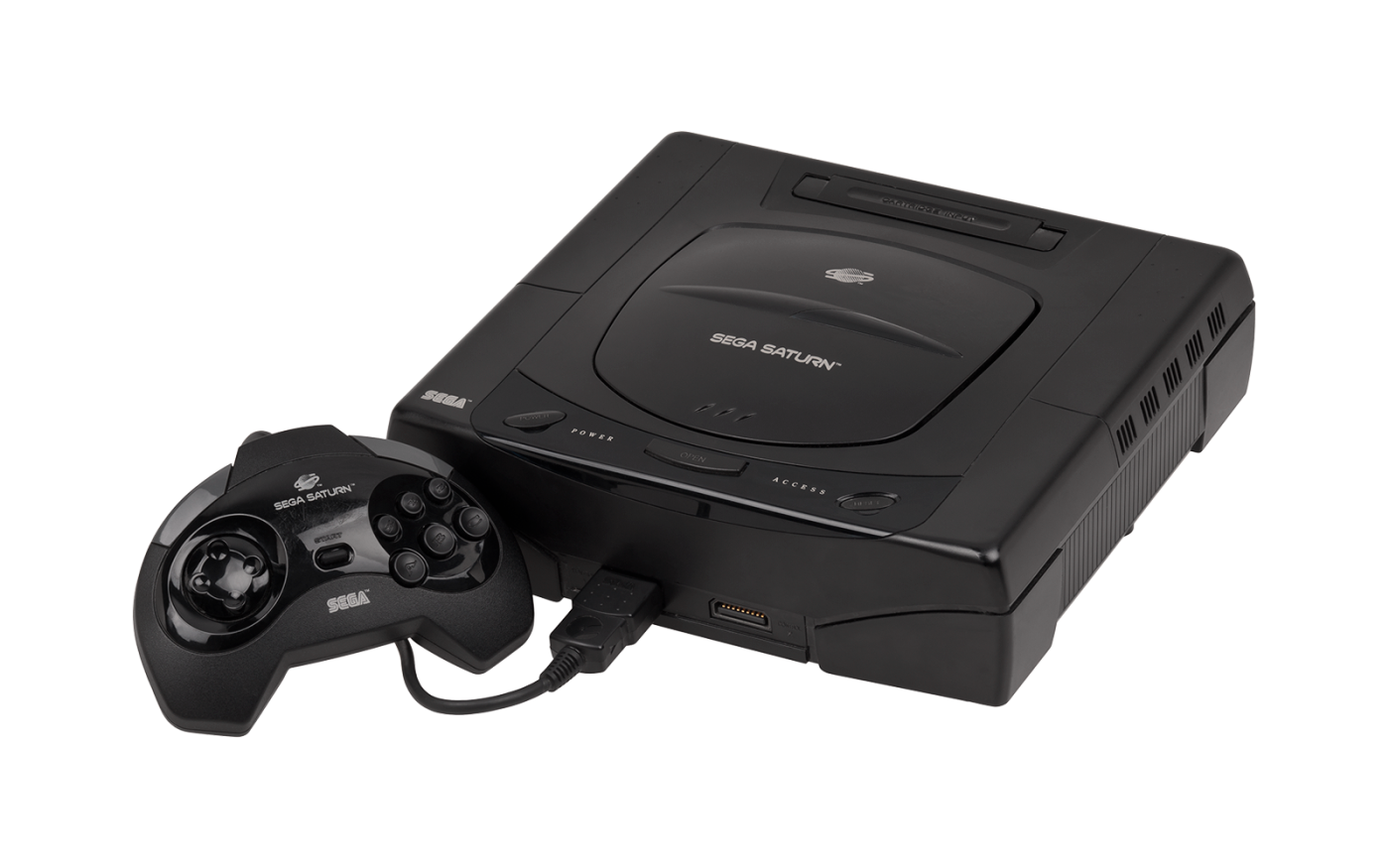



Sega Saturn
Released by SEGA in Japan in 1994, and in North America and Europe in 1995, the Saturn was the company’s entry into the 32-bit generation. It arrived during a difficult transition, as the market was moving toward 3D graphics, CD-ROM media and a broader console audience. Its main rivals were Sony PlayStation and Nintendo 64, while SEGA’s own Mega Drive, Mega-CD and 32X ecosystem also made the company’s strategy harder to read.
The Saturn used two Hitachi SH-2 32-bit CPUs, supported by several dedicated processors. Its architecture was powerful but difficult to master, especially compared to the PlayStation. Graphics were handled by two separate chips: VDP1 for sprites, polygons and textures, and VDP2 for backgrounds, scrolling, rotation and multiple planes. This made the console especially strong in 2D and certain perspective effects, though less straightforward for 3D development. Its main medium was CD-ROM, with audio handled by the Yamaha SCSP chip.
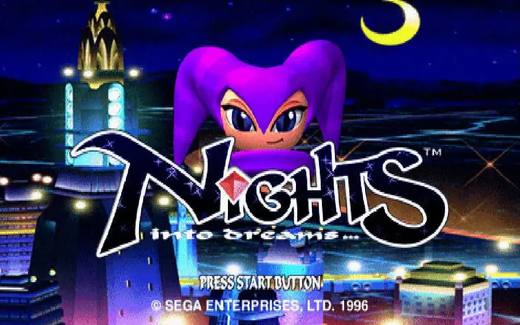
Worldwide sales are generally estimated at around 9.2 million units, with stronger results in Japan than in Western markets. The Saturn remains a fascinating, uneven console: commercially troubled, but rich in arcade conversions, SEGA productions and high-quality 2D games. Its legacy runs through Virtua Fighter 2, Sega Rally Championship, NiGHTS into Dreams…, Panzer Dragoon Saga, Radiant Silvergun, Guardian Heroes, Daytona USA and Dragon Force.