
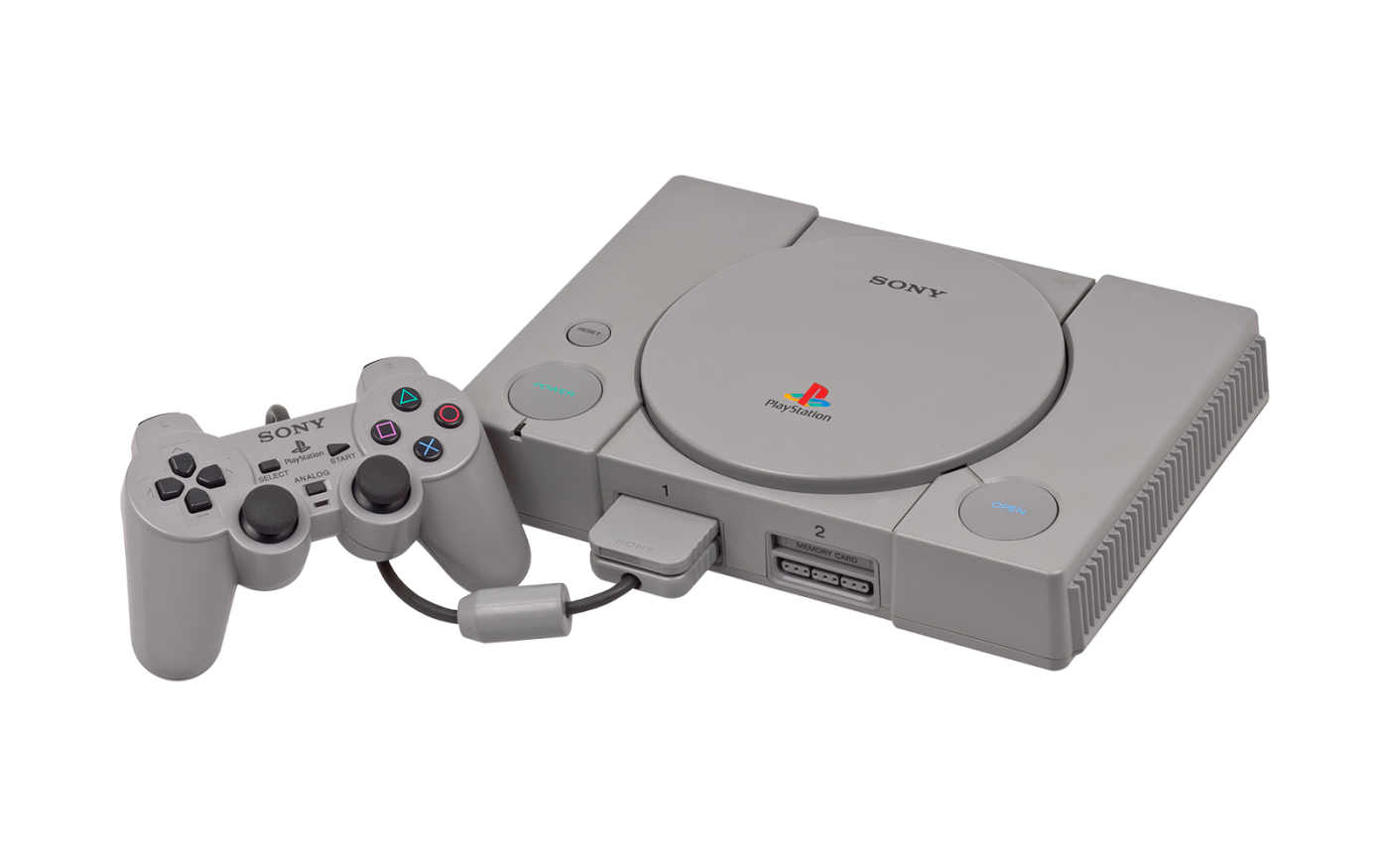


Launched by Sony in Japan in 1994, and in North America and Europe in 1995, the PlayStation marked the company’s definitive entry into the console market after the breakdown of its project with Nintendo. It arrived during the full transition toward 3D graphics and optical media, competing mainly with the Sega Saturn and Nintendo 64. In Italy it became hugely widespread in the second half of the 1990s, helped by the lower cost of CDs, a more adult image and a very broad catalogue.
The console used a 32-bit MIPS R3000A CPU running at around 33.9 MHz, supported by 2 MB of main RAM, 1 MB of video memory and 512 KB dedicated to audio. Its medium was CD-ROM, a decisive choice for larger content, video sequences, CD-quality music and lower production costs compared with cartridges. Graphics were based on textured polygons, Gouraud shading and variable resolutions, often around 320×240 pixels, with hardware designed to make 3D development more accessible.
Worldwide sales are generally reported at around 102 million units, a result that changed the balance of its generation. The PlayStation made console gaming more mainstream, urban and closer to an adult audience, without losing strength in traditional genres. Its legacy lives through Ridge Racer, Tekken 3, Final Fantasy VII, Metal Gear Solid, Resident Evil, Gran Turismo, Crash Bandicoot and Tomb Raider.