





Atari
- Developer
- Manufacturer
- Publisher
Atari is one of the founding names of video games, central to arcades, home consoles and home computers during the 1970s and 1980s.
History
Atari was founded in Sunnyvale, California, in 1972 by Nolan Bushnell and Ted Dabney. The name came from the board game Go and refers to a strategically threatened position, almost a statement of intent for a company born when commercial video games were still being invented. After the experience of Computer Space, Bushnell and Dabney created Atari to produce simpler, more immediate coin-operated games suited to public spaces. Its first major success was Pong, designed by Allan Alcorn in 1972: a basic idea, two paddles and a ball, that turned video games from a technical curiosity into a bar, arcade and pop culture phenomenon.
During the 1970s Atari became one of the most important companies in electronic entertainment. After Pong came arcade games such as Breakout, Night Driver, Football, Asteroids, Lunar Lander, Battlezone, Missile Command, Centipede and Tempest, titles that helped define the language of the arcade: scores, reflexes, competition, vector graphics, dedicated controls and an immediate relationship between gesture and screen. Many key figures passed through or around the company, including Al Alcorn, Steve Jobs, Steve Wozniak, Ed Logg, Lyle Rains, Howard Scott Warshaw, Carol Shaw, Dona Bailey and many others. Atari was at once a technical laboratory, a chaotic factory and a symbol of California’s 1970s electronic culture.
In 1976 Bushnell sold Atari to Warner Communications, giving the company the resources to continue the project that would reshape the home market: the Atari Video Computer System, later known as the Atari 2600, launched in 1977. The console was not an immediate runaway success, but it exploded between the late 1970s and early 1980s thanks to interchangeable cartridges and arcade conversions. Space Invaders, Adventure, Missile Command, Asteroids, Yars’ Revenge, Pitfall! and many other games made the 2600 the defining machine of the first great American console era. Atari established the modern idea of a home platform, but it also created internal tensions: the lack of credits and recognition for programmers led in 1979 to the formation of Activision by former Atari developers, helping define the third-party publisher model.
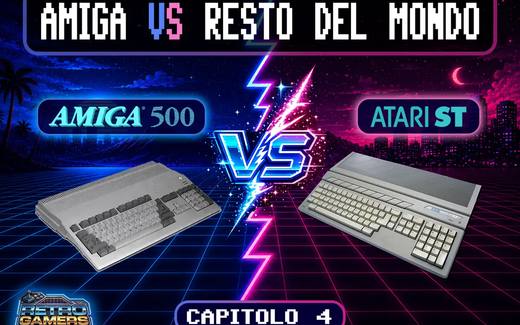
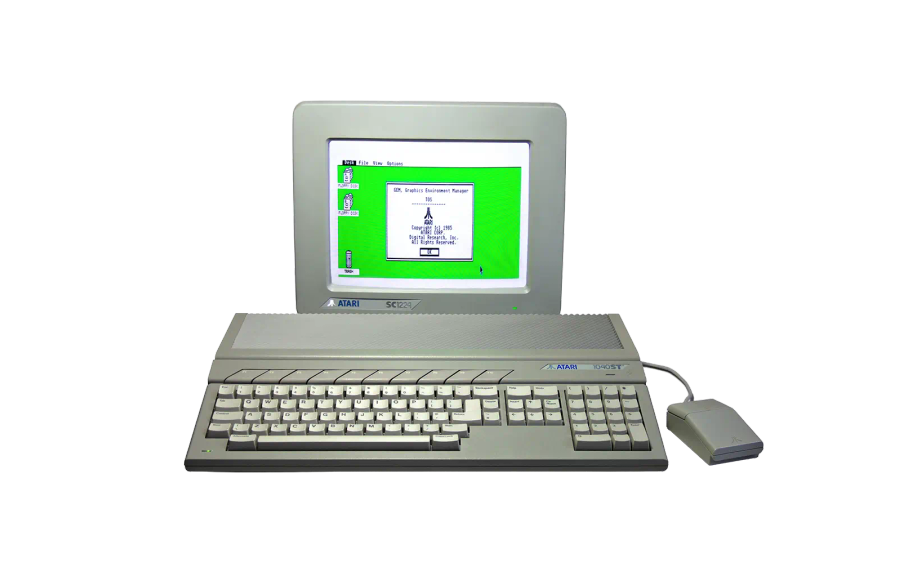
Atari was also important in home computers. The Atari 400 and 800 line, introduced in 1979, brought advanced graphics and sound into the home through custom chips designed in part by Jay Miner, later known as the father of the Amiga. Later came the Atari XL and XE lines, and especially the Atari ST, launched in 1985 under Jack Tramiel after the split between Atari Games and Atari Corporation. The ST became a key 16-bit computer in Europe, loved by musicians, artists, programmers and players, thanks in part to its built-in MIDI ports and competitive price against the Amiga and Macintosh.
Atari’s corporate history, however, was marked by constant fractures. The North American crash of 1983 hit the console market hard and overwhelmed the old Warner-owned Atari. In 1984 the consumer business was sold to Jack Tramiel, founder of Commodore, while the arcade division continued separately as Atari Games. From that point the Atari name was split across different companies: Atari Corporation continued with computers and consoles such as the 7800, Lynx and Jaguar, while Atari Games remained active in arcades with titles such as Marble Madness, Gauntlet, Paperboy, RoadBlasters, Hard Drivin’ and San Francisco Rush. In 1996 Atari Corporation merged with JTS, then the brand passed to Hasbro Interactive in 1998 and finally to Infogrames in 2001; in 2009 Infogrames officially adopted the Atari SA name.
Atari’s legacy is enormous and also melancholy. It was the company that brought video games into arcades, living rooms and then home computers, but also the symbol of an industry that grew too fast and burned through talent, markets and brands. For Retro-Gamers, Atari remains fundamental not because its path was linear, but because almost all the origins of modern video games pass through its history: arcades, consoles, home computers, third-party publishing, market crashes and technological nostalgia.