







Sega System 16
Released by SEGA in 1985, the System 16 was one of the company’s most important arcade platforms of the late 1980s. Built for coin-op cabinets rather than home use, it appeared in a market where SEGA was competing with Namco, Konami, Taito, Capcom, Irem and Atari Games, all pushing 2D arcade hardware in different directions. The board existed in several revisions, mainly System 16A and System 16B, and became a flexible base for action games, platformers, beat ’em ups and arcade titles later associated with SEGA’s home identity.
The hardware used a Motorola 68000 16-bit CPU, usually running at around 10 MHz, with a Zilog Z80 dedicated to audio. Its 2D graphics were built around hardware sprites, tile-based backgrounds and smooth scrolling, generally at 320×224 pixels. Audio relied on the Yamaha YM2151 FM chip, often supported by PCM hardware depending on the board and game. There are no consolidated public sales figures, as System 16 was an arcade platform distributed through boards and dedicated cabinets rather than a consumer console.
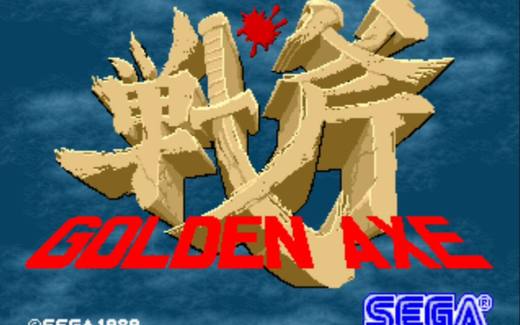
System 16 helped define SEGA’s late-1980s arcade style: clean visuals, strong motion, sharp music and fast, immediate play. Its legacy runs through Shinobi, Altered Beast, Golden Axe, Fantasy Zone, Alex Kidd: The Lost Stars, Wonder Boy III: Monster Lair, Alien Syndrome and Cotton.