



Loriciel
- Developer
- Publisher
A French software house born during the golden age of European microcomputers, Loriciel became one of the most prolific publishers of the 8-bit and 16-bit era in France.
History
Loriciel was founded in France in 1983 as Loriciels by Marc Bayle and Laurent Weill. Its name came from a mix of Oric, one of the first computers the company worked on, and “logiciels”, the French word for software. In a European market that was still fragmented by country, platform and local communities, Loriciel quickly became one of the most recognizable names in French home computer software. Its early work appeared on machines such as the Oric, ZX81, ZX Spectrum, Thomson computers and, most importantly for the French market, the Amstrad CPC.
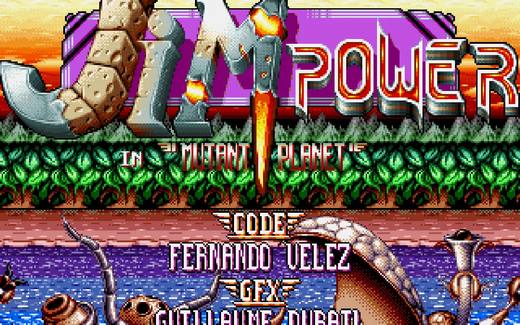
The company operated both as a developer and as a publisher, releasing games, utilities and educational software. Its catalogue was wide and very typical of the European scene of the mid-1980s: adventures, arcade games, sports titles, technical experiments and productions with a strong local flavor. Among its most representative games were L’Aigle d’Or, Le 5ème Axe, Sapiens, Infernal Runner, Bob Winner, Skweek, Tennis Cup, Panza Kick Boxing, Jim Power in Mutant Planet and Super Skweek. Some of these titles remained closely tied to the French market, while others travelled further through ports to Atari ST, Amiga and console formats.
Loriciel’s strongest period came during the transition from 8-bit to 16-bit computers. The company followed the market onto Atari ST and Amiga, two key machines for European game development at the end of the 1980s. During this phase its output became more international, with sports, action and arcade games that tried to compete beyond the French scene. Tennis Cup and Panza Kick Boxing showed a more polished technical ambition, while Jim Power captured the early 1990s taste for fast action, bright graphics and console-like presentation.
The company’s story also connects with important figures in French game history. Laurent Weill remained an influential entrepreneur in interactive media, while Éric Chahi, later known for Another World, began programming on Oric and Amstrad for Loriciels in the early 1980s.
Financial problems marked the beginning of the end. Sources differ on the exact final date: some point to bankruptcy in 1992 followed by a short-lived rebirth as Virtual Studio, while others place the company’s final closure between 1993 and 1995. What is clear is that Loriciel disappeared as the market was becoming more expensive, more global and less forgiving for the European publishers born in the microcomputer era. Its legacy is not just a list of games, but a snapshot of a very specific moment in French and European video game history, when small studios could still build a catalogue across many machines with personality, speed and a strong local identity.