



In 1986, Defender of the Crown was one of the games that most immediately demonstrated what the Amiga could do. Its strategy was relatively simple, but the large illustrated scenes, jousting tournaments, castle sieges and sword fights had a visual impact that played a major role in establishing the reputation of Cinemaware’s first game.
Forty years later, that particular combination of strategy, action and cinematic presentation returns with Defender of the Crown: The Legend Returns.
Developed by Polish studio Black Tower Basement and published by Nordcurrent Labs, the game was released on August 13, 2026 for PC, PlayStation 5, Xbox Series X|S and Nintendo Switch. Rather than simply rebuilding the original with new graphics, the project attempts to address one of the unavoidable challenges involved in bringing back a game with this kind of historical importance: preserving what players remember while acknowledging that game design has changed considerably over the past four decades.
Three ways to return to Defender of the Crown
The developers approached this by dividing The Legend Returns into three distinct modes.
Retro Mode preserves the original Amiga version of Defender of the Crown, adding some quality-of-life improvements while keeping the 1986 experience largely intact. It is the part of the package aimed primarily at players who want to revisit the original without relying on emulation or period hardware.
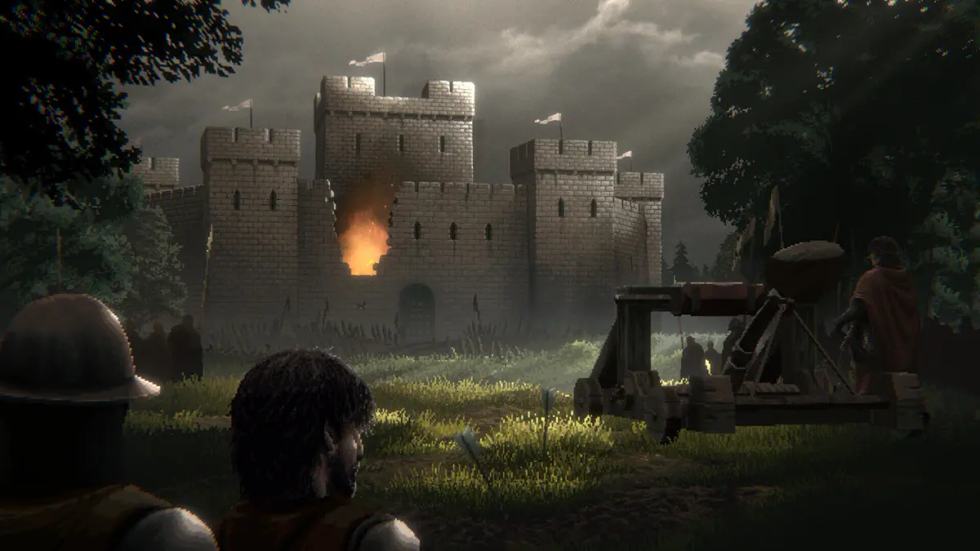
Classic Mode starts from the same foundations and rebuilds them for modern systems. The graphics and interface have been redesigned, several mechanics refined and the overall experience made more accessible. Conquering English territories, recruiting armies, laying siege to castles, jousting and sword fighting all remain part of the structure inherited from the Cinemaware original.


Kingdom Mode moves much further away from the past. Maps are procedurally generated, while traditional conquest mechanics are expanded with dice, cards, unlockable abilities and multiple difficulty levels. Rather than restoring Defender of the Crown, this mode uses its setting and some of its original concepts as the foundation for something more focused on replayability.
This three-part structure is arguably the most interesting aspect of the project. Players can experience three very different approaches to dealing with a classic: preserving it, reinterpreting it, or using it as the starting point for something new.
A game designed to impress in 1986
Defender of the Crown was Cinemaware’s first title, with Kellyn Beck responsible for its game design and Jim Sachs playing a crucial role in defining its visual identity.
Its importance has to be understood in the context of 1986. On Amiga, Sachs’ large illustrated scenes, detailed characters and cinematic presentation became an immediate demonstration of what the machine could achieve visually. The success of the game helped define the identity of Cinemaware, which would continue combining video games with cinematic genres in titles such as Rocket Ranger, Lords of the Rising Sun, It Came from the Desert and Wings.
The limitations of the original were already visible at the time, however. Behind its extraordinary presentation was a relatively lightweight strategy system. This is also where The Legend Returns faces its most difficult challenge. Improving the graphics alone is not enough when what astonished players in 1986 has long since become commonplace, while mechanics that once felt immediate can now appear extremely simple.
Offering Retro, Classic and Kingdom Mode side by side avoids trying to provide a single answer. Players looking for the historical experience can return to the original Amiga game. Those wanting a modern presentation can choose Classic Mode. And those looking for something structurally more contemporary can explore the much more ambitious Kingdom Mode.
Defender of the Crown: The Legend Returns is available now on PC and current-generation consoles.
Forty years later, Defender of the Crown can no longer recreate the visual shock caused by those Amiga screens in 1986. Its return offers something different but equally interesting for anyone interested in video game history: the chance to place the original, its modern reinterpretation and a new evolution of its ideas side by side.
Reader memories
Comment on the article and join the discussion.
Comment rulesLog in or register to leave a comment.
Create your account
Loading comments...