






Virgin Games
- Developer
- Publisher
Virgin Games was the video game arm of the Virgin group, one of the most visible British publishers of the 1980s and 1990s, later evolving into Virgin Interactive.
History
Virgin Games was founded in the United Kingdom in 1983 within Richard Branson’s Virgin group, with Nick Alexander as the key founding figure after he left Thorn EMI. The company was based in Portobello Road, London, and entered a fast-growing British home computer market built around the ZX Spectrum, Commodore 64, Amstrad CPC, BBC Micro and later Atari ST and Amiga. At first, Virgin relied heavily on freelance developers and small external teams, but in 1984 it created an in-house development group known as the “Gang of Five”, showing that it wanted to become more than a simple distribution label.
Its early years produced a varied catalogue, typical of the British games industry of the time. Titles such as Sorcery, Dan Dare: Pilot of the Future, Falcon Patrol II, Strangeloop, Shogun and conversions of board game or television licences helped build the brand. Virgin also acquired smaller publishers such as Rabbit Software, New Generation Software and Leisure Genius, expanding its presence in a fragmented and highly competitive market. It was not a compact authorial school like Ultimate or Sensible Software. It was an ambitious publisher, able to bring very different projects together under a strong commercial identity.
In 1987 Virgin acquired Mastertronic, one of the most important names in British budget software, and for several years operated as Virgin Mastertronic. This phase was important because it combined two different strengths: Mastertronic’s aggressive mass-market distribution and the more media-conscious image of the Virgin brand. In 1991 the company returned to the Virgin Games name, while in 1993 it gradually adopted the Virgin Interactive Entertainment identity, better suited to a market moving toward CD-ROMs, multimedia and larger international productions.
Its best-remembered period came between the late 1980s and the 1990s. Virgin published or distributed games such as The 7th Guest, Dune, Dune II, Cannon Fodder, Beneath a Steel Sky, The Lion King, Aladdin, Cool Spot, Global Gladiators, Earthworm Jim and Command & Conquer. Some were developed internally, others by external or owned studios, but the catalogue shows the publisher’s transformation clearly: from European microcomputers to PC, from pop and film licences to real-time strategy. A crucial step was the acquisition of Westwood Studios in 1992, the studio that would help define PC gaming with Dune II, Lands of Lore, The Legend of Kyrandia and later Command & Conquer.
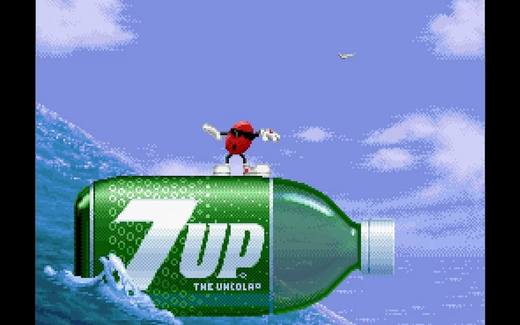
Virgin also played an important role in the era of Disney licences on consoles and computers. The Jungle Book, Aladdin and The Lion King showed a very high audiovisual standard for the time, especially on Mega Drive, Super Nintendo and PC. At the same time, characters such as Cool Spot showed the publisher’s ability to work with advertising brands and pop culture with a certain visual wit. Figures such as David Perry, Louis Castle, Brett Sperry, Graeme Devine, Rob Landeros, Charles Cecil and the artists and programmers of the internal and external teams connected to Virgin helped give the company a broad profile, less tied to one genre and closer to a wider entertainment model.
The second half of the 1990s was marked by complex corporate changes. Blockbuster invested in the company in 1994, then control moved into the orbit of Viacom and Spelling Entertainment. Electronic Arts acquired Westwood and the U.S. operations in 1998, while in 1999 Titus and Interplay entered Virgin Interactive’s structure; in 2001 Titus took full control. The brand was gradually hollowed out and, in the early 2000s, replaced or absorbed by other entities such as Avalon Interactive and Virgin Play in Spain.
Virgin Games’ legacy is that of a publisher that strongly represents the European transition from home computers to consoles and multimedia PC gaming. It did not always have a single creative identity, but it was able to gather talent, licences and technology at crucial moments. For players who lived through those years, its name remains tied to British tapes and disks, Disney productions of the 16-bit era, early CD-ROM landmarks and the birth of some essential PC game series.