




A technical and historical look at the Commodore 1541 and 1571, between serial bus limits, high expectations, Datasette comparisons and the clever tricks that made floppy loading faster.
If you lived through the Commodore 64 era, you probably remember one of the most classic dilemmas: was it better to use floppy disks or cassette tapes?
The Commodore 1541 represented the next step, the symbol of a more advanced experience and, at least on paper, a faster one. And yet, after just a few loading sessions, many users collided with a reality made of long waits, endless mechanical noises and a kind of slowness that was hard to justify.
With the Commodore 1571, Commodore tried to improve the situation by introducing new features and better efficiency. But were these drives really that slow, or was the problem deeper than that?
The Commodore 1541: brilliant architecture, limited performance
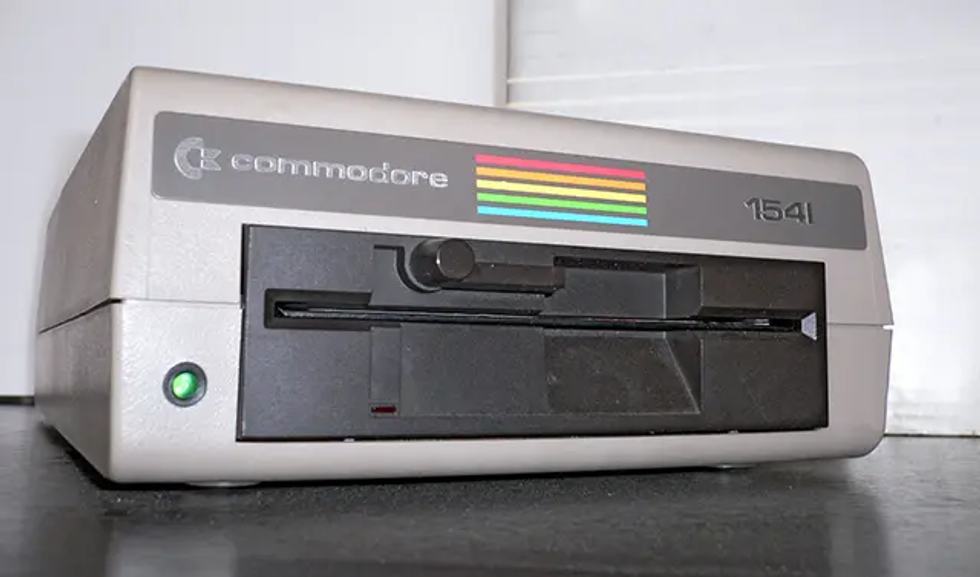
The Commodore 1541 is probably the most iconic disk drive in Commodore history, but also one of the most misunderstood. Its slowness was not caused by the magnetic medium or the mechanics themselves, but by a precise design choice.
Unlike many disk drives of the period, the 1541 was an autonomous system. Inside it were a MOS 6502 CPU, RAM and dedicated firmware. In practice, it was a small computer that managed the disk independently and communicated with the Commodore 64 through the serial bus.
And that was the heart of the problem. Commodore’s serial protocol, designed to keep costs down and preserve compatibility, proved extremely inefficient when transferring data. Every operation had to pass through that slow channel, turning it into the real bottleneck.
The result was almost paradoxical: an advanced architecture that, in everyday use, heavily penalised perceived performance.
The price: the real elephant in the room
A key aspect in understanding the reputation of the Commodore 1541 is its price on the Italian market. The drive was sold for around 500,000 lire, a significant amount, often comparable to — or even higher than — the price of the Commodore 64 itself.
Adjusted to today’s money, that meant several hundred euros, a serious investment for a home computer accessory. Expectations were naturally very high: anyone buying a 1541 expected a clear improvement in speed and convenience.
The reality was different. Without optimisations, loading times remained long and fragmented, and the gap between expectation and real-world performance became obvious very quickly.
The Commodore Datasette, by contrast, was extremely cheap and accessible. Even accepting longer loading times, it offered an experience that felt consistent with its price. In this context, the slowness of the 1541 was not only technical, but psychological: the more you paid, the more you expected.
The Commodore 1571: an evolution held back by context
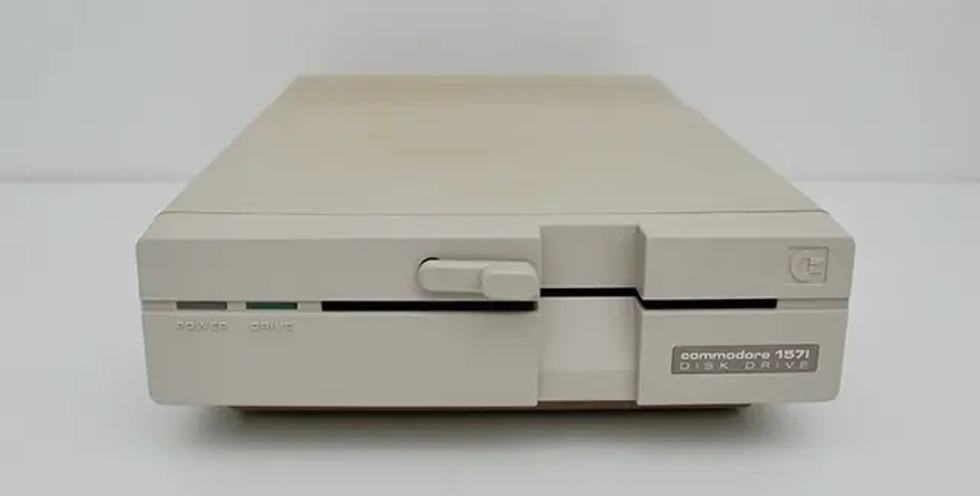
With the Commodore 1571, Commodore introduced a concrete evolution. The drive could read both sides of a disk without requiring the user to flip it manually, and it included meaningful hardware improvements.
The real leap, however, was the burst mode available with the Commodore 128, allowing much faster data transfers than the standard serial protocol.
The problem was that the market remained strongly anchored to the Commodore 64. Most software continued to be developed for that platform, where burst mode was not available.
As a result, the 1571 often ended up behaving like a slightly improved 1541, without being able to fully express its potential. It was not a technical failure, but an innovation launched into a context that was not ready to take advantage of it.
Disk versus cassette: two different philosophies
In a direct comparison between floppy disk and magnetic tape, the Commodore Datasette appears as a simple but surprisingly effective solution.
Cassette loading was sequential and required long waiting times, but its behaviour was linear and predictable. Once started, the process continued without interruption until completion.
The floppy disk introduced direct access to data, greater flexibility and the possibility of frequent saving. However, without optimisations, the 1541 alternated bursts of activity with pauses, sometimes making the experience feel less fluid than expected.
When floppy really made the difference
It was with more ambitious software that floppy disks showed their true value. Games such as OutRun benefited from more manageable loading between sections, improving the overall rhythm.
But disks became truly essential with more complex games. Productions such as The Bard’s Tale and Ultima V: Warriors of Destiny used floppy storage to handle large amounts of data, frequent saves and persistent worlds.
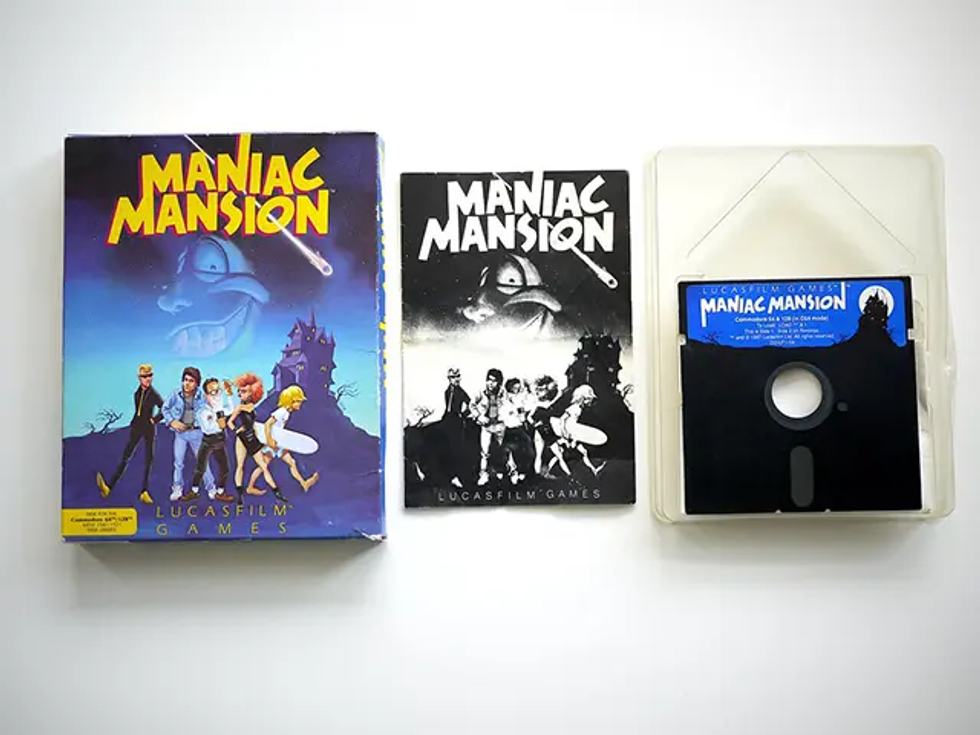
Narrative games such as Maniac Mansion also benefited from a structure less constrained by the limits of tape, offering a more fluid and articulated experience.
In this sense, floppy was not simply a faster medium. It was a tool that made more complex games possible.
Speeding up the impossible: loaders and cartridges
One of the most fascinating aspects of the Commodore ecosystem was its ability to work around hardware limits through intelligent solutions.
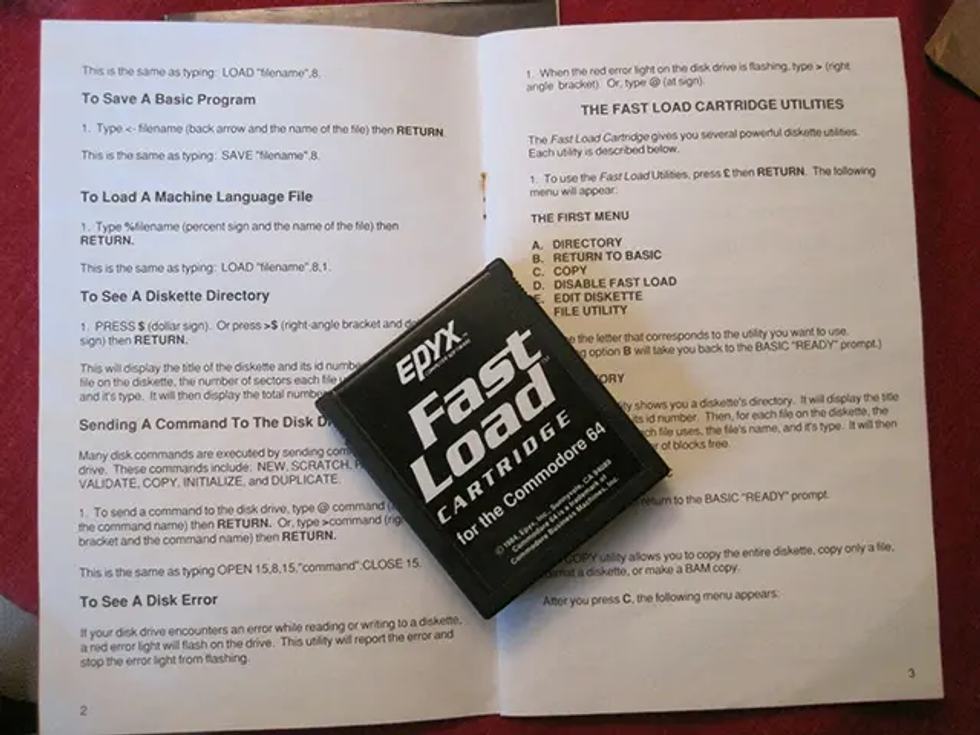
Software fast loaders could significantly improve performance, while hardware cartridges such as Action Replay or Final Cartridge allowed even more noticeable acceleration.
Many developers also integrated custom loading systems directly into their games, achieving results far superior to the standard routines.
Under those conditions, the 1541 and 1571 stopped being mere limitations and became much more effective tools.
Conclusion
The Commodore 1541 and Commodore 1571 were not simply slow devices. They were products shaped by precise design decisions.
Their slowness was the result of a balance between cost, compatibility and architecture. Without optimisations they could be frustrating, but in the right conditions they offered far broader possibilities and much better performance.
And it is precisely in this contrast between limits and potential that much of the Commodore experience still finds its charm.
Reader memories
Comments, memories and points of view stay here, beside the article.
Comment rulesLog in or register to leave a comment.
Leave a comment
Create your account
Loading comments...