


Renegade
- Publisher
Renegade Software was a British publisher built around The Bitmap Brothers, important in the Amiga and Atari ST scene of the early 1990s.
History
Renegade Software was formed in the United Kingdom between 1990 and 1991, as a project connected to The Bitmap Brothers and Martin Heath, founder of the music label Rhythm King. Some sources point to 1990 as the beginning of the operation, while others list 1991 as the formal foundation year. In either case, the idea came from dissatisfaction with the way traditional publishers treated developers. The Bitmap Brothers, already known for Xenon, Speedball and Speedball 2, wanted more control over their work, more public recognition and a presentation that valued the creators as much as the product. Renegade was therefore a very early 1990s answer: independent, image-conscious, close to music culture and built around the belief that a development team could become a recognizable brand.
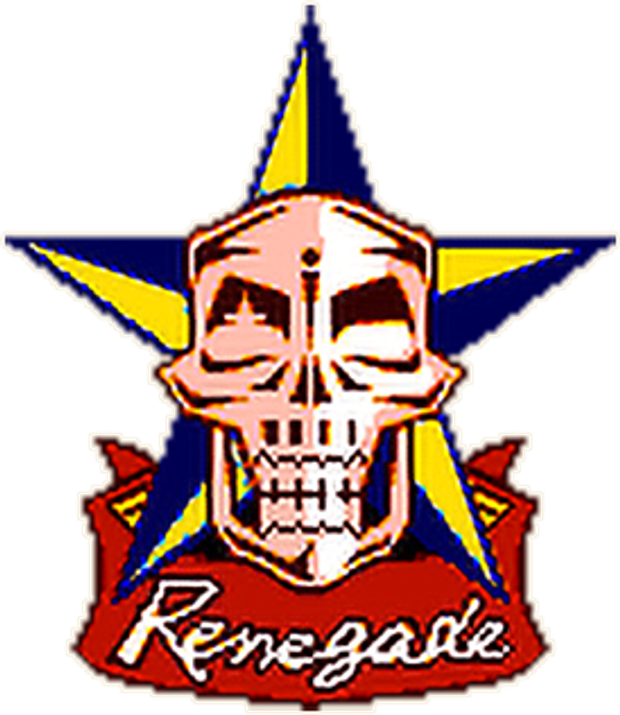
Renegade’s first role was to publish The Bitmap Brothers’ games after their Mirrorsoft and Image Works period. Gods, Magic Pockets, Cadaver: The Payoff and especially The Chaos Engine quickly established the label’s tone: metallic visuals, precise design, strong packaging, clear visual identity and a more mature European style than many home computer platformers and arcade games of the time. Magic Pockets also reflected the Rhythm King connection, using music by Betty Boo and showing a desire to link video games with British pop culture. For Amiga and Atari ST players, the Renegade logo soon became associated with technically polished and highly recognizable releases.
Renegade, however, did not remain only The Bitmap Brothers’ label. It also published games by other independent studios, becoming one of the most interesting European publishers of the first half of the 1990s. Its relationship with Sensible Software was crucial: Sensible Soccer, International Sensible Soccer and Sensible World of Soccer brought one of the most important sports series in European computer history into the Renegade catalogue, with Jon Hare, Chris Yates and Richard Joseph among its central creative figures. Alongside them came Graftgold’s Fire & Ice, Uridium 2, Turrican 3, Ruff ’n’ Tumble, Flight of the Amazon Queen, Virocop and Z, confirming Renegade’s ability to work with studios that already had a strong personality.
Renegade’s strongest period matched the final great years of the Amiga and Atari ST markets, and the increasingly clear move toward PC and consoles. The label represented an alternative to the large generalist publishers: less scattered than Ocean or U.S. Gold, more author-led in its communication, and often connected to teams that already had a strong reputation among readers of specialist magazines. In only a few years it built a compact but influential catalogue, where The Chaos Engine, Sensible Soccer, Sensible World of Soccer, Gods and Z capture a particular idea of British game design: immediate, technical, competitive, often hard-edged, but supported by distinctive art and sound direction.
In 1995, Renegade was acquired by Time Warner Interactive and became part of Warner Interactive Entertainment’s European operation. In 1996, Warner Interactive’s European activities, including Renegade’s assets, were sold to GT Interactive; the Renegade label then disappeared as an independent name by 1997. Its life was short, but unusually dense. Renegade did not have time to become a global giant, and it did not survive the industrial reorganization of the second half of the 1990s. Yet it remains one of the cleanest symbols of the European Amiga scene: a publisher born from developers, able to put teams at the center and turn only a few years of activity into a lasting memory for that generation of players.