




Sonic Team
- Developer
Sonic Team is the internal SEGA studio built around Sonic the Hedgehog, central to the identity of the Mega Drive, Saturn, Dreamcast and several of SEGA’s most recognizable series.
History
Sonic Team was born inside SEGA between the late 1980s and the early 1990s, as an internal group originally connected to the AM8 division. The actual Sonic Team name came after the success of Sonic the Hedgehog, released in 1991 for the Mega Drive. Before becoming a formal label, Sonic Team was above all a creative core: Yuji Naka on programming, Naoto Ohshima on character design and Hirokazu Yasuhara on game design were the key figures behind Sonic, a character created to give SEGA a mascot able to compete with Mario and express a faster, sharper, more 1990s image.
Sonic the Hedgehog immediately changed the perception of the Mega Drive. It was not just a fast platform game. It was a statement of identity. Bright colours, loops, slopes, momentum, memorable music and a style of communication very different from Nintendo’s turned Sonic into SEGA’s international face. Sonic Team consolidated that success with Sonic the Hedgehog 2, Sonic CD and Sonic the Hedgehog 3 & Knuckles, also working through different collaborations between Japan and the United States. During those years the team helped define an essential part of the 16-bit rivalry: not only a technical contest, but a clash between two ways of imagining home console gaming.
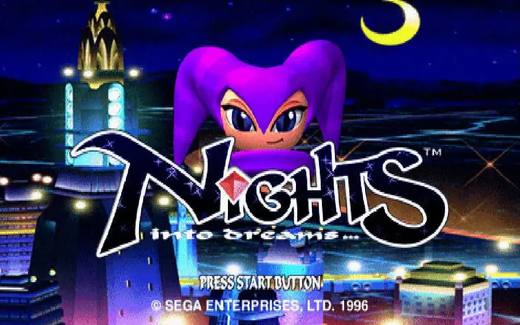
On Saturn, Sonic Team did not deliver a true new mainline Sonic game, but found other creative directions. Nights into Dreams, released in 1996, became one of the console’s most important titles: not a traditional platformer, but an experience built around flight, scoring, trajectories and a dreamlike atmosphere. With Burning Rangers in 1998, the studio experimented again, mixing 3D action, rescue missions, futuristic environments and a strong use of audio. The Saturn years were difficult for SEGA, but Sonic Team remained one of its most personal laboratories, searching for unusual solutions while the industry was still learning the language of 3D.
The Dreamcast period was perhaps the studio’s second great era. Sonic Adventure, released in Japan in 1998 and later in the West, brought Sonic into 3D with ambition, speed and a broader structure, even with some of the rough edges typical of that period. Sonic Adventure 2, Phantasy Star Online, ChuChu Rocket! and Samba de Amigo showed a Sonic Team very different from a studio focused only on the blue hedgehog: online console play, puzzle design, rhythm games, eccentric characters and a strong desire to use Dreamcast as a modern, connected and experimental machine. Phantasy Star Online, in particular, was historically important in bringing online role-playing to consoles.
After SEGA left the hardware market in 2001, Sonic Team entered a more complicated phase. The studio continued to develop games for Nintendo, PlayStation, Xbox and PC platforms, but lost part of the natural context in which it had grown. Sonic Heroes, Shadow the Hedgehog, Sonic the Hedgehog 2006, Sonic Unleashed, Sonic Colors, Sonic Generations, Sonic Lost World, Sonic Forces and Sonic Frontiers describe an uneven path, made of experiments, mistakes and recoveries. Some entries divided players, others recovered part of the original spirit, but managing Sonic in 3D remained one of SEGA’s hardest creative challenges.
Sonic Team’s legacy, however, cannot be reduced to the ups and downs of one series. It is the studio that gave SEGA its most famous character, but also the one that experimented with Nights, Phantasy Star Online, Samba de Amigo and ChuChu Rocket!. At its best, it represented the most instinctive and risk-taking side of SEGA: speed, colour, music, technology and an almost impatient desire to move beyond the standard. For Retro-Gamers, Sonic Team is above all this: the place where SEGA turned a mascot into a cultural identity.